
To prevent the spread of invasive species, it’s essential that you clean and disinfect your boots after outdoor activities. Remove mud, plant material, and organic matter with brushes or power washers, then apply disinfectants to kill any hitchhikers. Proper boot maintenance helps protect ecosystems, native species, and your local environment. By consistently following these steps, you minimize ecological risks. Keep going to discover more effective techniques and tips to strengthen your biosecurity efforts.

Get garden gear delivered free — and shop member deals
- Fast, free delivery on millions of items
- Access to Prime Big Deal Days deals on October 6–7
- Prime Video, Amazon Music and more included
Key Takeaways
- Regularly clean boots to remove mud, plant material, and debris that may harbor invasive species.
- Use brushes or power washers for thorough removal of organic matter from soles.
- Disinfect boots with specialized solutions after cleaning to kill microbes and hitchhikers.
- Proper boot maintenance prevents the transfer of invasive seeds, insects, and microbes between sites.
- Consistent cleaning supports ecosystem health and reduces the risk of ecological disruption.

Have you ever considered how crucial your footwear is in preventing the spread of disease on farms or in laboratories? Your boots are more than just protection; they’re a frontline defense against invasive species and harmful pathogens. Proper boots maintenance isn’t just about keeping your shoes clean; it’s about safeguarding ecosystems, animals, and human health. Every step you take carries the potential to carry unwanted guests—plants, insects, or microbes—that can wreak havoc when introduced to new environments. That’s why diligent cleaning of your boot soles is essential.
Invasive species don’t need a passport—they hitch a ride on your boots. When you move between different sites, contaminated soles can transfer seeds, tiny insects, or microorganisms. Once introduced, invasive species can outcompete native flora and fauna, disrupt local ecosystems, and cause irreversible damage. By paying attention to boots maintenance, you take control of this threat. A simple, consistent routine of cleaning and disinfecting your soles can be a game changer. It’s about actively preventing the spread of these unwelcome visitors, giving native species a fighting chance to thrive.
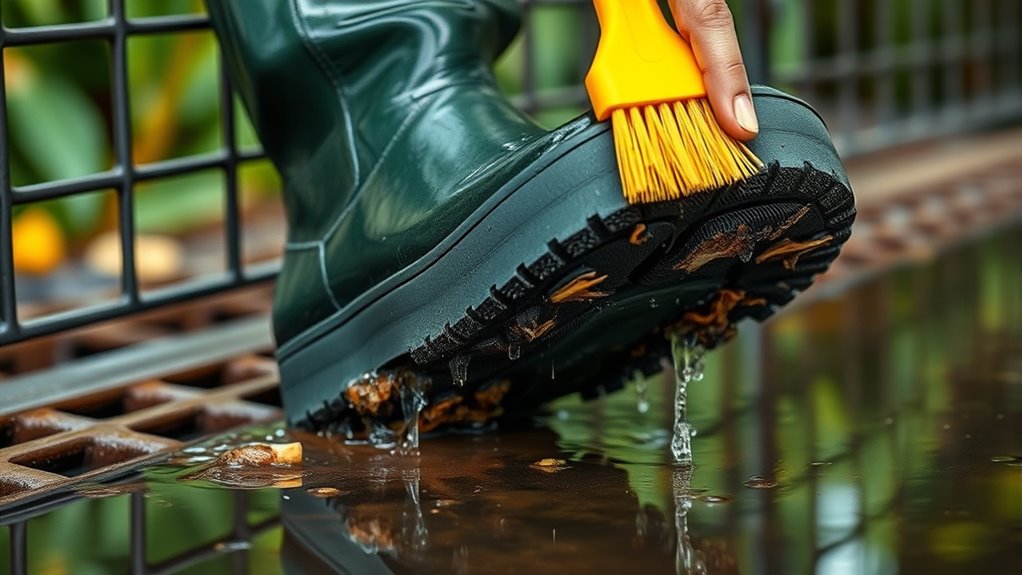
Effective cleaning also reduces the risk of transmitting germs and microbes, which is especially important in settings like farms and laboratories. Cleaning your boots effectively involves more than just a quick wipe. You need to thoroughly remove mud, plant material, and organic matter that can harbor invasive species. Use brushes or power washers to dislodge stubborn debris. Disinfectants or specialized solutions should follow, ensuring you kill any microbes or hitchhikers lurking on the soles. This process isn’t just about hygiene—it’s about liberation from the chains of contamination and ecological destruction. When you keep your boots well-maintained, you’re not only protecting your immediate environment but also contributing to a broader effort to control invasive species worldwide.
boot cleaning brush for outdoor shoes
As an affiliate, we earn on qualifying purchases.
As an affiliate, we earn on qualifying purchases.
Frequently Asked Questions
How Often Should I Clean My Biosecurity Boots?
You should clean your biosecurity boots after every use to guarantee maximum contamination prevention. Regular boot cleaning frequency helps stop the spread of invasive species and protects ecosystems. Don’t wait until dirt or mud builds up—cleaning your boots frequently keeps invasive organisms at bay and gives you peace of mind. Embrace this simple step to safeguard nature’s freedom, knowing you’re actively preventing invasives from hitching a ride and spreading.
What Cleaning Products Are Safest for Boots and Environment?
You should use eco-friendly disinfectants that are safe for both your boots and the environment, ensuring effective cleaning without harm. Regularly cleaning your boots with these products, especially after each use in sensitive areas, helps prevent the spread of invasive species. Stick to a consistent boot cleaning frequency, and choose biodegradable solutions that protect ecosystems while keeping your footwear clean and safe for outdoor adventures.
Can Different Types of Boots Be Cleaned the Same Way?
Imagine you’re cleaning outdoor hiking boots and rubber wellingtons; you might think the same method works for both. In reality, boot material compatibility and cleaning method differences matter. For example, leather boots need gentle soap and air drying, while synthetic boots handle harsher cleaning agents and washing machines. You can’t use one universal approach—tailoring your cleaning method protects your boots and prevents invasive species from hitchhiking.
Are There Specific Storage Tips to Prevent Contamination?
You should store your boots in a clean, dry area to prevent contamination. Keep them organized in a designated space, away from soil, water, or plant material that could carry invasive species. Regularly inspect and clean storage surfaces to avoid buildup of dirt or pests. Proper storage not only prolongs your boots’ life but also plays a vital role in contamination prevention, helping you stay responsible and free to explore without spreading invasives.
How Do I Know if My Boots Are Thoroughly Disinfected?
You’ll know your boots are thoroughly disinfected when the sole looks clean, and you see no dirt or residue after using your boot disinfectant. Make certain to follow a proper cleaning frequency—ideally after each site visit—to prevent invasives. Check directions on your disinfectant, and if it remains visibly cloudy or dirty, reapply. Regular, diligent cleaning guarantees your boots stay effective and help you enjoy outdoor adventures freely.
Conclusion
So next time you slip on your biosecurity boots, remember, those simple steps could prevent invasive species from hitching a ride. It’s a small act, but one that makes a big difference—coincidence or not, your efforts protect ecosystems and local communities. By cleaning your soles thoroughly, you become part of a larger story, where everyday actions help guard our environment. Keep those boots clean; your actions truly matter in the fight against invasives.
Fall yard work Picks
leaf blowers
As an affiliate, we earn on qualifying purchases.