
TL;DR
A rare leucistic loon chick was photographed in Montana, attracting attention for its unusual white appearance. The sighting offers a rare glimpse into genetic variation among loons. Photographers and bird enthusiasts are excited about the discovery.
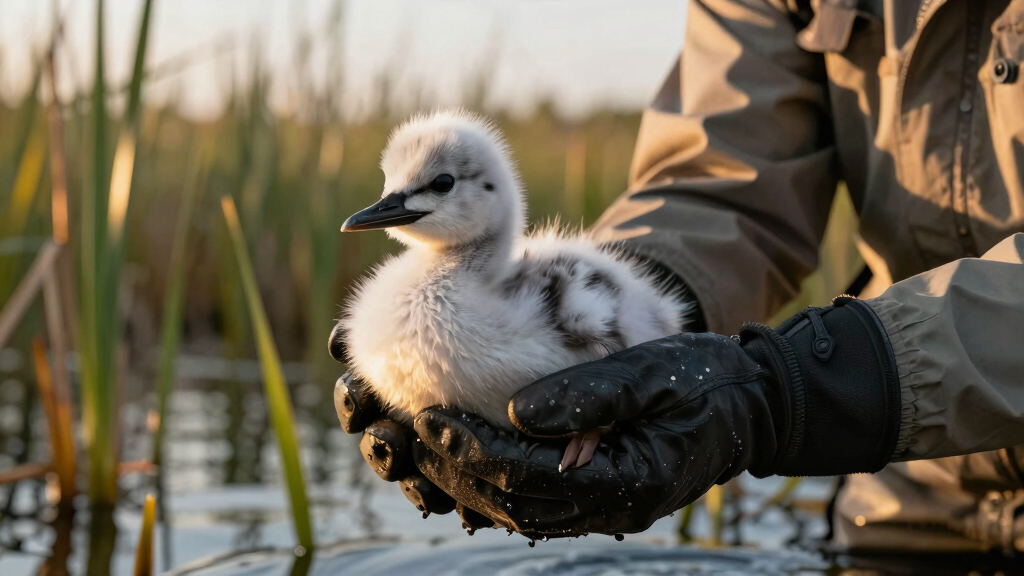
A leucistic loon chick has been observed and photographed on a Montana lake, marking a rare genetic occurrence that has attracted attention from bird enthusiasts and wildlife photographers.
Montana photographer Tony Gangemi captured images of a leucistic loon chick on a small lake in Northwest Montana in May 2025. The chick’s white plumage results from leucism, a rare genetic condition affecting approximately one in 30,000 loons, which causes partial loss of pigmentation.
Gangemi’s photographs show the chick alongside its parents and sibling, providing a rare visual record of this genetic anomaly. The sighting occurred during a routine bird-watching expedition, and the photographs have since gained attention for their rarity and beauty.
Why It Matters
This sighting is significant because leucism in loons is exceedingly rare, with only a few documented cases. The photographs offer valuable insights into genetic diversity within loon populations and provide an extraordinary opportunity for scientific study and public awareness of wildlife variation.
For bird watchers and conservationists, the sighting underscores the importance of documenting and protecting these rare genetic occurrences, which can contribute to understanding species health and resilience amid environmental changes.

Smart Bird Camera Only, for Bird Feeder/Bath/House Bird Watching Live, 2.4G
- Smart Birdwatching Camera: Designed for garden bird watching
- Live 2.5K UHD View: High-resolution bird videos with wide lens
- Color Night Vision: Vivid footage after dark
As an affiliate, we earn on qualifying purchases.
As an affiliate, we earn on qualifying purchases.
Background
Loons are migratory waterbirds known for their haunting calls and striking black-and-white plumage. They migrate seasonally through North America, with Montana serving as a key stopover during spring and fall migrations. Leucism is a rare condition among loons, estimated to occur in about 1 in 30,000 individuals, and results in partial or complete loss of pigmentation. The last notable leucistic loon sighting in Montana was several years ago, making this recent discovery particularly noteworthy.
“Seeing the leucistic loon chick was an extraordinary moment—like witnessing a rare piece of natural art. It’s a reminder of how diverse and unpredictable wildlife can be.”
— Tony Gangemi
“Leucistic birds are rare but not unheard of. Documenting these occurrences helps us understand genetic diversity and the health of local populations.”
— Montana Wildlife Expert Dr. Susan Harper
What Remains Unclear
It is not yet confirmed whether this leucistic loon chick is part of a larger population or an isolated genetic anomaly. Further observations are needed to determine if similar cases will be documented in the region in the future.
What’s Next
Wildlife researchers and bird watchers are expected to monitor the area for additional sightings of leucistic loons. Further photographic documentation and genetic studies may follow to better understand the occurrence and implications of leucism in local loon populations.
Key Questions
How rare is a leucistic loon chick?
Leucism in loons is estimated to occur in approximately 1 in 30,000 individuals, making such sightings extremely rare.
Can leucistic loons survive and reproduce normally?
Yes, leucistic loons can survive and reproduce, but their appearance may make them more vulnerable to predators. Their genetic condition does not typically affect their health or reproductive ability.
Will there be efforts to protect or study this leucistic loon?
While specific conservation efforts for this individual are not yet known, scientists and bird enthusiasts are likely to observe and document such rare occurrences to enhance understanding of genetic diversity.
Are there other known cases of leucistic loons in North America?
There have been very few documented cases of leucistic loons in North America, making this sighting particularly noteworthy for researchers and bird watchers.