Plantain is one of the most useful backyard plants because it’s easy to grow and offers numerous benefits. It has medicinal properties for treating cuts, bites, and skin irritations, and can also support your internal health through teas and tinctures. Plus, it acts as a natural pest deterrent and is eco-friendly for gardening. Its versatility makes it a true backyard treasure—discover more ways it can serve you as you explore further.
Key Takeaways
- It offers versatile medicinal benefits for skin, respiratory, and digestive health through easy-to-use leaves.
- Acts as a natural pest deterrent and can be used to create eco-friendly pest control solutions.
- Requires minimal care, grows well in poor soil, and is suitable for sustainable backyard cultivation.
- Leaves can be dried, stored, and used in teas or tinctures for internal health support.
- Turns a common weed into a valuable resource for healing, pest management, and eco-friendly gardening.
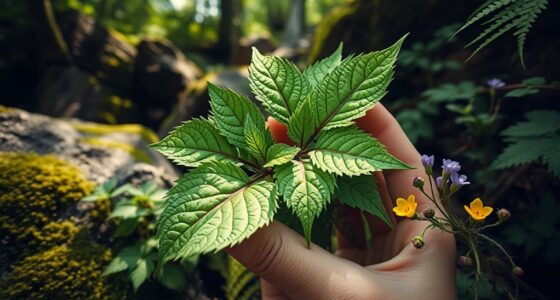
Have you ever considered how a common backyard plant like plantain can be more than just a weed? Many people overlook this humble plant, but it has been a valuable resource for generations. Not only does it thrive in various conditions, but it also offers numerous practical uses that can benefit your home and health. If you’re interested in herbal medicine, plantain stands out because of its natural healing properties. The leaves contain compounds known for their anti-inflammatory, antimicrobial, and soothing effects. You can easily harvest fresh leaves and apply them directly to minor cuts, insect bites, or skin irritations to promote healing and reduce discomfort. It’s a simple, natural remedy that requires no special equipment or chemicals, making it an excellent addition to your herbal medicine toolkit.
Discover how plantain’s healing leaves can treat minor cuts and skin irritations naturally and effectively.
Beyond its medicinal benefits, plantain can also serve as a natural pest control agent. If you’re tired of dealing with pesky insects damaging your garden, this plant can help. Certain compounds in plantain repel or deter pests, making it a natural alternative to chemical pesticides. You can even create a homemade pest spray by steeping the leaves in water or making an infusion to spray on your plants. This method is safe for your family, pets, and the environment, and it keeps your garden healthy without introducing harmful substances. Plus, because plantain is easy to grow and maintain, you can establish a dedicated patch right in your backyard, ensuring a continuous supply for herbal remedies or pest control needs. It’s also easy to grow in various conditions, making it accessible for gardeners of all levels. Growing this resilient plant can also contribute to eco-friendly gardening, as it supports sustainable practices. Additionally, understanding the plant’s role in herbal medicine can help you harness its full potential for health and wellness.
Another reason to love plantain is its versatility. Its leaves are not only useful for topical applications but can also be dried and stored for later use. When prepared as a tea or tincture, plantain provides internal support for respiratory health and digestion. The plant’s resilience and adaptability make it an excellent choice for sustainable gardening. It’s a low-maintenance plant that can thrive in poor soil, and it rarely requires attention beyond occasional watering. This makes it an accessible and sustainable resource for anyone interested in natural health practices or eco-friendly gardening. Additionally, as a hardy and adaptable plant, it can flourish in various environments, making it a reliable choice for gardeners of all levels.
In short, plantain is a backyard plant that offers practical, health-promoting benefits. Its role in herbal medicine is well-established, providing a natural way to treat minor injuries and skin issues. Meanwhile, its pest-repelling properties give you a chemical-free option for protecting your garden. By cultivating plantain, you turn a common weed into a multifunctional tool, enhancing your home’s health, safety, and sustainability. So next time you see it growing in your yard, remember—it’s more than just a weed; it’s a natural treasure waiting to be used.

Plantain Seeds for Planting – Common Plantain (Plantago Major) Edible Broadleaf Medicinal Herb for Herbal Garden – Heirloom Non-GMO Open Pollinated – Survival Garden Seeds (1 Pack)
HARDY PERENNIAL HERB – Common plantain (Plantago major) is a resilient perennial with broad green leaves and tall…
As an affiliate, we earn on qualifying purchases.
As an affiliate, we earn on qualifying purchases.
Frequently Asked Questions
Can Plantains Be Grown Indoors Successfully?
Yes, you can grow plantains indoors successfully through indoor gardening and container planting. Choose a large pot with good drainage, and place it in a sunny spot, like near a south-facing window. Keep the soil moist and fertilize regularly. With proper care, your indoor plantain will thrive, providing fresh leaves and even fruit, making it a rewarding addition to your home garden.
What Pests Commonly Affect Plantain Plants?
You’ll find that plantain plants face pests like aphids, beetles, and slugs. To protect them, choose pest-resistant varieties whenever possible. Regularly inspect your plants and use organic pest control methods like neem oil or insecticidal soap to keep pests at bay. Maintaining healthy, well-drained soil and avoiding overwatering also helps prevent infestations. Staying vigilant guarantees your plantain plants stay healthy and productive.
How Long Does It Take for a Plantain to Mature?
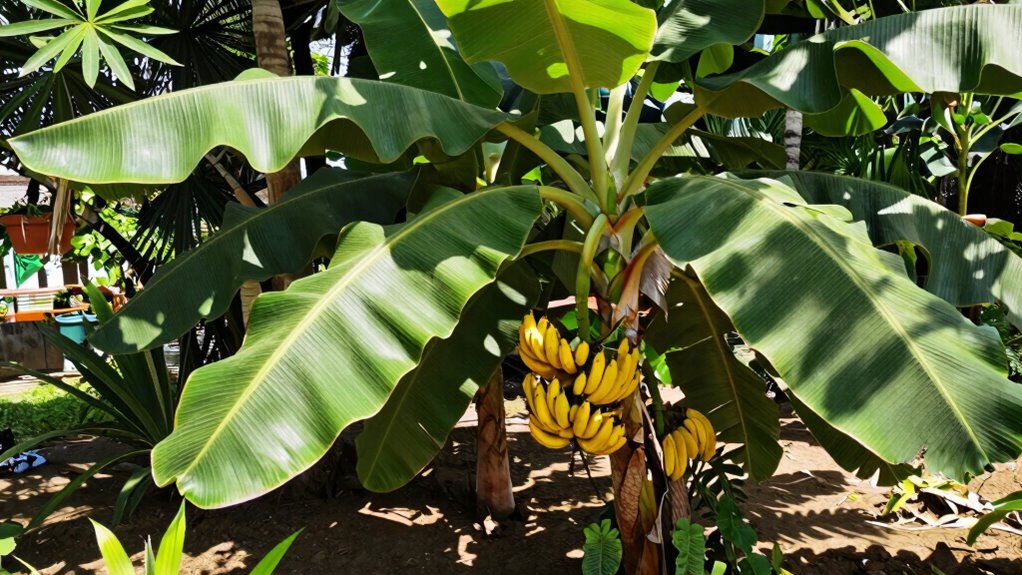
Plantains typically take about 3 to 4 months to mature, depending on growing conditions. The harvest timing depends on the growth rate, which can vary with climate and care. You’ll know they’re ready when the plantains have grown large, firm, and have turned yellow or black, indicating ripeness. Regularly monitor your plants to guarantee you harvest at peak maturity for the best flavor and texture.
Are Plantains Safe for Pets and Children?
Did you know that plantains are generally safe for pets and children? You can include them in your backyard without worrying much about pet safety or child safety. However, it’s best to serve cooked plantains, as raw ones might cause stomach issues. Always monitor kids and pets around plants, and consult a vet or pediatrician if you’re unsure. Properly managed, plantains make a healthy, safe addition to your backyard.
What Are the Best Companion Plants for Plantain?
You should plant chamomile, yarrow, or marigolds alongside your plantain. These companion plants enhance pest prevention by attracting beneficial insects and repelling pests, protecting your plantain. They also improve soil health and promote healthy growth. By practicing companion planting, you create a balanced ecosystem that benefits your garden’s overall health. So, choose these plants to support and maximize the benefits of your plantain in your backyard.

VermExon Peppermint Oil Insect & Pest Control Spray – 16oz Natural Plant-Based Bug Killer for Spiders, Ants, Flies, and Other Insects, Safe for Home & Kitchen Use
[Highly Effective Against Pests]: Scientifically engineered with the natural power of peppermint oil, VermExon 16oz spray is proven…
As an affiliate, we earn on qualifying purchases.
As an affiliate, we earn on qualifying purchases.
Conclusion
Imagine your backyard transforming into a resourceful haven with a simple plant like plantain. Picture yourself harvesting its leaves to soothe a minor scrape or using its roots for natural remedies. Just like Sarah, who incorporated plantain into her garden, she found a versatile plant that saved her trips to the pharmacy. By planting plantain, you’re not just growing greenery—you’re cultivating a natural, handy medicine cabinet right outside your door.

Starwest Botanicals Organic Plantain Leaf – Natural Loose Leaf Herbal Tea, Dried Plantain Herb, Cut & Sifted, Certified Kosher, Non-GMO – 4 oz Bag
CUT AND SIFTED PLANTAIN LEAF: This bag contains Plantago lanceolata, the botanical name for plantain leaf. It is…
As an affiliate, we earn on qualifying purchases.
As an affiliate, we earn on qualifying purchases.

THE MASTER'S TINCTURE BIBLE: A Complete Guide to Easily Crafting Herbal Tinctures & Blends at Home for Healing Body, Mind and Spirit
As an affiliate, we earn on qualifying purchases.
As an affiliate, we earn on qualifying purchases.