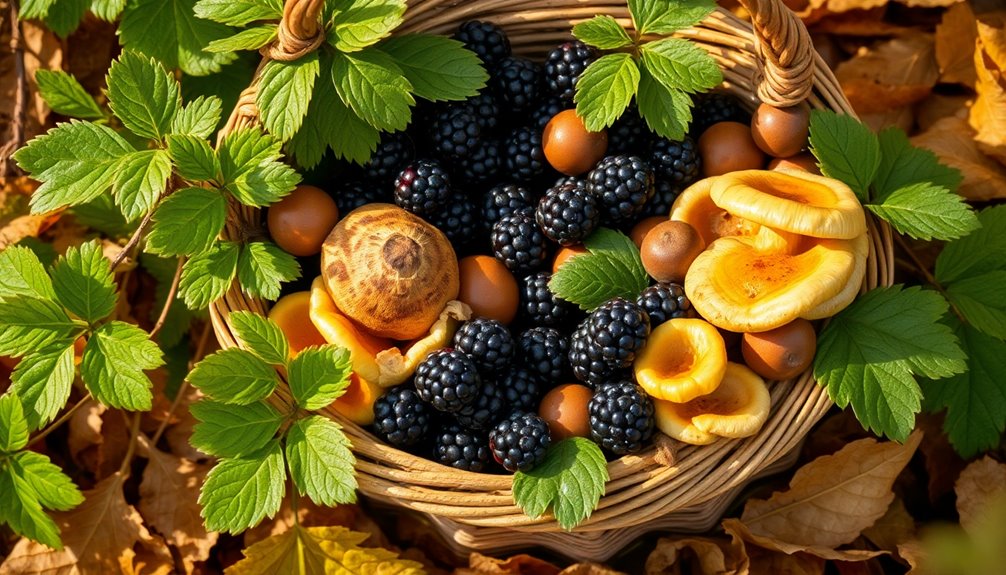
To forage blackthorn or sloe berries, look for ripe, dark fruits in hedgerows and woodland edges in late autumn. Pick only what you need, leaving plenty for wildlife, and guarantee proper plant identification. These tart berries are great for making traditional sloe gin, jams, tinctures, and herbal remedies to support your health. If you want to discover more about responsible harvesting techniques and creative uses, keep exploring this natural resource.
Key Takeaways
- Sloe berries are best harvested in late autumn when they turn a deep, almost black color indicating ripeness.
- Responsible foraging involves picking only necessary berries, leaving plenty for wildlife and plant regeneration.
- Blackthorn bushes are identified by their thorns and clusters of dark berries, growing mainly in hedgerows and woodland edges.
- Traditional preparations include sloe gin, jams, syrups, and herbal infusions that harness their antioxidant and medicinal properties.
- Sustainable harvesting practices support plant health, ecological balance, and preserve the natural availability for future seasons.
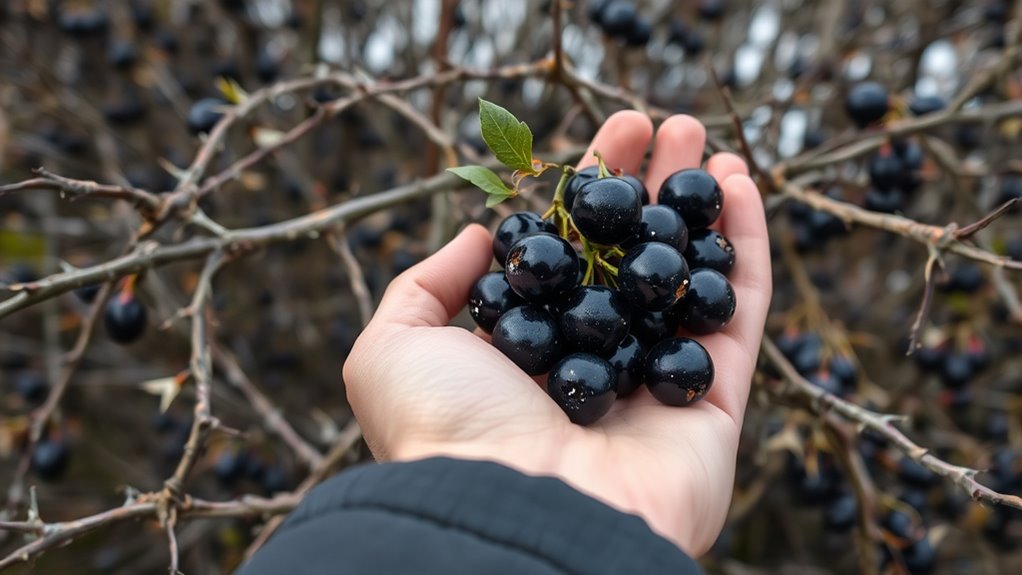
If you’re interested in foraging wild ingredients, sloe berries, also known as blackthorn, offer a rewarding opportunity to connect with nature and reclaim your culinary independence. Wild harvesting these resilient berries allows you to tap into centuries-old traditions of herbal remedies and natural medicine, empowering you to craft remedies that are free from commercial additives. Blackthorn bushes grow abundantly in hedgerows and woodland edges, waiting for keen eyes to spot their distinctive thorns and clusters of dark, matte berries. By learning to identify and harvest these wild ingredients responsibly, you can open a world of herbal healing that’s as liberating as it is delicious.
When you venture into the wild for harvesting sloe berries, it’s essential to approach with respect and awareness. Pick only what you need, leaving plenty behind to sustain the plant and wildlife that depend on it. The best time for wild harvesting is late autumn, after the berries have ripened and turned a deep, almost black hue. The berries are tart and astringent when raw, but that’s precisely what makes them ideal for herbal remedies and traditional preparations like sloe gin, jams, and syrups. As you gather, pay attention to the plant’s overall health and avoid overharvesting from a single bush, ensuring its vitality for future seasons.
Using sloe berries in herbal remedies is about more than just flavor; it’s about reclaiming your health and embracing natural healing. The berries contain antioxidants, vitamins, and compounds believed to support circulation and boost immunity. You can infuse the berries into spirits or create tinctures, harnessing their medicinal properties for relief from colds, sore throats, or digestive issues. Making your own herbal remedies from wild-sourced ingredients frees you from reliance on commercial pharmaceuticals and synthetic supplements, fostering a deeper connection to your body’s innate ability to heal. Additionally, understanding the best oils for deep frying on a keto diet can help you prepare delicious, health-conscious treats using wild ingredients like sloe berries, which can be incorporated into keto-friendly recipes. The process of wild harvesting and preparing herbal remedies becomes a ritual of independence—an act of reclaiming control over your well-being.
Top picks for "sloe blackthorn forag"
Open Amazon search results for this keyword.
As an affiliate, we earn on qualifying purchases.
Frequently Asked Questions
When Is the Best Time to Harvest Sloe Berries?
You should harvest sloe berries in late autumn, around September to October, when they reach their seasonal harvesting peak. This is the ideal timing, as the berries are fully ripened, dark purple, and bursting with flavor. Don’t wait too long, or frost may damage them. Seize this moment to gather these wild treasures, revealing their potential for vibrant jams, liqueurs, or simply celebrating nature’s bounty at its fullest.
Are There Any Look-Alike Plants to Avoid When Foraging?
You should watch out for poisonous look-alikes like deadly nightshade and bittersweet nightshade when foraging. To identify sloe berries confidently, look for the distinctive blackthorn shrub with its thorny branches, oval leaves, and clusters of small, dark blue berries. Always check the plant’s overall shape and berry color carefully. Trust your intuition, stay alert, and use clear identification tips to enjoy foraging safely and freely.
How Do I Identify the Mature Blackthorn Tree?
Imagine walking through a wild hedgerow, and you spot a blackthorn tree. To identify it, look for the mature tree’s rough, deeply furrowed bark, which feels textured under your fingertips. Check the thorn arrangement: the branches bear dense, straight thorns, often in pairs or clusters, creating a formidable barrier. When you see these features, you’re free to confidently harvest the blackthorn, embracing nature’s bounty with confidence.
Can I Use Sloe Berries From a Wild Blackthorn?
Yes, you can use sloe berries from a wild blackthorn, but always prioritize foraging safety. Make sure you’re confident in identifying the wild blackthorn correctly, as some lookalikes may be toxic. Harvest berries only from areas free of pesticides or pollutants, and avoid over-harvesting. Trust your knowledge, stay cautious, and embrace the freedom of foraging responsibly to enjoy authentic, wild flavors.
Are There Health Benefits Associated With Consuming Sloe Products?
Yes, consuming sloe products can boost your health with antioxidant properties that fight free radicals, helping your body stay resilient. They also support immune health, giving you a natural edge to stay vibrant and energized. By including sloe in your diet, you embrace a tradition of wellness, empowering yourself to feel liberated from ailments. Enjoy their benefits and take control of your health naturally with these potent, traditional remedies.
Conclusion
As you gather sloe berries, remember they symbolize resilience and transformation, much like your own journey. Each berry you pick holds the promise of sweet renewal, turning the wild into something cherished. Through traditional preparations, you connect with centuries of wisdom, transforming nature’s bounty into a symbol of perseverance. Embrace the sloe’s quiet strength, letting it remind you that even in the darkest moments, there’s potential for beauty and new beginnings.