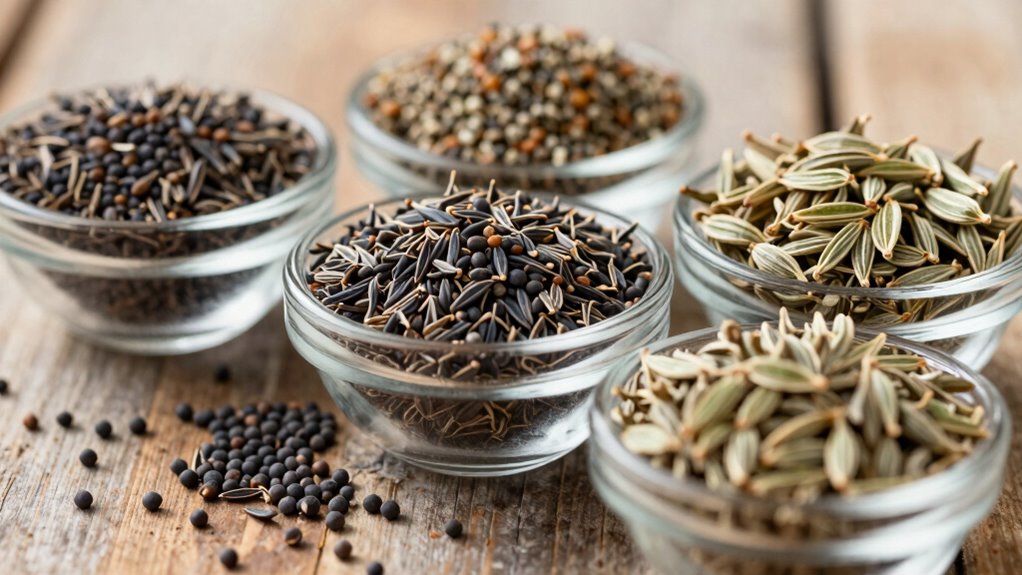
You can incorporate wild seeds like sunflower, pine nuts, or amaranth into your cooking for added flavor and nutrition. Proper identification is key to avoid dangerous lookalikes, and you should make sure seeds are fully mature before harvesting. Roast or grind them into flours for baking or toss them into salads and trail mixes. Practicing responsible foraging helps protect plants and the environment. Keep exploring to discover more safe and tasty wild seed options you can use in your kitchen.
Key Takeaways
- Many wild seeds, like sunflower, pine nuts, and chia, are edible and can be incorporated into cooking and baking.
- Proper identification and harvesting at full maturity ensure safe, high-quality wild seeds for culinary use.
- Wild seeds can be roasted, ground into flour, or added directly to salads and trail mixes for flavor and nutrition.
- Use gentle collection methods and sustainable practices to protect plant populations and ensure continuous harvests.
- Thorough cleaning, drying, and storage are essential to prepare wild seeds for safe, long-term kitchen use.
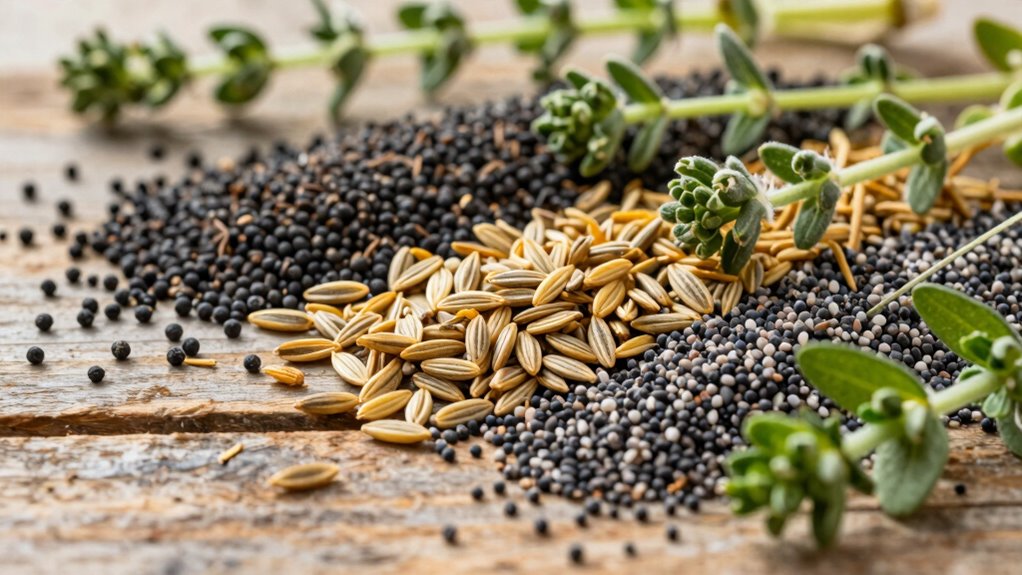
Wild seeds often get overlooked, but many of them are actually edible and can add unique flavor and nutrition to your kitchen creations. If you’re interested in exploring wild foods, it’s vital to learn some foraging tips to identify safe, edible seeds. Start by familiarizing yourself with local plants and their seed-producing structures. Use reputable guides or join foraging groups to guarantee accuracy and avoid dangerous lookalikes. When foraging, always harvest responsibly—leave enough seeds behind for the plant to reproduce, and avoid areas that might be contaminated or heavily polluted.
Wild seeds are edible and flavorful—learn to identify, harvest responsibly, and incorporate them into your cooking adventures.
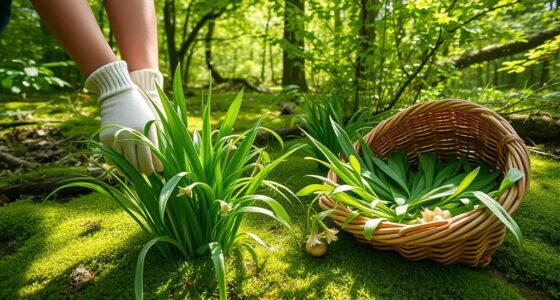
Once you identify a promising seed source, understanding seed harvesting methods becomes essential. The best approach varies depending on the plant, but generally, you want to gather seeds when they’re fully mature. For many wild plants, this means waiting until the seed heads or pods have dried out and turned their characteristic color. Gently collect the seeds using gloves or tools to minimize damage to the plant and yourself. After harvesting, you’ll need to process the seeds properly, which often involves cleaning off debris, chaff, or other plant material. You can do this by winnowing—tossing the seeds in a gentle breeze or using a fan—to blow away lighter chaff, leaving you with clean seeds ready for storage or use.
Incorporating wild seeds into your cooking isn’t just about foraging; it’s about understanding storage and preparation. Many seeds can be stored in airtight containers for months, but make sure they’re thoroughly dried before storing to prevent mold. When you’re ready to use them, consider roasting or toasting the seeds to enhance their flavor, or grind them into flours or meal for baking. Some wild seeds, such as sunflower or pine nuts, offer rich, nutty flavors perfect for adding crunch or depth to salads, bread, or trail mixes.
As you expand your wild seed collection, pay attention to sustainable foraging practices. Always follow local regulations and avoid overharvesting from the same area. Respect the environment, and only take what’s necessary, leaving plenty for wildlife and the plants’ future growth. With patience and care, wild seeds can become a nutritious, flavorful addition to your culinary repertoire, transforming simple ingredients into adventurous, homemade dishes.
wild seed roasting and grinding kit
As an affiliate, we earn on qualifying purchases.
As an affiliate, we earn on qualifying purchases.
Frequently Asked Questions
Are All Wild Seeds Safe to Eat Raw?
Not all wild seeds are safe to eat raw. When wild seed harvesting, you need to identify edible seed varieties carefully, as some can be toxic if consumed raw. Always research thoroughly or consult an expert before trying new seeds. Many wild seeds, like sunflower or pumpkin seeds, are safe to eat raw, but others may require cooking to eliminate toxins. Safety should always come first in wild seed consumption.
How Do I Properly Identify Edible Wild Seeds?
Identifying edible wild seeds is like decoding a secret message. You should use careful foraging techniques, focusing on plants you recognize confidently. Learn key features such as seed shape, color, and plant habitat. When seed harvesting methods, like collecting from mature plants, are followed, you reduce risks. Always cross-reference with reputable field guides or consult local experts to verify you’re harvesting safe, edible seeds, avoiding look-alikes that could be toxic.
Can Wild Seeds Be Used in Baking or Cooking?
Yes, wild seeds can be used in baking or cooking if you identify them as edible seed varieties through wild seed foraging. You can incorporate seeds like sunflower, pumpkin, or chia into your recipes for added nutrition and flavor. Just make certain you’re confident about the seed’s safety, properly clean and dry them, and experiment with small amounts to enjoy their unique taste and texture safely in your culinary creations.
Are There Any Health Risks Associated With Wild Seeds?
Are wild seeds safe to eat? Not always. You need to be cautious because of toxic seed risks and the importance of poisonous plant identification. Some wild seeds contain harmful compounds that can cause illness or allergic reactions. Before foraging, thoroughly research or consult an expert. Are you confident in your ability to identify safe seeds? Proper identification is essential to avoid health risks and enjoy wild seeds without harm.
How Should I Store Wild Seeds for Culinary Use?
To store wild seeds for culinary use, you should focus on seed preservation by keeping them in airtight storage containers. Choose glass jars or resealable bags to prevent moisture and pests from getting in. Keep the containers in a cool, dark, and dry place, such as a pantry or cellar. Proper storage extends seed freshness, flavor, and nutritional value, ensuring your wild seeds stay ready for cooking whenever you need them.

Yupik Organic Sunflower Seeds, No Shell, 2.2 lb (35.2 oz), Non-GMO, Vegan, Gluten-Free, Kosher, Raw Seeds, Salt-Free, Oil-Free, Source of Fiber & Iron, Healthy Snack, Ideal for Baking & Topping
Shelled raw sunflower seed kernels
As an affiliate, we earn on qualifying purchases.
As an affiliate, we earn on qualifying purchases.
Conclusion
Now that you know these wild seeds are more than just nature’s scattered treasures, you can confidently incorporate them into your kitchen adventures. Think of them as hidden gems waiting to be discovered—adding flavor, nutrition, and a touch of wild magic to your meals. So go ahead, explore the outdoors, gather these seeds, and let your culinary creativity bloom like a wildflower in spring. Your taste buds—and the environment—will thank you!

FROM WILD Fresh Organic Pine Nuts 7oz Certified Vegan Kosher Unsalted Pignolias – Siberian, for Pesto, Raw nuts, Mediterranean Delight Gluten-Free, Non-GMO European Grown Shelled, Cedar Nuts, Pinion, Piones, Pignoli Nuts, Bulk, Italian Seasoning, Keto Spices
TRUE WILD EXPERIENCE FROM PRISTINE ECOSYSTEMS: Our organic pine nut are sourced from one of the world's most…
As an affiliate, we earn on qualifying purchases.
As an affiliate, we earn on qualifying purchases.

Relative Foods Organic Amaranth Flour – Gluten-Free, High Protein Organic Millet Flour – Amaranth Powder Ideal for Baking, Thickening, Flatbreads & More – 2lb Bag
Organic & Non-GMO: Milled from 100% organic amaranth grain with purity that you can trust; free from additives,…
As an affiliate, we earn on qualifying purchases.
As an affiliate, we earn on qualifying purchases.