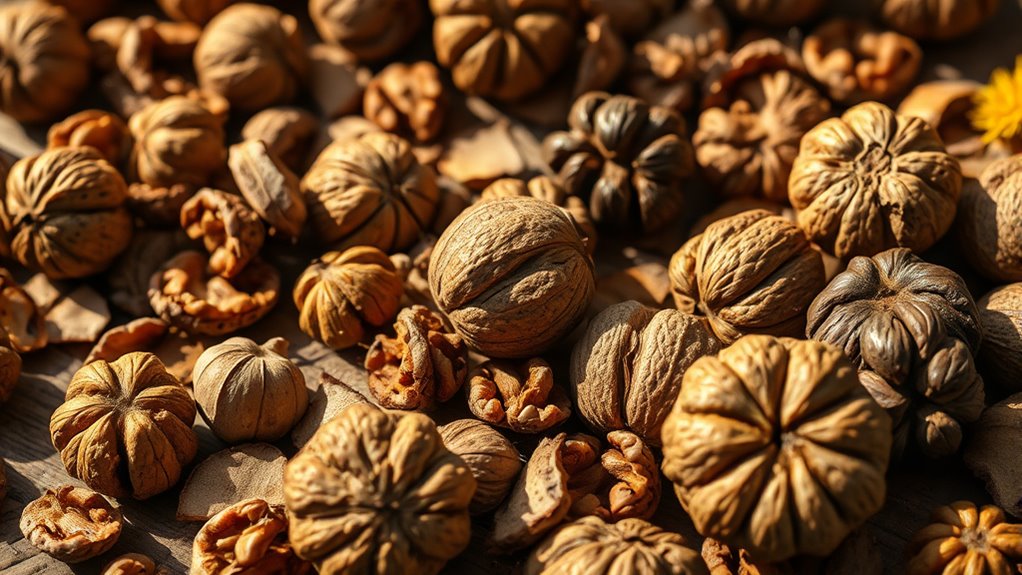

When foraging walnuts and black walnuts, watch for ripe hulls that turn brown and crack, and gather black walnuts soon after they hit the ground to avoid tough shells. Use gentle knocking or tools to dislodge them, and handle hull stains carefully to prevent lasting marks on your hands or surfaces. Proper timing and clean collection methods improve quality and reduce mess. Keep exploring these tips to master harvesting and managing hull stains effectively.
Key Takeaways
- Forage walnuts when hulls turn brown and cracks appear; black walnuts fall earlier with tougher shells.
- Use gentle knocking or tools to dislodge nuts, avoiding hull damage and ensuring clean collection.
- Remove hulls promptly to prevent stains, and clean nuts thoroughly before curing and storage.
- To reduce hull stains, wear gloves and work in well-ventilated areas; rinse nuts promptly after harvesting.
- Proper curing and storage prevent mold and preserve nut quality, making cleanup easier and reducing stains.
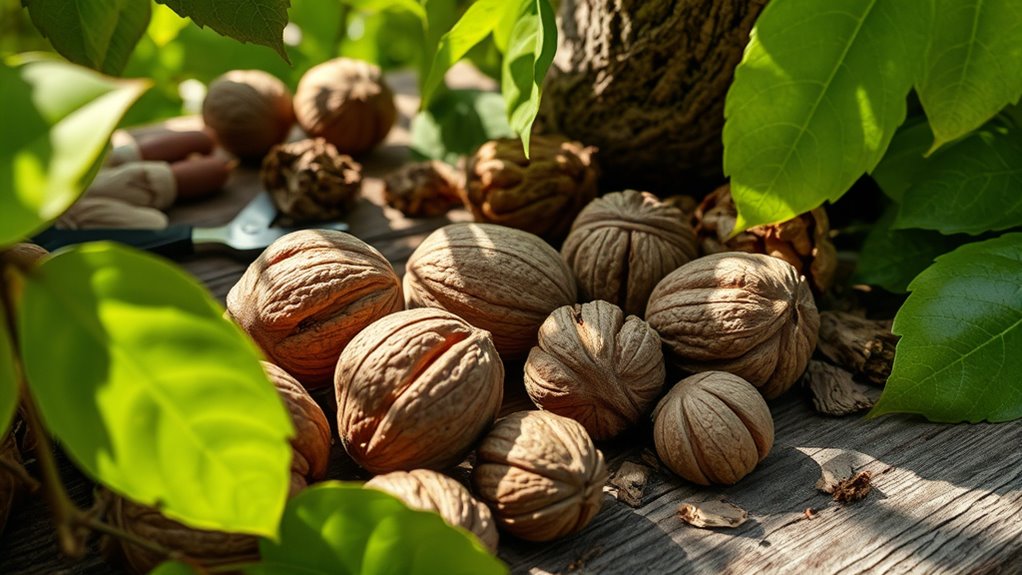
Have you ever wondered what sets walnuts and black walnuts apart? It’s not just the color or flavor—there’s a whole world of difference in how you harvest and use them. When it comes to harvesting techniques, understanding the distinct growth patterns and ripening times is vital. Walnuts generally hang on the tree longer and mature earlier in the season, making them easier to pick when the hulls turn brown and start to crack. Black walnuts, on the other hand, often fall earlier and have tougher shells, requiring a more deliberate approach. You’ll want to gather black walnuts soon after they hit the ground to prevent mold and spoilage. Instead of shaking the trees wildly, gently knocking or using tools to dislodge mature nuts ensures you don’t damage the tree or miss ripe ones. Once harvested, both types benefit from proper cleaning and curing—drying them in a well-ventilated area to prevent mold and prepare them for storage or culinary uses. Proper storage techniques also help preserve the nuts’ freshness and nutritional value.
Speaking of culinary uses, walnuts are a versatile treasure in your kitchen. Their mild, buttery flavor makes them a natural fit for baked goods, salads, and snack mixes. You can toast them to enhance their richness or grind them into a creamy nut butter. Black walnuts, with their bold, earthy flavor, are best suited for hearty dishes and robust baked goods. Their strong aroma and taste can elevate cookies, bread, and even savory sauces. When harvesting black walnuts, remember to crack open their tough shells carefully—using a heavy-duty nutcracker or a specialized black walnut tool can save you time and frustration. Once cracked, you’ll find rich, oil-filled kernels perfect for adding depth to your recipes. Keep in mind, black walnuts have a distinctive smell that might linger, so plan your culinary experiments accordingly. Exploring nut harvesting techniques can further improve your yield and quality.
Liberating yourself from the limits of store-bought nuts means embracing these harvesting techniques and culinary possibilities. You get to connect directly with nature, taking control of the process from tree to table. Whether you’re gathering black walnuts for their intense flavor or collecting walnuts for their subtler taste, understanding the right methods makes all the difference. You’re not just a consumer—you’re a creator, shaping your own culinary adventures. So, get out there, identify the right time to harvest, and experiment with what these nuts can bring to your kitchen. With a little effort and knowledge, you unlock the full potential of walnuts and black walnuts, transforming simple ingredients into expressions of your culinary freedom.
Top picks for "walnut black forag"
Open Amazon search results for this keyword.
As an affiliate, we earn on qualifying purchases.
Frequently Asked Questions
When Is the Best Time to Harvest Black Walnuts?
You should harvest black walnuts when the hulls turn yellow-brown and start to crack open, typically in late September to October. Ripening indicators include the hulls softening and the nuts falling to the ground naturally. Don’t wait too long, or the nuts might spoil or be eaten by wildlife. This timing lets you enjoy fresh harvests and avoid unnecessary mess or loss. Act now to catch them at their peak!
How Do I Identify Ripe Walnuts in the Wild?
Think of ripe walnuts as hidden treasures waiting to be uncovered. To identify their ripeness, look for walnuts with shells that are dark brown and feel firm, not soft or shriveled. Ripe walnuts often fall easily from the tree or shake loose with a gentle tug. Check the walnut shell characteristics—smooth, intact shells indicate readiness. When you spot these signs, you’re free to gather your bounty and embrace the wild harvest adventure.
Are There Any Safety Precautions for Foraging Walnuts?
When foraging walnuts, prioritize foraging safety by wearing gloves to avoid skin irritation from the hulls and guarantee proper identification to prevent harvesting toxic look-alikes. Follow walnut harvesting precautions by only collecting from areas free of chemicals or pollutants. Stay alert for wild animals and difficult terrain. Always forage with a sense of respect for nature, and if unsure, consult local experts to protect yourself and the environment.
Can Walnuts Be Grown in Containers Indoors?
Absolutely, you can grow walnuts in containers indoors! Indoor cultivation of walnuts through container gardening unlock a world of freedom, letting you nurture these majestic trees inside your home. Imagine the thrill of watching your sapling thrive in a pot, defying limits. While it requires patience and proper care—like ample sunlight and large containers—this method empowers you to enjoy fresh walnuts anytime, breaking free from traditional constraints.
What Are Common Pests Affecting Walnut Trees?
You’ll often find pests like walnut husk fly, aphids, and walnut caterpillars attacking your trees. To keep your walnut tree healthy and thriving, use effective pest management strategies like targeted insecticides or natural predators. Regularly inspect your trees, remove infested foliage, and stay vigilant. By actively managing pests, you’re empowering yourself to enjoy a bountiful harvest and maintain your tree’s vibrancy.
Conclusion
As you gather walnuts and black walnuts, remember they hold more than just their shells—they carry the promise of new beginnings, like seeds of potential waiting to grow. With patience and care, you transform their stubborn hull stains into a symbol of your craftsmanship and connection to nature. Each nut you forage is a reminder that from humble shells, strength and beauty can emerge, inspiring you to nurture your own growth beyond the orchard.