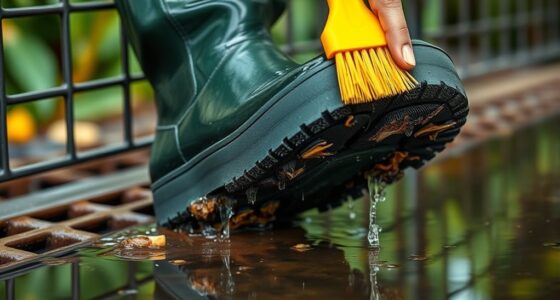
To stop invasives and pathogens, it’s crucial to clean and disinfect your footwear properly before entering farm areas. Remove all mud and debris first, then use a disinfectant proven to kill harmful organisms—rinsing alone isn’t enough. Consistent footwear hygiene helps prevent disease spread, protect your livestock, and maintain biosecurity standards. Staying vigilant with your cleaning routines is essential, and if you keep exploring, you’ll discover even more effective ways to keep your farm safe.
Key Takeaways
- Proper cleaning and disinfection of footwear soles remove soil and pathogens that can carry invasive species.
- Rinsing dirt alone is insufficient; use effective disinfectants proven to eliminate harmful organisms.
- Regularly cleaning boots reduces the risk of transmitting invasive pests and disease agents onto farms.
- Maintaining footwear hygiene reinforces biosecurity measures, protecting livestock and the environment.
- Consistent sole sanitation demonstrates a commitment to preventing invasive species and safeguarding farm health.

Biosecurity boots are essential tools for protecting farms and livestock from the spread of disease. When you step onto a farm, you’re not just entering a space—you’re carrying the potential to either safeguard or threaten the health of the animals and environment around you. The key to maintaining this protection lies in understanding pathogen transmission and prioritizing footwear hygiene. Every step you take can transfer harmful pathogens from contaminated areas to clean zones, and it’s your responsibility to stop that chain in its tracks.
Your boots act as the frontline defense against invasive species and disease agents. If you neglect proper cleaning and disinfection, you inadvertently become a carrier, allowing invisible threats to hitch a ride on your footwear. Pathogen transmission is sneaky; it can happen through tiny soil particles, manure, or contaminated bedding that cling to the soles. That’s why keeping your footwear hygienic isn’t just a routine—it’s a liberation from the fear of unintentionally spreading disease. Clean soles mean you’re actively breaking the cycle of infection, giving your farm a fighting chance to stay healthy and resilient.
The process of cleaning your boots should be straightforward but thorough. Before entering livestock areas, make a habit of removing mud and debris, then sanitize the soles with appropriate disinfectants. Don’t just rinse off dirt—use products proven to kill pathogens. This simple act ensures that dangerous organisms don’t slip through the cracks and infect your animals or contaminate feed and water sources. Remember, pathogen transmission often happens unseen, so diligence in footwear hygiene directly impacts the health of your entire operation. Incorporating high-quality projectors into your training or educational efforts can help emphasize best practices for maintaining biosecurity and understanding pathogen risks.
By taking responsibility for your footwear, you claim your power to prevent disease outbreaks. It’s about more than just compliance; it’s about liberation from the fear of losing livestock to preventable illnesses. When you prioritize cleaning your boots, you’re actively reducing the risk of invasive species or pathogens crossing boundaries, protecting the farm’s integrity. This discipline strengthens your control over the environment, giving you confidence and peace of mind.
In the end, protecting your farm starts from the ground up—literally. Every time you clean your boots, you’re forging a barrier that keeps harmful organisms at bay. Your footwear becomes a symbol of your commitment to biosecurity, a tool for liberation from disease and contamination. Keep those soles spotless, and you’ll be taking a powerful step toward safeguarding your farm, your animals, and your future.
As an affiliate, we earn on qualifying purchases.
Frequently Asked Questions
How Effective Are Different Cleaning Methods for Biosecurity Boots?
Different cleaning methods for biosecurity boots vary in effectiveness, but boot sole sterilization is highly reliable when done properly. Using disinfectants like bleach or commercial solutions enhances cleaning method efficacy, ensuring invasive species don’t hitch a ride. You’ll find that scrubbing thoroughly and allowing proper contact time makes a big difference. By choosing proven sterilization techniques, you actively protect ecosystems and enjoy the freedom of exploring nature without risking invasives.
What Materials Are Best for Durable, Easy-To-Clean Boots?
Did you know that rubber boots last up to 50% longer than leather ones? For durability and easy cleaning, rubber or PVC are your best bets—they resist wear and withstand harsh cleaning materials. These materials also offer high compatibility with disinfectants, making it easier to keep invasives out of your environment. Choose boots made from these tough, cleanable materials, and you’ll feel liberated knowing you’re effectively protecting ecosystems with less effort.
How Often Should Boots Be Cleaned During Invasive Species Control?
You should clean your boots daily during invasive species control to guarantee effective boot maintenance and contamination prevention. Regular cleaning removes dirt and potential invasive seeds or organisms, reducing the risk of spreading invasive species. After each use, especially when moving between different sites, take a few minutes to scrub soles and wipe down boots. This routine keeps your gear effective, helps protect ecosystems, and keeps you liberated from the worry of unintentionally spreading invasives.
Are There Specific Disinfectants Recommended for Boot Soles?
You should follow disinfectant guidelines that recommend using solutions like bleach, alcohol-based disinfectants, or commercial biosecurity products compatible with your boot soles’ material. For sole material options, rubber and rubber-like materials respond best to these disinfectants, ensuring thorough cleaning without damage. Regularly disinfect your boots, especially after each invasive species control session, to effectively stop the spread and keep ecosystems safe.
Can Biosecurity Boots Be Reused After Cleaning or Should They Be Disposed Of?
You can definitely reuse your biosecurity boots after cleaning—think of them as your armor, ready for the next battle against invasives. Just make certain thorough cleaning and disinfection to guarantee reuse safety, like wiping away hidden threats. If boots are worn or damaged, consider boot disposal, freeing yourself from risk. Reusing keeps you empowered and eco-conscious, while proper disposal lets you break free from potential contamination. Stay vigilant, stay liberated.
Conclusion
Next time you slip on your biosecurity boots, remember you’re guarding a hidden frontier. Picture muddy soles, tiny invaders clinging to the tread, waiting to hitch a ride. By thoroughly cleaning your boots, you sweep away these unwelcome guests, stopping invasive species from creeping into new lands. Your simple act becomes a powerful shield—protecting fragile ecosystems and preserving nature’s delicate balance. Step confidently, knowing your clean boots are a frontline defense against ecological invasion.