When removing invasive plants for foraging, always wear gloves and use proper tools to stay safe and avoid skin irritation. Identify invasive versus native species carefully before harvesting, and remove plants strategically to support native growth. Proper disposal is key—bag and remove cuttings to prevent re-establishment, following local guidelines like burning or designated sites. A safe, thoughtful approach helps protect ecosystems and promotes biodiversity; if you continue, you’ll discover more tips to make your removal effective.
Key Takeaways
- Properly identify invasive species before foraging or removal to prevent harming native plants and ecosystems.
- Always wear gloves and use appropriate tools to ensure safety during invasive plant removal.
- Remove invasive plants strategically, targeting key areas to maximize ecological benefits and native plant recovery.
- Bag and dispose of invasive plant material according to local guidelines to prevent re-establishment.
- Avoid excessive soil disturbance to protect native roots and underground networks during removal activities.
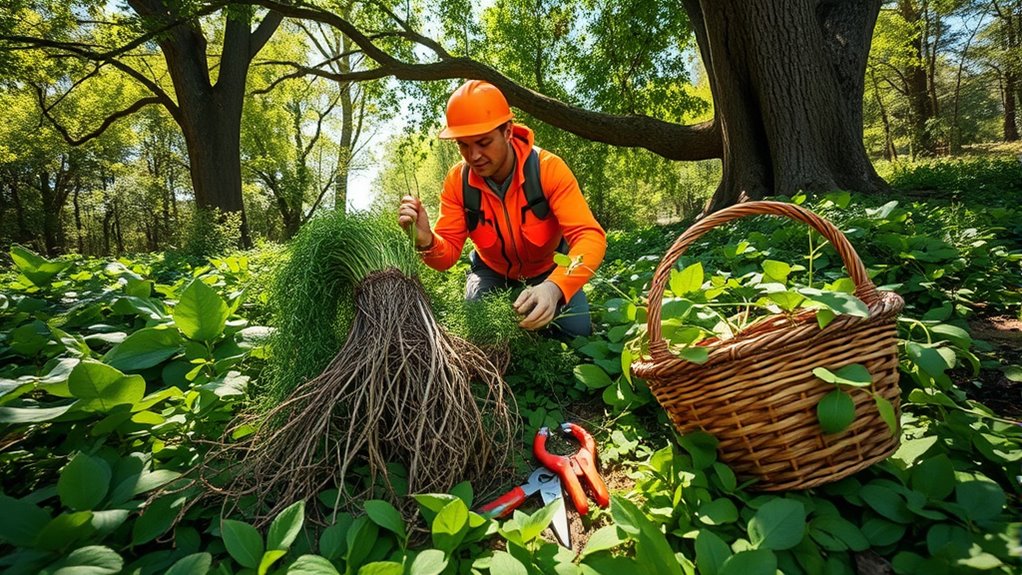
Invasive Removal Foraging offers a practical way to combat the spread of non-native species while providing a rewarding foraging experience. When you engage in invasive removal, you’re not just gathering plants; you’re actively restoring native habitats and helping to reverse ecological damage. By removing invasive species, you support native plant restoration, giving indigenous flora a chance to thrive and re-establish their rightful place in the ecosystem. This process directly impacts the ecological balance, reducing competition for resources and allowing native species to flourish, which benefits local wildlife and the broader environment.
Your efforts in invasive removal foraging are a form of liberation—for the land, the native plants, and the creatures that depend on them. As you identify and remove invasive species, you’re helping to restore the natural order, giving native plants space to grow and reproduce without being overshadowed by aggressive non-natives. This act of removal diminishes the ecological impact of invasive plants, which often outcompete native species, disrupt food chains, and alter soil and water conditions. Each invasive plant you remove is a step toward a healthier, more balanced ecosystem where native plants can reclaim their territory and ecological roles.
Removing invasive species helps restore natural balance and allows native plants and wildlife to thrive.
Safety should always be your top priority. Equip yourself with gloves, proper tools, and knowledge about invasive species to avoid any hazards. Some invasive plants can cause skin irritation or other health issues, so it’s crucial to identify them correctly before harvesting or removing. Be cautious about plants that may be mistaken for native species, and avoid disturbing the soil excessively to prevent unintended harm to native roots or underground networks. Always dispose of invasive plants properly—either by composting if safe or removing them from the site entirely to prevent re-establishment.
Disposal methods are essential to prevent invasive plants from spreading again. Never leave cuttings or roots in the wild, as they can root and re-establish. Instead, bag and remove them for disposal according to local guidelines, which might include burning or taking them to designated disposal sites. This careful disposal safeguards the progress you’ve made and ensures that your efforts contribute meaningfully to native plant restoration. Through strategic removal and responsible disposal, you actively combat the ecological impact of invasive species, fostering a landscape where native plants can thrive and ecosystems can regain their natural vitality.
Top picks for "invasive removal forag"
Open Amazon search results for this keyword.
As an affiliate, we earn on qualifying purchases.
Frequently Asked Questions
Are Invasive Plants Safe to Handle Without Gloves?
You shouldn’t handle invasive plants without gloves because their toxicity varies. Some invasive species can cause skin irritation, allergic reactions, or even more serious health issues. To stay safe and feel liberated from potential harm, always wear gloves and follow safety precautions when foraging or removing invasive plants. Protect your skin and health by respecting plant toxicity, ensuring your removal efforts are both effective and safe.
How Can I Identify Invasive Species Accurately?
To identify invasive species accurately, you need to observe key features like leaf shape, growth patterns, and flowering structures. Use reliable guides, compare with native plants, and consult local experts. Recognize invasive species to prevent their spread, support native plant replanting, and promote invasive species prevention. By staying vigilant and educated, you empower yourself to liberate ecosystems from invasive threats and protect native biodiversity effectively.
What Tools Are Best for Invasive Removal?
You’ll want to use sharp hand tools like pruners, loppers, and saws for precise removal of invasive species. Power equipment such as brush cutters or chainsaws can handle larger, tougher plants quickly. These tools give you the power to clear invasive species efficiently, helping you reclaim your space. Always choose the right tool for the job, wear safety gear, and work confidently to liberate your land from invasive threats.
Can Invasive Removal Harm Local Wildlife?
Invasive removal can harm local wildlife if you’re not careful, potentially causing ecosystem disruption. To prevent this, you must be strategic, ensuring native species recover quickly after removal. Focus on targeted efforts that minimize disturbance, and avoid damaging habitats. By doing so, you empower yourself to protect native species, restoring balance and fostering a healthier environment. Your proactive approach helps safeguard wildlife while liberating the ecosystem from invasive threats.
How Often Should Invasive Species Be Monitored After Removal?
You should conduct monitoring frequently, especially in the first few months after invasive removal, to guarantee no new growth or re-infestation occurs. A post removal assessment should be done every 2-4 weeks initially, then monthly as you see progress. This vigilant approach helps you stay ahead of invasive species, giving you the power to protect and restore your natural environment effectively, ensuring long-term success in your conservation efforts.
Conclusion
By following safe strategies and proper disposal methods, you can effectively remove invasive species like kudzu from your property. Imagine spotting a dense patch of kudzu overtaking your garden; by carefully removing it and disposing of it properly, you prevent its spread and protect native plants. Your efforts make a real difference—each action counts. Stay vigilant, stay safe, and remember that even small foraging moves can help restore local ecosystems for future generations.