
TL;DR

Get garden gear delivered free — and shop member deals
- Fast, free delivery on millions of items
- Access to Prime Big Deal Days deals on October 6–7
- Prime Video, Amazon Music and more included
European research initiatives are focusing on deploying sensors to monitor and manage fertilizer application. This aims to reduce waste, improve crop efficiency, and promote sustainability. The development is in early stages, with no confirmed deployment dates yet.
European research institutions are actively exploring the use of sensor technology to monitor and manage fertilizer application in agriculture. This initiative aims to address concerns over fertilizer waste, environmental pollution, and inefficient crop production, with early-stage studies showing promising results. The focus on sensor-based management reflects a broader push toward sustainable farming practices across Europe.
The research efforts are centered on developing and testing sensors that can measure soil nutrient levels, moisture, and other key parameters in real-time. These sensors would provide farmers with precise data, enabling targeted fertilizer application rather than blanket treatments. According to sources familiar with the projects, several pilot programs are underway in different European countries, with initial results indicating potential for significant reductions in fertilizer use without compromising crop yields.
Experts involved in these projects emphasize that sensor technology could revolutionize fertilizer management by providing continuous, accurate data. This would help prevent over-application, which is a major contributor to environmental issues such as water pollution and greenhouse gas emissions. The research is supported by European Union funding and collaboration among universities, agricultural tech firms, and environmental agencies.
While the technology shows promise, it remains in the experimental phase, with challenges including sensor durability, cost, and integration into existing farming practices. No formal deployment timelines have been announced, and further validation is needed to ensure scalability and effectiveness across diverse farming systems.
Potential Impact on Sustainable Agriculture in Europe
This research could significantly influence European farming by reducing fertilizer waste, lowering environmental pollution, and optimizing crop yields. If successful, sensor-based management may set a new standard for sustainable agriculture, aligning with the European Green Deal’s goals to reduce chemical inputs and promote eco-friendly practices. Widespread adoption could also help farmers meet stricter environmental regulations and improve their economic efficiency.
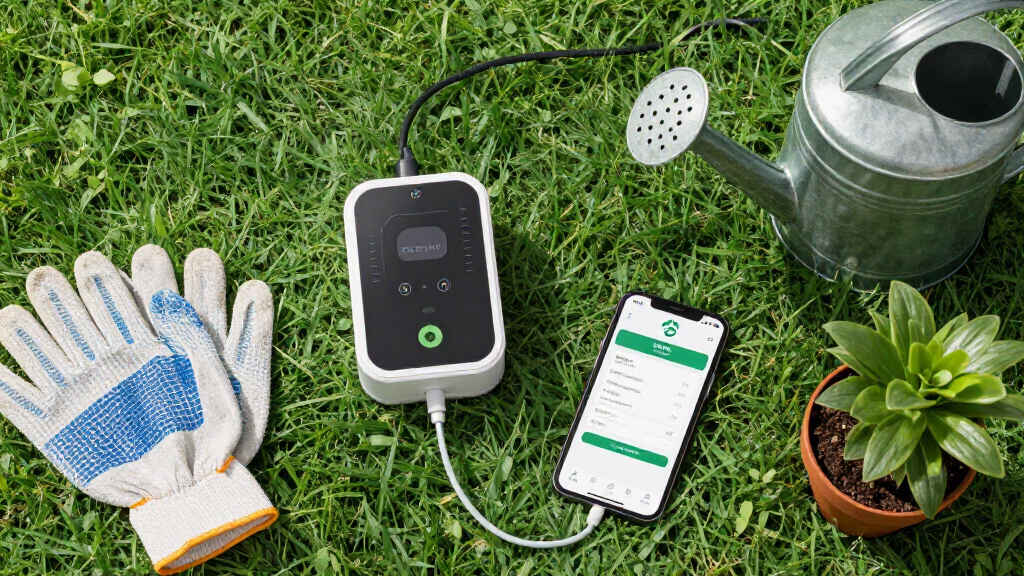
soil nutrient sensors for agriculture
As an affiliate, we earn on qualifying purchases.
As an affiliate, we earn on qualifying purchases.
Rising Interest in Precision Agriculture and Environmental Concerns
Interest in sensor technology for agriculture has surged in recent years, driven by increasing awareness of environmental challenges and the need for sustainable farming solutions. Precision agriculture, which uses data and technology to optimize resource use, is gaining traction across Europe. Prior efforts have focused on GPS-guided machinery and remote sensing, but sensor-based fertilizer management is emerging as a key area of development.
European policymakers and environmental groups have emphasized reducing chemical runoff and greenhouse gases associated with fertilizer overuse. This has spurred research initiatives and funding programs aimed at integrating advanced monitoring tools into standard farming practices. The current focus on sensors reflects a broader trend toward data-driven decision-making in agriculture.
However, these efforts are still in early stages, and it remains to be seen how quickly and effectively the technology can be scaled for widespread use.
Unconfirmed Deployment Timelines and Scalability Challenges
It is not yet clear when sensor-based fertilizer management will be ready for widespread commercial use. The current projects are in pilot phases, and issues such as sensor durability, cost, and integration into diverse farming systems remain unresolved. Experts caution that further validation and testing are needed before large-scale adoption can occur.
Further Research, Validation, and Potential Pilot Expansions
Researchers plan to continue testing sensor systems in different agricultural contexts, aiming to refine technology and demonstrate its benefits at larger scales. Future steps include securing funding for broader pilot programs, addressing technical challenges, and developing user-friendly interfaces for farmers. Regulatory and market acceptance will also influence the pace of adoption.
Key Questions
How do sensors improve fertilizer management?
Sensors measure soil nutrients, moisture, and other factors in real-time, allowing farmers to apply fertilizer more precisely and avoid waste.
What are the main challenges facing sensor-based fertilizer management?
Key challenges include sensor durability in field conditions, high costs, and integrating new technology into existing farming practices.
Will this technology reduce environmental pollution?
Yes, by preventing over-application of fertilizer, sensor technology can help reduce runoff, water pollution, and greenhouse gas emissions.
When might farmers start using this technology widely?
It is uncertain; current projects are in pilot phases, and full-scale deployment depends on further validation and technological refinement.
Are there any regulatory hurdles for deploying sensor-based systems?
Regulatory considerations are still evolving, and acceptance by policymakers and farmers will influence adoption timelines.
Source: rss
Fall yard work Picks
leaf blowers
As an affiliate, we earn on qualifying purchases.