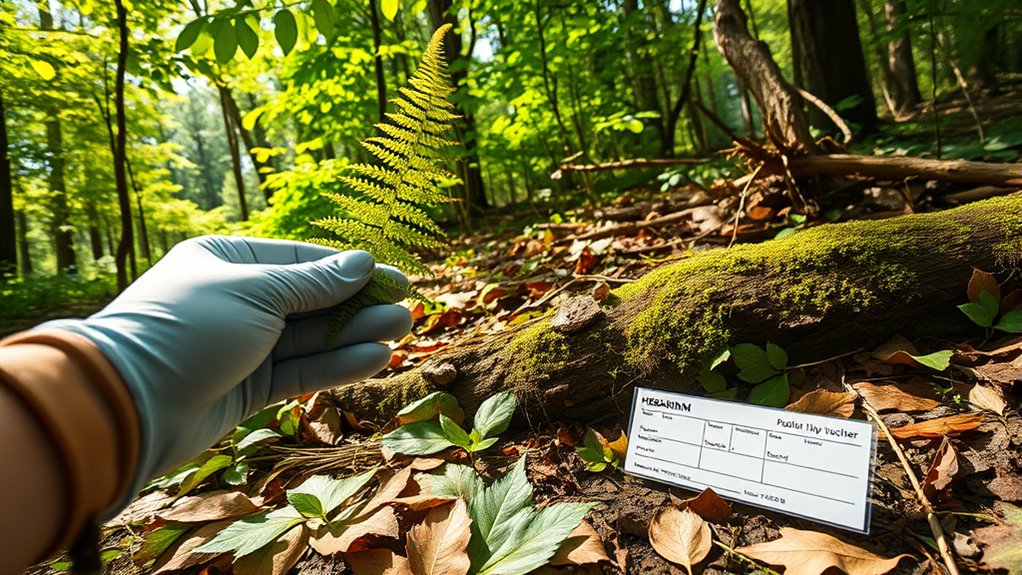

To contribute effectively to citizen science, you should collect herbarium vouchers when the plant is in its reproductive phase, with flowers or fruits fully developed. This timing guarantees accurate identification and minimal harm to the plant. It’s best to consult local experts or recognize seasonal windows for different species. If you keep these practices in mind, you’ll find detailed tips on how to collect sustainably and responsibly as you explore further.
Key Takeaways
- Collect specimens during the plant’s peak reproductive phase for accurate identification.
- Consult local experts and seasonal patterns to determine optimal collection timing.
- Record detailed habitat, GPS, and photographic data to enrich herbarium vouchers.
- Use sustainable methods, collecting only necessary samples and avoiding harm to vulnerable populations.
- Avoid collecting from rare or protected species without proper permissions and adhere to local regulations.
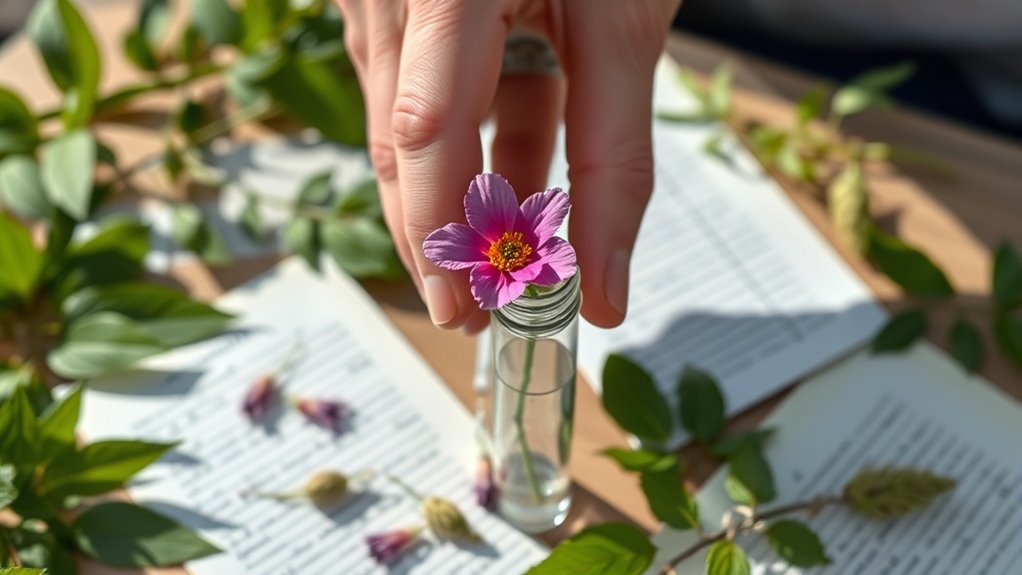
Herbarium vouchers play an essential role in documenting plant diversity, and citizen science has made it easier than ever for enthusiasts to contribute to this critical work. When you decide to collect a plant specimen for herbarium preservation, you’re participating in a movement that empowers individuals to take ownership of nature’s stories. These vouchers serve as tangible evidence of plant species, capturing their unique features and ecological context. By sharing your data, you help create a comprehensive record that benefits scientific research, conservation efforts, and community knowledge. Your contribution fuels data sharing networks, allowing others to access and utilize this information freely, fostering a collective effort to understand and protect plant biodiversity.
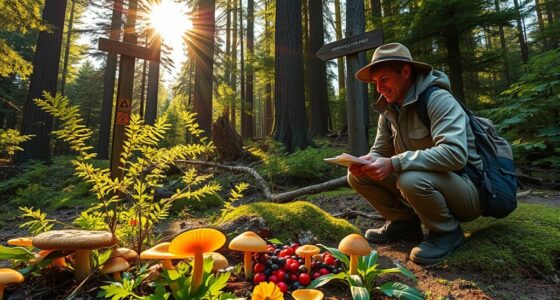
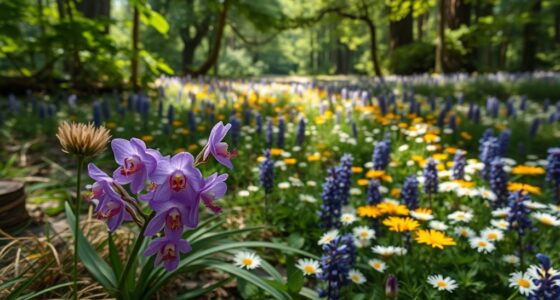
Knowing when to collect is key to effective plant preservation. You should aim to gather specimens during the plant’s peak reproductive phase—when flowers or fruits are fully developed. This guarantees accurate identification and preserves the plant’s most distinguishing features. Collecting at the right time also minimizes harm; avoid harvesting during vulnerable periods or from rare populations unless you have explicit permission. Timing your collection carefully respects the plant’s lifecycle and supports sustainable practices. Additionally, consider the local climate and seasonal patterns—many plants have specific windows of opportunity for collection. If you’re unsure, reaching out to local experts or botanists can guide you on the optimal timing, ensuring your efforts are both impactful and respectful.
Furthermore, understanding the appropriate timing for collection helps ensure the longevity and usefulness of your herbarium voucher. Proper documentation is vital—record detailed habitat information, GPS coordinates, and photographs to enrich the data sharing process. This comprehensive data enhances the value of your herbarium voucher, making it a reliable reference for others. Remember, your goal is to support plant preservation, not to disturb or deplete populations. Collect only what’s necessary, and consider non-destructive methods like taking photographs or collecting small samples when possible.

YiePhiot Herb Drying Rack, Wooden Herb Drying Rack, Wood Pasta Herb Drying Racks, Herb Drying Storage with 2 layer herb drying rack for drying pasta flowers plant specimens and more
Easy installation, flexible space: The cascading design of Herb Drying Rack makes installation a breeze. Simply stack the…
As an affiliate, we earn on qualifying purchases.
As an affiliate, we earn on qualifying purchases.
Frequently Asked Questions
How Do I Properly Store Herbarium Vouchers at Home?
To properly store herbarium vouchers at home, focus on plant preservation and effective storage techniques. Dry your specimens completely using a well-ventilated space, then place them in paper envelopes or herbarium boxes to avoid moisture damage. Keep them in a cool, dry, dark spot to prevent deterioration. Label each voucher clearly, and handle with care to maintain their condition. This way, you guarantee your collection stays intact and ready for future study.
Can Citizen Scientists Contribute to Herbarium Databases Worldwide?
Yes, citizen scientists can definitely contribute to herbarium databases worldwide. Your efforts in plant identification and data sharing help expand global collections, making botanical knowledge more accessible. By submitting high-quality photos and location data, you empower researchers and enthusiasts alike. This active participation breaks down barriers, fostering a community where everyone can help document plant diversity and support conservation efforts across the globe.
What Equipment Is Essential for Collecting Plant Specimens Safely?
You need essential field gear to collect plant specimens safely and confidently. Always carry collecting safety items like gloves, pruning scissors, a field notebook, and a GPS device. A sturdy backpack keeps your gear organized, while protective clothing shields you from irritants. Don’t forget a knife for cutting samples and a plastic bag or envelope for storage. With the right equipment, you can explore freely and gather specimens safely, embracing your passion for discovery.
Are There Legal Restrictions on Collecting Plant Samples in Protected Areas?
You should know that legal restrictions often prohibit collecting plant samples in protected areas to preserve ecosystems. These regulations aim to safeguard native flora and prevent overharvesting. Before you collect, always check local laws, signage, and obtain necessary permits. Respecting protected areas allows you to contribute positively to conservation efforts, ensuring these rich habitats remain vibrant and accessible for future generations. Your responsible actions make a real difference.
How Can I Identify the Right Time to Collect a Plant Specimen?
You can identify the right time to collect a plant specimen by observing plant phenology and seasonal variation. When flowers bloom or fruits ripen, that’s usually the best moment, as it reveals key identification features. Trust your instincts—timing varies with climate and species. By paying attention to natural cycles, you’re free to harvest when the plant’s story is most complete, ensuring your collection is both meaningful and respectful of nature’s rhythm.

Mini GPS Tracker for Vehicles: Tracker Device for Vehicles No Subscription No Monthly Fee Car Tracker Device Hidden Magnetic Real-Time Tracking for Cars Dogs Kids (GF10-09)
Real-Time GPS Tracking: Enjoy precise positioning and real-time location updates directly on your smartphone via our user-friendly app….
As an affiliate, we earn on qualifying purchases.
As an affiliate, we earn on qualifying purchases.
Conclusion
By understanding when to collect herbarium vouchers, you become a guardian of nature’s story, capturing fleeting moments before they slip away like grains of sand. Your careful timing turns you into a steward of biodiversity, ensuring each specimen tells a tale for generations. Embrace this role with enthusiasm, knowing that every well-timed collection adds a vibrant thread to the rich tapestry of our natural world. Together, you and nature weave a legacy that endures beyond the seasons.

Botanical Science Flower Drying Kit
microwaveable flower preserving kit
As an affiliate, we earn on qualifying purchases.
As an affiliate, we earn on qualifying purchases.

BrightRow Wooden Herbarium Press Frame – 13"x18" Plant Press Frame with 2 Buckle Straps Includes Absorbent and Corrugated Papers for Specimens Flower Educational Specimen Display Supplies
Herbarium Clips Frame: you'll receive a herbarium press frame with 2 pieces of nylon straps with buckles for…
As an affiliate, we earn on qualifying purchases.
As an affiliate, we earn on qualifying purchases.