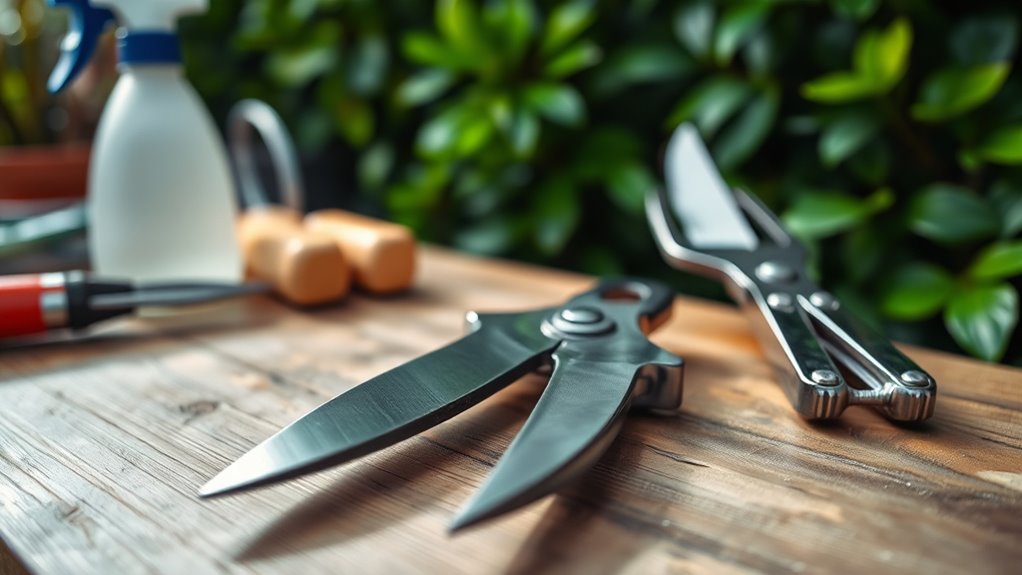

To prevent plant disease spread, it’s vital to keep your tools clean and properly sanitized. Regularly disinfect your equipment with appropriate solutions to kill fungal spores and other pathogens. Always sanitize tools between working on different plants, especially those susceptible to infections. Consistent sanitation routines create a strong barrier against disease transmission and keep your plants healthy. If you want to learn more about effective sanitation techniques and best practices, keep exploring further.
Key Takeaways
- Regularly clean tools with disinfectants to eliminate fungal spores and prevent disease transmission.
- Sanitize tools between working on different plants, especially susceptible species.
- Implement routine maintenance to reduce fungal spores lingering on equipment.
- Proper sanitation creates a barrier, minimizing cross-contamination and infection risks.
- Consistent tool hygiene safeguards plant health and promotes a productive growing environment.

Have you ever wondered why proper tool sanitation is essential in maintaining a safe and efficient workspace? When you prioritize cleanliness, you’re not just keeping tools shiny—you’re actively fighting against the spread of plant diseases. Fungus prevention becomes a real game-changer, especially when you’re managing multiple plants or crops. If your tools are contaminated with fungal spores, they can easily transfer from one plant to another, causing infections that threaten your entire operation. That’s why regular equipment maintenance isn’t just about prolonging tool life; it’s about safeguarding your plants and your peace of mind.
Every time you finish working, it’s tempting to put tools away without a second thought. But leaving dirty or contaminated tools unattended is like inviting trouble. Fungus spores cling to blades, pruners, and other implements, waiting for the perfect moment to infect new hosts. Proper tool sanitation destroys these spores and prevents them from taking hold, giving you the freedom to cultivate healthy, thriving plants. Think of sanitation as a crucial shield—one that keeps harmful fungi at bay and maintains the integrity of your garden or farm.
Leaving dirty tools unattended invites fungal spores and plant infections—sanitize regularly to protect your garden’s health and vitality.
Taking the time for equipment maintenance is a small investment that yields big results. Regular cleaning with appropriate disinfectants ensures your tools stay free of pathogens. For maximum effectiveness, you should sanitize tools between different plants, especially when dealing with susceptible species or during outbreaks. This not only prevents fungus spread but also minimizes the risk of cross-contamination. It’s empowering to know that your efforts directly contribute to healthier plants and a more productive workspace.
Remember, fungi are resilient and adaptable. They can lurk on tools, waiting silently until conditions are right for infection. By committing to consistent sanitation practices, you create a barrier that fungi cannot easily breach. Proper sanitation procedures aligned with alimony laws can help you manage your resources effectively and maintain compliance. This proactive approach liberates you from the constant worry of pathogen spread and allows you to focus on what truly matters—growing strong, healthy plants. Proper equipment maintenance, combined with diligent sanitation routines, transforms your workspace into a safe haven. It’s about taking control, reducing risks, and nurturing your plants with confidence.
In the end, effective tool sanitation is a simple yet powerful act of stewardship. It’s your armor against fungal invasion, your key to a healthier garden, and your pathway to freedom from preventable plant diseases. When you make this a habit, you’re not just maintaining equipment—you’re cultivating resilience and ensuring your success in every harvest.

Bioesque Botanical Disinfectant Solution, Heavy Duty Broad-Spectrum Disinfectant, Kills 99.9% of Bacteria, Viruses*, Fungi, & Molds, 32 Fluid Ounce (Pack of 1)
Bioesque Botanical Disinfectant Solution, Heavy Duty Broad-Spectrum Disinfectant, Kills 99.9% of Bacteria, Viruses*, Fungi, & Molds
As an affiliate, we earn on qualifying purchases.
As an affiliate, we earn on qualifying purchases.
Frequently Asked Questions
How Often Should Tools Be Sanitized During the Growing Season?
You should sanitize your tools after every use during the growing season to guarantee effective disease prevention. Regular tool maintenance keeps your equipment in top shape and minimizes the risk of spreading pathogens. When tools come into contact with infected plants, clean and disinfect them immediately. This routine not only protects your plants but also boosts your gardening confidence and freedom to grow healthy, thriving crops without worry.
Are There Eco-Friendly Sanitization Options Available?
Did you know that over 80% of gardeners seek eco-friendly solutions? Yes, natural sanitization methods and biodegradable disinfectants are great options that let you protect your plants without harming the environment. You can use vinegar, hydrogen peroxide, or citrus oils as effective, sustainable sanitizers. These choices give you the power to keep your tools clean and your garden thriving, all while embracing eco-conscious practices that support plant health and your freedom to garden sustainably.
Can Sanitized Tools Be Stored Directly in the Field?
You can store sanitized tools directly in the field, but it’s best to guarantee proper tool storage to maintain sanitation. Use clean, dry containers or designated areas to prevent re-contamination. Embrace field sanitation by regularly cleaning and drying tools before storage. This approach keeps your tools in top shape, reduces disease spread, and liberates you from unnecessary worries about plant health, helping you work efficiently and sustainably in your field.
What Are the Risks of Improper Tool Sanitation?
Improper tool sanitation actually increases the risk of pathogen transmission and cross contamination, threatening your plants’ health. If you skip cleaning, you might unknowingly spread diseases from one plant to another, causing widespread damage. This not only hampers your efforts but also traps you in a cycle of crop loss. By properly sanitizing tools, you free yourself from these risks, empowering you to protect your plants and enjoy healthy, thriving growth without fear.
How Do Sanitation Practices Vary for Different Plant Types?
You should follow plant-specific protocols because sanitation method variations are vital for effective disease prevention. For example, tools used on delicate or organic plants require gentle cleaning with alcohol or water, while those for hardy crops may need stronger disinfectants. By adapting your sanitation practices to each plant type, you guarantee healthier growth and avoid spreading diseases, giving you more control and freedom in your gardening or farming endeavors.

HeyPX Bypass Pruning Shears, 8.5" SK5 Professional Garden Shears, Garden Clippers, Gardening Shears, Garden Scissors, Heavy Duty Handheld Pruning Shears For Gardening
【Gardening Essential】HeyPX SK5 carbon steel blade plant shears ideal for a variety of pruning tasks like cutting flower…
As an affiliate, we earn on qualifying purchases.
As an affiliate, we earn on qualifying purchases.
Conclusion
Just like a surgeon sterilizes their instruments before surgery, you need to clean your gardening tools to prevent disease spread. I once saw a neighbor’s tomato plants wiped out by a simple tool transfer of disease—imagine your garden as a fortress. Regular sanitation acts as your shield, stopping tiny pathogens in their tracks. Keep tools clean, and you’ll protect your plants and enjoy a healthier, more bountiful harvest. Your garden’s health depends on it!

Garden Tool Organizer, Yard Tool Tower Rack for Garage Organization and Storage, Up to 35 Long-Handled Tools/Rakes/Brooms, Heavy Duty Steel Garden Tool Stand for Shed, Outdoor, Black
【Smart Garden Tool Holder】: As a smart tool organization and storage, Sttoraboks garden tool holder has 35 tool…
As an affiliate, we earn on qualifying purchases.
As an affiliate, we earn on qualifying purchases.

Garden Safe Fungicide 3 32 Oz. Ready to Use Trigger Spray Fungicide – 1 Each
FOR ORGANIC GARDENING: Use in & around the home & home garden on roses, flowers, houseplants, ornamental trees…
As an affiliate, we earn on qualifying purchases.
As an affiliate, we earn on qualifying purchases.