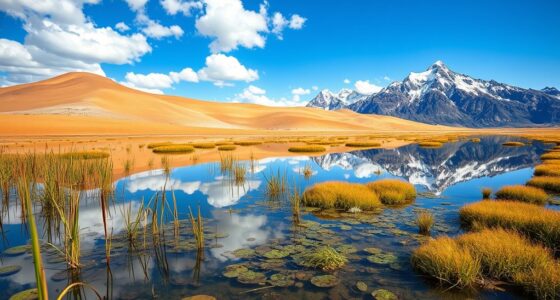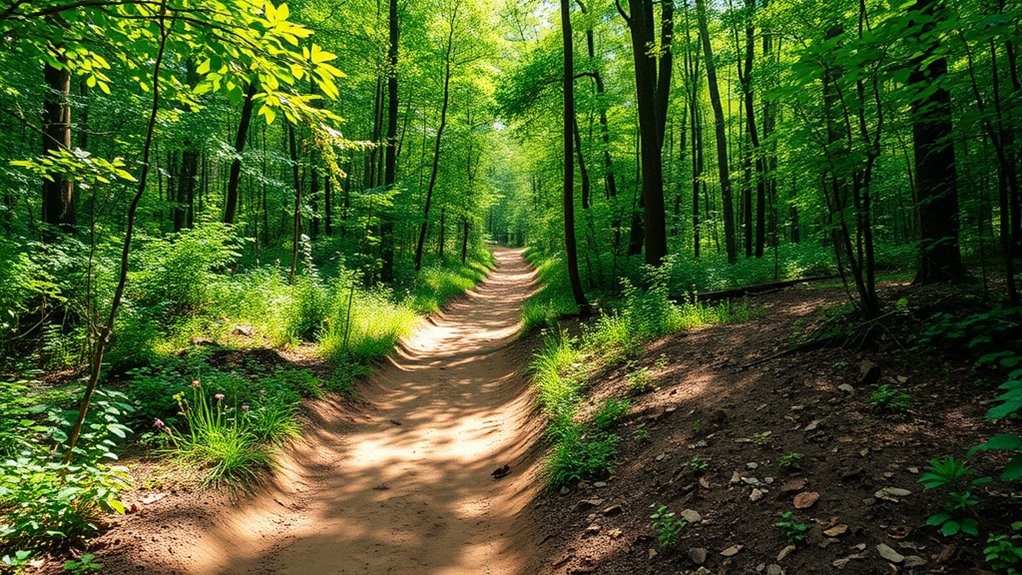
Staying on designated trails helps protect the environment, wildlife, and soil stability. When you go off-trail, you trample vegetation, loosen soil, and cause erosion that damages the landscape. This also disrupts animals’ habitats and can pollute streams with sediment. By sticking to marked paths, you contribute to ecosystem health and guarantee future visitors can enjoy the same natural beauty. Want to learn more about how responsible trail use makes a difference?
Key Takeaways
- Staying on designated trails minimizes environmental damage and preserves fragile ecosystems.
- Going off-trail disrupts wildlife habitats and interferes with animals’ natural routines.
- Off-trail activity accelerates soil erosion, leading to degraded terrain and water pollution.
- Maintaining trails helps protect plant life, prevent erosion, and sustain ecosystem health.
- Responsible trail use supports conservation efforts and ensures natural beauty for future visitors.
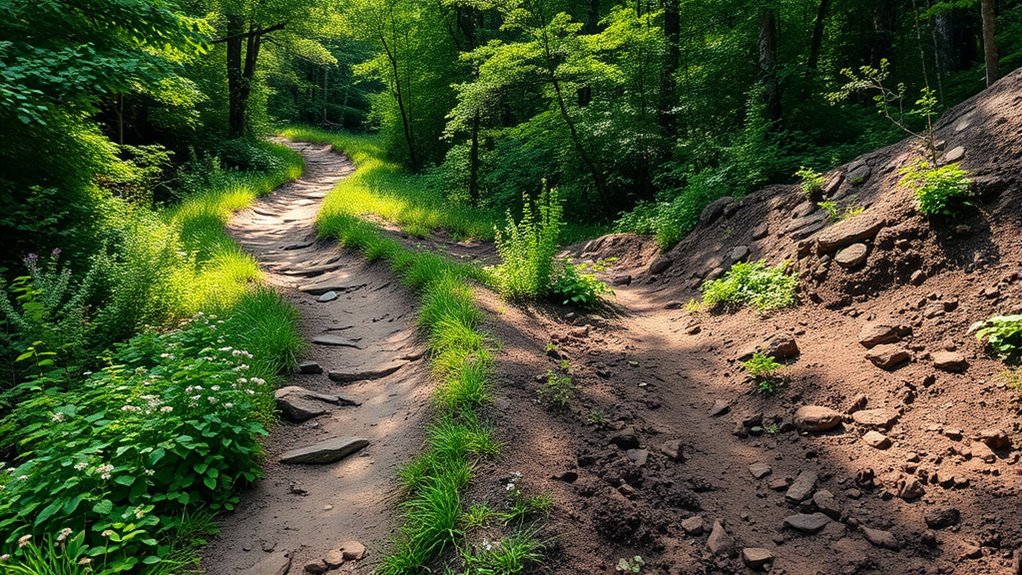
Have you ever wondered how your favorite trails change over time? Every step you take, whether on a well-worn path or off-trail, leaves an imprint on the landscape. When you stay on designated paths, you help protect the environment from unnecessary harm. Off-trail wandering can disturb wildlife, disrupt their natural routines, and cause lasting damage to fragile ecosystems. Wildlife disturbance isn’t just about animals fleeing from you; it can interfere with their feeding, breeding, and sheltering habits. Staying on the trail minimizes this disruption, allowing wildlife to thrive undisturbed and ensuring that future generations can experience the same natural beauty you enjoy today.
Staying on trails protects wildlife and preserves natural beauty for future generations.
Erosion prevention is another critical reason to stick to established paths. When hikers or bikers venture off-trail, they often trample vegetation and loosen soil, which accelerates erosion. Over time, this erosion creates ruts, gullies, and degraded terrain that can be difficult to repair. The more erosion occurs, the less stable the landscape becomes, leading to loss of plant life and increased sediment in streams and rivers. This sediment can harm aquatic life and pollute water sources. By maintaining your course on designated pathways, you help preserve the integrity of the terrain, keeping it resilient against the forces of nature and human activity. Protecting soil stability is essential for maintaining healthy ecosystems and preventing further environmental degradation.
Choosing to stay on the trail is an act of liberation—liberation from causing harm, liberation from contributing to environmental degradation. It’s about recognizing that you’re part of a bigger picture, a essential link in the chain of conservation. When you resist the temptation to veer off course, you actively participate in protecting natural habitats and maintaining the wilderness’s wild essence. You empower yourself to enjoy nature in a way that’s sustainable and respectful, ensuring that the landscapes you love remain vibrant and alive for others to experience.
Every step on the trail, when taken responsibly, becomes a statement of respect for the environment. It’s about balancing your desire for adventure with the responsibility to preserve the land, the plants, and the animals that call it home. Your choices matter—staying on paths helps prevent erosion, reduces wildlife disturbance, and keeps trails accessible and beautiful. Remember, the true freedom lies in enjoying nature without leaving scars behind. By choosing wisely, you help protect the wilderness’s delicate balance, ensuring that its beauty endures for generations to come.
Frequently Asked Questions
How Can Hikers Minimize Their Environmental Footprint?
To minimize your environmental footprint, embrace Leave No Trace principles and practice eco-conscious hiking. Stay on designated paths to protect plant life and wildlife, and avoid going off-trail. Carry out all trash, respect wildlife, and tread lightly. By making mindful choices, you help preserve the wilderness for future explorers. Your conscious actions empower you to enjoy nature freely while leaving a positive impact, ensuring these wild places remain vibrant and free for all.
What Are the Legal Consequences of Off-Trail Hiking?
When you go off-trail, you risk facing legal liabilities and trespassing penalties. Authorities may fine you or even face legal action if you’re caught on private land or protected areas without permission. Breaking these laws can lead to hefty fines and a tarnished reputation. To stay free and enjoy your adventure, stick to designated paths. It’s your best choice for respecting nature’s boundaries and avoiding unnecessary legal trouble.
How Do Trail Impacts Affect Local Wildlife?
When you venture off-trail, you cause wildlife disturbance and habitat fragmentation, disrupting animals’ routines and homes. Your actions can scare off shy species, making it harder for them to find food or breed. Going off-path destroys sensitive vegetation and splits ecosystems apart. Stay on designated trails to protect local wildlife, allowing them to thrive undisturbed. Your mindful choices help preserve nature’s freedom and balance.
Are There Eco-Friendly Alternatives to Traditional Trails?
Yes, there are eco-friendly alternatives like designated sustainable trails that minimize environmental harm. You can also participate in trail restoration projects, helping repair and preserve natural landscapes. These options give you the freedom to explore responsibly, reducing your impact on wildlife and ecosystems. By choosing eco-friendly trails, you embrace a more liberated way of connecting with nature while ensuring its preservation for future adventurers.
What Tools Can Help Stay on Designated Paths?
You can use trail markers and navigation apps to stay on designated paths easily. Trail markers guide you visually, so you feel free to explore without worry, while navigation apps provide real-time directions, giving you a sense of adventure without risking the environment. These tools help you navigate confidently, letting you enjoy your journey while respecting nature’s boundaries and keeping you liberated from the fear of getting lost or damaging sensitive areas.
Conclusion
Staying on designated trails protects our natural landscapes and preserves wildlife habitats. Did you know that off-trail hiking can cause erosion up to 10 times faster than staying on paths? By sticking to the trail, you help minimize environmental damage and make certain these beautiful areas remain for future adventurers. So, next time you explore, remember: your choices make a difference. Keep to the trail, protect nature, and enjoy your hike responsibly.