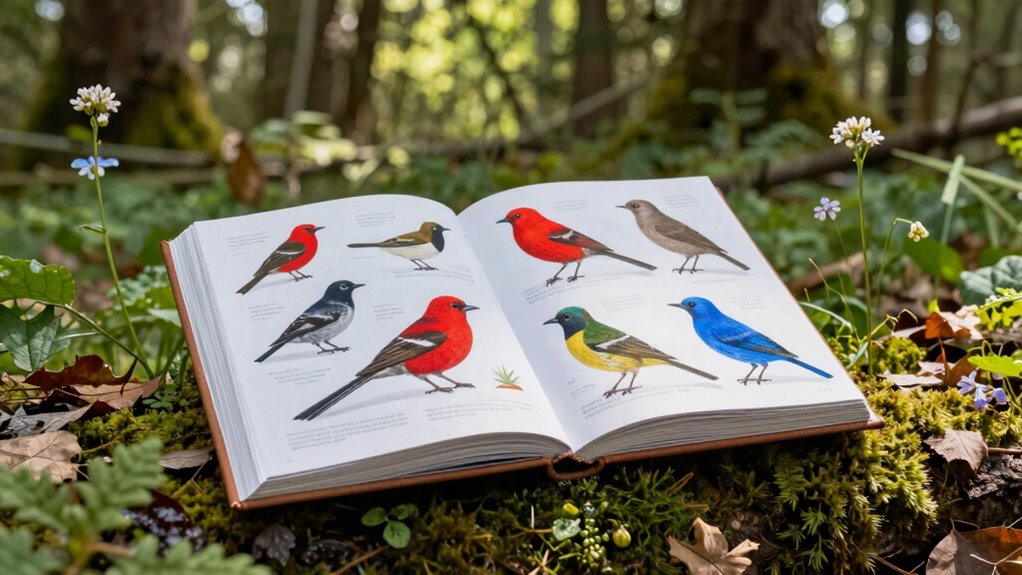
A good field guide beats ten random photos because it offers detailed descriptions, accurate images, and clear distinctions between similar species. It provides context about habitats, behaviors, and vocalizations, helping you make confident, correct identifications. Instead of guessing from confusing or poorly lit pictures, you get reliable info that enhances your understanding. Keep exploring, and you’ll discover how these guides can truly improve your birding skills and overall outdoor experience.
Key Takeaways
- A good field guide offers detailed descriptions and images, ensuring accurate species identification beyond random visual snapshots.
- It provides habitat and behavioral context, helping users focus on likely species in specific environments.
- Field guides include vocalizations and seasonal info, enriching understanding beyond just appearance.
- They develop observation skills and confidence through structured, reliable information.
- Overall, they enhance the outdoor experience by ensuring accurate, comprehensive understanding of bird species.

When it comes to identifying plants and animals, you often face a choice between using detailed field guides or browsing through random photos online. While the internet offers quick access to countless images, a good field guide provides a depth of information that photos alone can’t match. If you’re serious about bird identification, for example, a well-structured field guide helps you understand subtle differences in plumage, size, and markings that are crucial for accurate recognition. Unlike random images, which might show a bird from an odd angle or in poor lighting, a field guide presents clear illustrations or photos alongside detailed descriptions, helping you distinguish between similar species with confidence.
Habitat differentiation is another key aspect where a reliable field guide shines. When you’re out in the field, knowing the typical habitats of various species can dramatically improve your identification accuracy. A good guide not only shows what a bird looks like but also explains where you’re likely to find it. For instance, if you’re in a marshy wetland, a field guide will highlight which species prefer that environment, saving you time and frustration. Random photos, on the other hand, often lack context, making it harder to determine whether a bird you spot belongs to that habitat or not. Without this contextual knowledge, you risk misidentification or overlooking important species. Incorporating habitat information from a guide can greatly enhance your understanding of species behavior and distribution. Additionally, understanding the ecological role of different species can deepen your appreciation and improve identification skills in the field. Recognizing these environmental factors can further refine your ability to identify species accurately under different conditions.
Field guides also serve as valuable educational tools. They often include information on behavior, vocalizations, and seasonal changes, enriching your understanding beyond just appearance. This holistic approach is essential for bird identification, where songs and behaviors can be as telling as looks. Random photos rarely capture these nuances, leaving you with only a visual cue that may be ambiguous or misleading. Recognizing the importance of accurate color representation in distinguishing species, a good guide ensures you’re not misled by lighting or photo quality, which is often a challenge with online images.
Furthermore, a good field guide encourages active engagement with nature. It prompts you to observe details, compare features, and develop a keen eye for differences that might escape casual viewers. This skill is vital for effective bird identification and understanding habitat differentiation. Browsing random photos might make you feel like you’re seeing everything, but it doesn’t foster the same level of learning or attention to detail. Additionally, a high-quality field guide often incorporates correct identification skills, which are essential for developing your expertise. Ultimately, a well-made field guide is a trusted companion that enhances your outdoor experience, making it easier to distinguish species accurately and appreciate the complexity of natural habitats.

The Stokes Field Guide to the Birds of North America
Fantastic field guide for birds found commonly throughout North America
As an affiliate, we earn on qualifying purchases.
As an affiliate, we earn on qualifying purchases.
Frequently Asked Questions
How Do Field Guides Improve Observational Skills?
A good field guide sharpens your observational skills by enhancing visual recognition, helping you identify details you might overlook. It encourages note-taking techniques, allowing you to record specific features and patterns, which deepens your understanding. As you regularly use a field guide, you train your mind to notice subtle differences and similarities, making your observations more accurate and confident, ultimately improving your ability to recognize and interpret nature’s details.
What Makes a Field Guide More Reliable Than Random Photos?
You’ll find a field guide more reliable because it offers 85% species accuracy, ensuring you identify creatures correctly. Unlike random photos, a good guide maintains visual consistency, helping you recognize subtle differences and common features. This structured, curated approach minimizes confusion and mistakes, making it easier to learn and remember species. So, relying on a well-designed field guide enhances your confidence and accuracy in the field.
Can Field Guides Help Identify Rare or Elusive Species?
Yes, field guides can help you identify rare species accurately. They offer detailed descriptions, high-quality illustrations, and key features that improve identification accuracy, even for elusive creatures. With a good guide, you can compare your observations directly and reduce confusion with similar species. While rare species are tricky, a well-designed field guide gives you the tools to recognize subtle differences and confidently confirm your sightings.
How Should One Choose the Best Field Guide for Their Needs?
You should choose a field guide based on its visual design and user reviews. Opt for one with clear, high-quality images and organized layouts that make identification easy. Check reviews to see if others found it accurate and user-friendly. Consider your specific needs—whether you’re a beginner or expert—and select a guide that matches your local region and target species. A well-designed, well-reviewed guide will enhance your nature explorations.
Do Field Guides Include Detailed Habitat and Behavior Information?
Yes, field guides include detailed habitat descriptions and behavior patterns. You’ll find information about where to spot species and how they act in their environment, helping you identify them more accurately. These details are essential for understanding the context of each sighting and improving your skills. With clear habitat descriptions and behavior patterns, a good guide makes it easier to recognize and learn about different species in their natural settings.

The Birds of Costa Rica: A Field Guide (Zona Tropical Publications)
As an affiliate, we earn on qualifying purchases.
As an affiliate, we earn on qualifying purchases.
Conclusion
Sure, a collection of random photos might seem exciting, but a good field guide offers focused knowledge and context that photos alone can’t provide. You might think, “Isn’t a photo enough?” But without expert guidance, you risk misidentifying species or missing subtle details. A quality field guide becomes your trusted companion, turning fleeting glimpses into real understanding. Invest in a good guide—you’ll learn faster, see more, and truly connect with nature’s wonders.

North American Bird Watching for Beginners: Field Notes on 150 Species to Start Your Birding Adventures (Bird Watching Adventures)
As an affiliate, we earn on qualifying purchases.
As an affiliate, we earn on qualifying purchases.

Birds of Florida Field Guide (Bird Identification Guides)
As an affiliate, we earn on qualifying purchases.
As an affiliate, we earn on qualifying purchases.