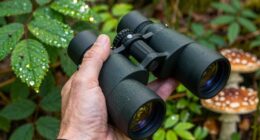

To tackle the poison-lookalike problem, start by carefully examining physical features like leaf shape, color, texture, and growth patterns. Don’t rely on visual cues alone—consider environmental context and use reliable field guides or digital tools. When in doubt, consult laboratory testing to confirm identification and detect contamination. Staying informed about emerging threats and updates helps prevent dangerous mistakes. Keep exploring further to discover detailed steps that keep you safer and more confident.
Key Takeaways
- Observe detailed physical features and environmental context to differentiate between similar-looking plants or substances.
- Use multiple reliable field guides or digital tools to cross-reference visual cues and descriptions.
- Incorporate laboratory testing to confirm identification and detect chemical contamination or toxins.
- Stay updated on emerging poison-lookalikes, new plant varieties, and contamination risks through continuous learning.
- Follow a systematic, step-by-step workflow to minimize errors and ensure accurate, safe identification.

Have you ever mistaken a harmless plant for a deadly one? That moment of confusion can be dangerous, especially when quick judgment is vital. The poison‑lookalike problem isn’t just about mistaken identities; it’s a serious issue that threatens your health and safety. In the world of foraging, botany, or even medicine, accurately identifying plants and substances is essential. Misidentification can lead to ingestion of toxic plants, exposure to contaminated environments, or the misuse of substances that contribute to broader health issues like antibiotic resistance and chemical contamination. Recognizing these risks is the first step toward liberation—freeing yourself from the fear and uncertainty that can come with misidentification.
A step‑by‑step identification workflow becomes your most powerful tool. Start by observing the plant’s physical features—leaf shape, color, texture, and growth patterns. Don’t rely solely on visual cues because many poisonous plants mimic harmless ones. Next, incorporate context: consider the environment where you found the plant, seasonality, and nearby species. This helps narrow down possibilities and reduces the chances of misjudging a lookalike. Use reliable field guides or digital tools that include high-quality images and detailed descriptions. Cross‑referencing multiple sources minimizes errors and clarifies subtle differences that distinguish safe plants from toxic lookalikes.
Laboratory testing can further confirm your identification, especially when dealing with substances that might be chemically contaminated. Chemical contamination can mask a plant’s true nature, making visual identification insufficient. Proper testing detects harmful residues or toxins that could contribute to health issues, including antibiotic resistance. When plants or substances are contaminated with chemicals—pesticides, pollutants, or residues from chemical runoff—these can make toxic lookalikes appear safe, or vice versa. Therefore, laboratory verification becomes a vital step in ensuring your safety and making informed decisions.
Staying updated on the latest knowledge about poison‑lookalikes and contamination risks empowers you to act confidently. Continuous learning about emerging threats, new plant varieties, or contamination sources helps you avoid dangerous mistakes. Remember, your goal is liberation from fear—by mastering this step‑by‑step ID workflow, you reclaim control over your environment. You can confidently differentiate between safe and harmful, reducing the risk of accidental poisoning, exposure to chemical contaminants, or contributing to larger health issues like antibiotic resistance. This process isn’t just about avoiding danger; it’s about gaining the knowledge to live freely and safely, trusting your judgment and understanding of your surroundings.

National Geographic Pocket Guide to Trees and Shrubs of North America
Pocket Guide to Trees and Shrubs of North America
As an affiliate, we earn on qualifying purchases.
As an affiliate, we earn on qualifying purchases.
Frequently Asked Questions
How Common Are Poison‑Lookalike Cases Globally?
Poison‑lookalike cases are surprisingly common worldwide, especially with poisonous plants that mimic edible ones. You face significant identification challenges, making it easy to mistake a harmless plant for a deadly one. This confusion can lead to serious health risks. Staying informed and vigilant can help you avoid these dangers, empowering you to enjoy nature safely and confidently, knowing how to distinguish between safe and poisonous plants.
What Are the Most Frequently Confused Plant Species?
Think of plant taxonomy as a vast jungle where confusion lurks behind every leaf. You often mistake deadly poison ivy for harmless Virginia creeper or think milkweed is a common weed. Visual identification becomes your compass, helping you navigate this botanical maze. By understanding key features, you free yourself from danger, confidently distinguishing these lookalikes and reclaiming your freedom to enjoy nature’s beauty without risk.
How Do Climate Changes Affect Lookalike Patterns?
Climate changes alter lookalike patterns by shifting plant habitats and growth cycles, making molecular analysis vital for accurate identification. As a citizen scientist, you can help by collecting samples and data, contributing to understanding these shifts. This empowers you to challenge traditional limitations, freeing yourself from misidentification fears. Together, you and science can adapt to climate impacts, ensuring safe, confident plant recognition in a changing world.
What Technologies Are Most Effective for ID Workflows?
Imagine you’re verifying identities at a busy airport; biometric verification with mobile scanning becomes your best tool. It’s highly effective because it offers quick, accurate results, reducing fraud and delays. You can rely on facial recognition or fingerprint scans to streamline the process, giving you freedom from outdated methods. Embrace these technologies for efficiency and security, empowering you to manage identities confidently in an increasingly digital world.
How Can Public Awareness Reduce Poisoning Incidents?
You can reduce poisoning incidents by raising public awareness through targeted education campaigns that emphasize toxic plant identification. When you educate people on how to spot dangerous plants and recognize lookalikes, you empower them to avoid harmful contact. Public education campaigns foster a sense of liberation, giving individuals confidence to explore nature safely. Sharing clear, accessible information helps everyone stay informed and vigilant, ultimately decreasing poisoning risks.

Photographic Atlas of Botany & Guide to Plant Identification
Used Book in Good Condition
As an affiliate, we earn on qualifying purchases.
As an affiliate, we earn on qualifying purchases.
Conclusion
By understanding the poison-lookalike problem, you’re steering a minefield of potential hazards hidden behind familiar facades. This step-by-step workflow acts as your guiding compass, helping you distinguish genuine threats from false alarms. Think of it as peeling back layers of an onion—you’ll uncover the core truths beneath the surface. With vigilance and a clear process, you turn a tangled web into a straight path, ensuring your safety isn’t left to chance but backed by solid, structured identification.

Rapitest Soil Test Kit for Gardens, Vegetables, Flowers and Lawns. USA designed and assembled soil tester completely, quickly and accurately measures/analyzes soil pH acidity and garden nutrients.
Quick, at home results for Soil pH, Nitrogen, Phosphorous and Potash Innovative and inexpensive soil test kit features…
As an affiliate, we earn on qualifying purchases.
As an affiliate, we earn on qualifying purchases.
poison lookalike plant identification kit
As an affiliate, we earn on qualifying purchases.
As an affiliate, we earn on qualifying purchases.