When foraging, pack a safety kit with plant identification tools, first aid supplies, signaling devices, multi-tools, and hydration options. Use identification apps or guides to tell safe plants from toxic ones, and carry antiseptic wipes, bandages, and antihistamines for emergencies. A whistle, flashlight, and communication devices help you stay connected and signal for help if needed. Having safety gear and water purification methods guarantees you’re prepared for unexpected situations—continuing will show you how to assemble your perfect kit.
Key Takeaways
- Carry a plant identification app or guide to accurately distinguish edible plants from toxic look-alikes.
- Pack first aid supplies like antiseptic wipes, bandages, and antihistamines to treat injuries and allergic reactions promptly.
- Include signaling devices such as a whistle, flashlight, and a charged cell phone to call for help if needed.
- Bring multi-tools and safety gear like gloves and scissors for handling plants safely and managing emergencies.
- Ensure hydration and nutrition with water purification methods and high-energy snacks to maintain safety and stamina.
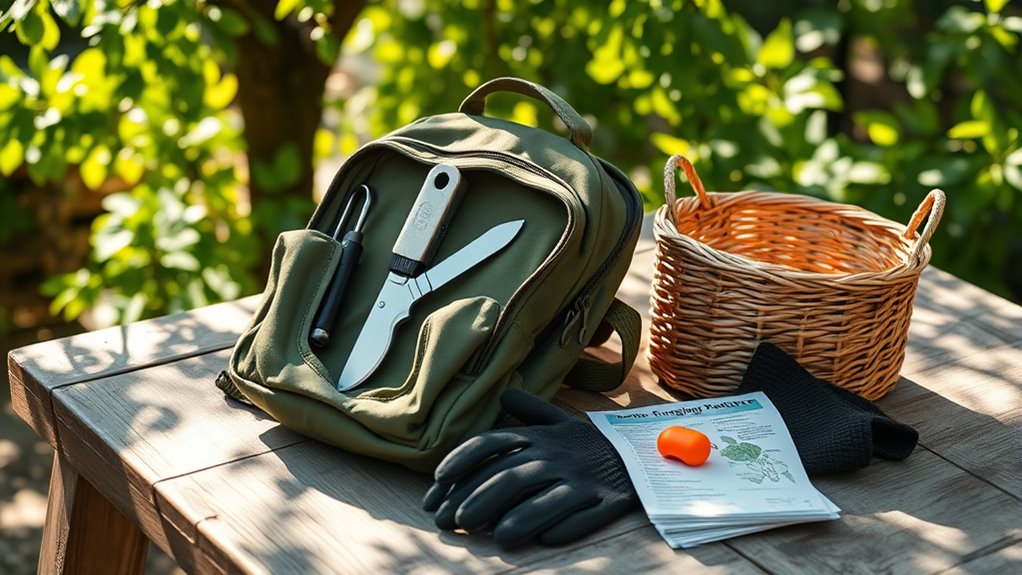
When you venture into the wild to forage for edible plants, having a well-prepared safety kit can make all the difference. It’s about taking control of your foraging experience, ensuring that every step is grounded in safety and confidence. A key part of that is knowing how to correctly identify plants—plant identification is your first line of defense. Misidentifying a plant can turn a rewarding hunt into a dangerous mistake, so carry a reliable field guide or a plant identification app. Practice recognizing key features like leaf shapes, flower structures, and growth patterns. The more familiar you are with safe, edible plants, the more liberated you feel exploring wild areas without fear. But plant knowledge isn’t enough; your kit should also prepare you for emergencies. That’s where emergency preparedness comes into play. Pack essentials like a compact first aid kit, including antiseptic wipes, bandages, tweezers, and antihistamines to handle cuts, stings, or allergic reactions swiftly. A whistle can be a lifesaver if you get lost or need to signal for help, giving you a clear way to attract attention without exhausting yourself. For added safety, include a multi-tool with a knife, scissors, and screwdrivers for improvising solutions on the spot. Lighting is critical, so bring a small flashlight or headlamp, especially if your foraging extends into dusk. Carry a means of communication—your cell phone with a portable charger is ideal, but consider a satellite phone or personal locator beacon if you venture far from coverage. Water purification tablets or a compact filtration device ensure you stay hydrated safely, and a few high-energy snacks keep your strength up. When it comes to emergency preparedness, it’s vital to have a plan, but your kit acts as the backbone that supports it. Incorporating reliable plant identification tools into your safety kit can greatly reduce the risk of misidentification and enhance your confidence. Whether you’re faced with a minor injury or an unexpected turn of events, your kit empowers you to handle situations promptly and effectively. Remember, the goal isn’t just to gather wild plants but to do so with the confidence that you’re prepared for whatever might come your way. With the right plant identification tools and emergency supplies, you’re free to explore the wilderness on your terms, embracing your independence and connection to nature without hesitation. This approach transforms foraging from a risky endeavor into a liberating adventure, where safety is integrated seamlessly into your pursuit of wild food.
Frequently Asked Questions
How Do I Choose the Right Knife for Foraging?
Choose a knife with a sharp, durable blade that makes cutting effortless, so you feel free to move quickly and confidently. Opt for handle ergonomics that fit comfortably in your hand, giving you control without fatigue. A versatile, lightweight knife lets you adapt to different foraging needs and keeps your spirit of adventure alive. Trust your instincts, and select one that inspires you to explore freely and safely.
What Are the Best Ways to Carry My Safety Kit?
You should carry your safety kit with versatile carrying methods like a belt pouch or a small backpack that keeps everything accessible. Organize your kit by purpose—first aid, tools, navigation—so you can quickly find what you need. Keep it close, secure, and lightweight, so you feel free to move without restrictions. Proper kit organization and smart carrying methods empower your foraging adventures, giving you confidence and peace of mind.
How Often Should I Update My Foraging Safety Kit?
You should update your foraging safety kit seasonally and with regular kit maintenance. Each season, check for expired items, worn tools, and new safety essentials tailored to changing conditions. Regularly inspect your kit before each outing to confirm everything works and is complete. This keeps you prepared, confident, and free to explore nature’s bounty without worry, knowing your safety kit is always ready for the adventure ahead.
Are There Specific First Aid Supplies for Allergic Reactions?
Yes, include allergy treatment supplies like antihistamines and an epinephrine auto-injector in your kit. These emergency medications can quickly counteract severe allergic reactions, giving you control and confidence during your foraging adventures. Make sure you’re familiar with how to use them properly, so when an allergic reaction occurs, you’re prepared to act swiftly and stay liberated from fear. Your safety depends on having the right supplies at hand.
What Are Common Mistakes to Avoid When Assembling a Safety Kit?
Imagine your safety kit as a fortress; avoid improper packaging that leaves essentials exposed like fragile glass in a storm. Never overlook items crucial for survival, like a compass or first aid supplies, which are your guiding stars. Don’t rely solely on memory—organize thoughtfully to guarantee quick access. By avoiding these mistakes, you empower yourself with the freedom to explore confidently, knowing you’re prepared for any challenge that comes your way.
Conclusion
Bringing a well-stocked foraging safety kit is like carrying a lifeline in the wild—it keeps you prepared for surprises and guarantees you can navigate the outdoors confidently. With the right tools at your fingertips, you become the captain of your own adventure, steering clear of danger and embracing nature’s bounty safely. Remember, preparedness is the anchor that keeps your foraging journey steady and secure, turning potential risks into opportunities for discovery.