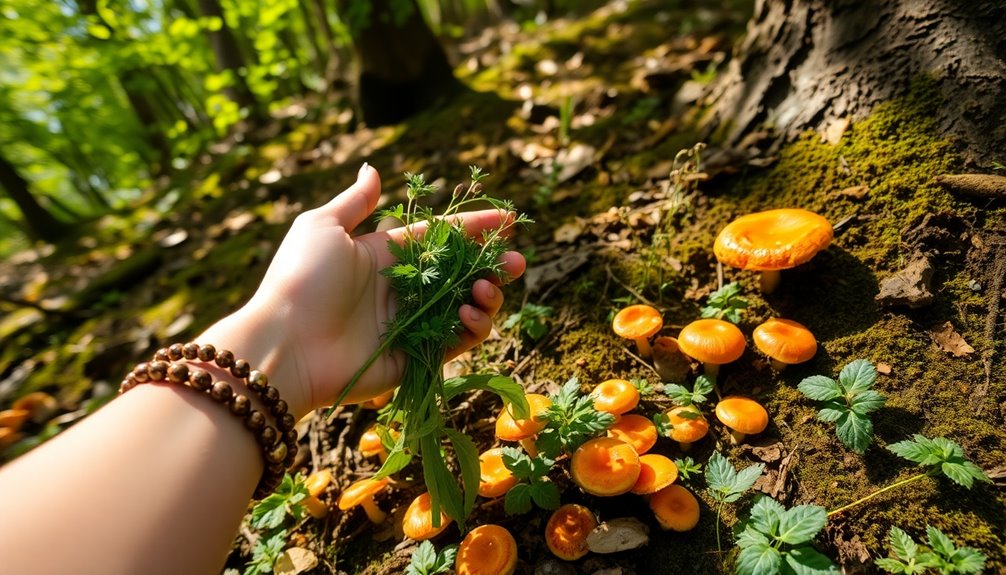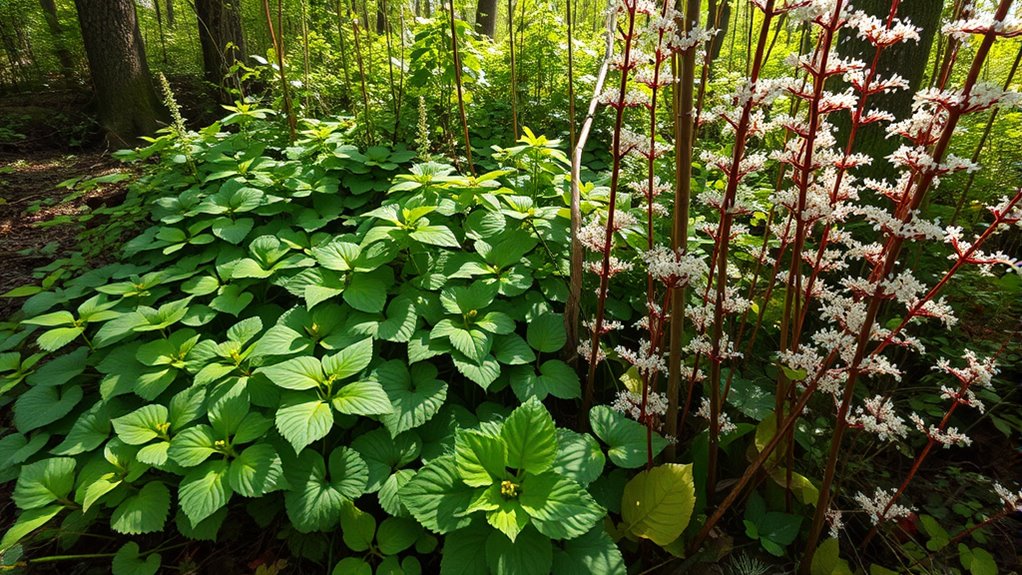

When you spot garlic mustard, look for its small, garlic-scented leaves in early spring and tall flower stalks with white, mustard-like flowers. For knotweed, recognize its bamboo-like stems and broad, pointed leaves that zigzag, with dense white flower clusters in late summer. Spotting these invasive plants early is vital, as their rapid spread can outcompete native species and disrupt ecosystems. Keep exploring to learn how to identify and control these invasive threats effectively.
Key Takeaways
- Garlic mustard is a woody biennial with garlic-scented jagged leaves forming a rosette early spring.
- Knotweed is a tall, bamboo-like perennial with hollow stems and dense white flower clusters late summer.
- Both invasive species outcompete native plants by rapidly growing and forming monocultures, reducing biodiversity.
- Early detection of garlic mustard and knotweed is vital for effective removal and ecosystem protection.
- Recognizing these plants supports awareness and actions to prevent their spread and preserve native ecosystems.

Have you ever wondered how to quickly identify invasive plants in the wild? Recognizing them early is your first step toward freeing local ecosystems from their grasp. Two of the most notorious invaders are garlic mustard and knotweed. These plants spread rapidly, disrupting native plant competition and causing significant ecosystem impact. Understanding their key features helps you spot them fast and take action to protect the natural balance.
Learn to identify invasive garlic mustard and knotweed early to protect native ecosystems.
Garlic mustard is a woody biennial that often appears as a small rosette of jagged, garlic-scented leaves at ground level in early spring. As it matures, it sends up tall, leafless flower stalks with clusters of tiny white flowers resembling wild mustard. Its garlic smell is a dead giveaway, especially when you crush the leaves. Garlic mustard’s aggressive growth smothers native seedlings, outcompeting them for sunlight, nutrients, and space. This invasion diminishes native plant diversity, making it harder for pollinators and wildlife to thrive. Its ability to produce abundant seeds that disperse easily amplifies its spread, further undermining native plant competition. High seed production is a key factor in its rapid dissemination.
Knotweed, especially Japanese knotweed, is a tall, bamboo-like perennial with hollow stems that can reach six feet or more. Its leaves are broad, pointed, and resemble those of a bamboo or lilac, with a zigzag pattern on the stems. In late summer, it produces dense clusters of tiny white flowers. One of its most striking features is its invasive root system, which can crack concrete and invade foundations. Knotweed’s rapid growth smothers native vegetation, creating monocultures that severely impact the ecosystem. Its thick stems and dense foliage block sunlight, preventing native plants from establishing. Over time, knotweed’s dominance reduces native plant competition and alters the habitat, making it less hospitable for native animals and insects.
Both garlic mustard and knotweed are invasive threats that demand vigilance. Their presence signals a shift in the ecosystem, where native plants struggle to survive. By learning to identify these invaders early, you empower yourself to act—whether through removal, control, or simply spreading awareness. Every effort you make helps restore native plant competition, which is essential for maintaining the health and resilience of your local environment. These invasive plants are not just a nuisance—they’re a threat to the ecosystem impact that sustains biodiversity and ecological balance. Recognize their signs, understand their effects, and become an advocate for the native plants that deserve to reclaim their rightful place in the wild. Your awareness and action can make all the difference in liberating ecosystems from invasive dominance.
Frequently Asked Questions
How Can I Distinguish Garlic Mustard From Native Plants?
To distinguish garlic mustard from native plants, look for its jagged, triangular-shaped leaves with scalloped edges, and tall, slender stems with tiny white flowers in clusters. Native plant comparison shows different leaf shapes and flower structures. Focus on garlic mustard’s distinctive smell when crushed—peppery and garlic-like. Recognizing these features helps you identify and control invasive plants, empowering you to protect native ecosystems and take active steps toward liberation from invasive species.
Are Knotweed Species Edible or Safe to Consume?
Knotweed species are generally considered safe to consume, but edibility concerns vary among types. Japanese knotweed, for instance, is edible and prized for its tart, rhubarb-like flavor, making it great for culinary uses like jams and desserts. However, always guarantee proper identification and source to avoid contamination. Using knotweed in your cooking can liberate you from traditional ingredients, offering a fresh, invasive option to incorporate into your diet.
What Are the Best Methods for Eradicating Invasive Garlic Mustard?
You should hand-pull garlic mustard before it seeds, ensuring you remove all roots. Avoid composting invasive species like garlic mustard, as it can spread further. Instead, focus on native plant competition by planting natives to outcompete garlic mustard. Regularly monitor your area and remove new seedlings promptly. This proactive approach helps you liberate your landscape from garlic mustard’s grip and promotes a healthier, native-rich environment.
How Quickly Do Invasive Knotweed Populations Spread?
You’ll notice knotweed’s subtle yet relentless spread rate, as it quietly encroaches upon native lands with impressive growth speed. Its expansion can be surprisingly swift, sometimes covering several feet in a single season. This rapid growth allows it to outcompete local plants, making early intervention essential. To truly liberate your landscape, act quickly before knotweed’s steady march becomes overwhelming, and remember, patience and persistence are your allies in this fight.
Can Invasive Plants Like Garlic Mustard Affect Local Wildlife?
Invasive plants like garlic mustard can markedly impact local wildlife by disrupting ecosystems and reducing native plant diversity. You might notice fewer food sources for insects and animals, which affects the entire food chain. These plants outcompete native species, causing ecosystem disruption and threatening the health of local habitats. By controlling invasives, you help preserve native wildlife, ensuring they thrive in a balanced, thriving environment.
Conclusion
By learning to identify garlic mustard and knotweed early, you’re like a detective catching trouble before it spreads. Spotting these invaders is your first line of defense, helping to protect native plants and keep ecosystems healthy. With each identification, you’re planting seeds of awareness and action that grow stronger over time. Remember, you’re the frontline hero in this battle—don’t let invasive plants sneak past your watchful eye and take over the landscape.