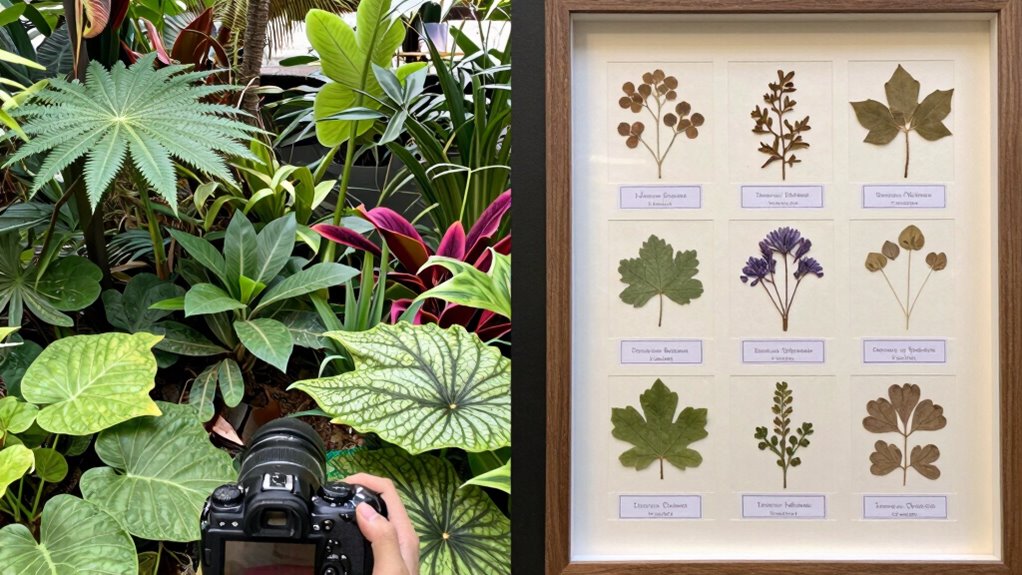

Learning plants means actively observing their features, understanding their growth, and recognizing their ecological roles. You develop skills to distinguish species by noticing subtle traits like leaf shapes or flower structures. Memorizing plants, however, only helps you recall their names without insight into their significance or care needs. If you want to deepen your connection and truly understand what makes each plant unique, keep exploring the differences and what they reveal.

Get garden gear delivered free — and shop member deals
- Fast, free delivery on millions of items
- Access to Prime Big Deal Days deals on October 6–7
- Prime Video, Amazon Music and more included
Key Takeaways
- Learning plants involves understanding their growth, functions, and ecological roles, while memorizing focuses on recalling names without deeper insight.
- Active learning develops observation skills and the ability to distinguish subtle plant differences, unlike rote memorization.
- Learning enhances practical knowledge for plant care, conservation, and uses, whereas memorization offers only surface-level recognition.
- Memorizing limits recognition to specific features and fails in identifying plants in different conditions or seasons.
- Genuine learning fosters curiosity, critical thinking, and a meaningful connection with nature, unlike simple memorization.

Understanding the difference between learning about plants and simply memorizing their names is essential if you want to truly appreciate their roles in nature. When you focus on plant identification, you go beyond just recalling the Latin or common names; you develop a deeper botanical understanding that allows you to recognize how plants grow, what conditions they prefer, and how they interact with their environment. Memorization might help you identify a plant on a flashcard, but it doesn’t give you the insight needed to understand its ecological significance or how to care for it properly. Learning about plants involves observing their features—leaf shapes, flower structures, bark textures—and understanding why these traits matter.
Deepening your plant knowledge reveals their ecological roles and enhances your connection to nature beyond simple name recall.
Plant identification is a skill that requires active engagement. Instead of just repeating names, you learn to notice subtle differences between similar species. For example, you might notice that a particular flower’s petals are slightly different in shape or that a leaf has a unique pattern of veins. This form of botanical understanding makes you more confident in identifying plants in the field. It also helps you understand their life cycles, their roles in local ecosystems, and their uses in traditional medicine or gardening. When you truly learn about plants, you connect with them on a level that’s both practical and educational. Additionally, understanding the specific traits of plants can help you better grasp their adaptations and ecological niches.
Memorizing plant names might seem sufficient at first, especially if you’re just starting out. However, it quickly becomes limiting. Without a botanical understanding, you might struggle to distinguish between plants that look similar or to recognize new species you’ve never seen before. Learning about plants expands your knowledge base, enabling you to identify plants even when they’re not in bloom or when they exhibit unusual features. It encourages curiosity, prompting you to explore how different environmental factors influence plant growth and how various species adapt to their surroundings.
Ultimately, the key difference lies in the depth of your engagement. Memorization involves rote learning, while botanical understanding involves active observation, critical thinking, and contextual knowledge. When you invest in learning about plants, you gain more than just names—you gain the ability to read the stories written in their structures and behaviors. This approach not only makes plant identification more accurate but also transforms your appreciation of nature from superficial recognition to meaningful understanding. It’s this botanical insight that turns casual interest into passionate learning, enriching your relationship with the natural world. Developing a comprehensive botanical understanding enhances your ability to see beyond surface features and truly appreciate the complexity of plant life.
botanical field guide for plant identification
As an affiliate, we earn on qualifying purchases.
As an affiliate, we earn on qualifying purchases.
Frequently Asked Questions
How Does Understanding Plant Biology Benefit Gardening Skills?
Understanding plant biology helps you improve your gardening skills by giving you insights into plant physiology and soil nutrition. You’ll learn how plants grow, absorb nutrients, and respond to their environment. This knowledge allows you to choose the right soil, watering schedule, and care techniques, resulting in healthier plants. Instead of rote memorization, you develop a deeper connection with your garden, leading to more successful and sustainable gardening practices.
What Are Common Misconceptions About Plant Memorization Techniques?
Did you know that nearly 60% of students rely solely on rote memorization? Many believe that memorizing plant names or facts is enough, but it’s a misconception. Rote memorization often leads to short-term recall, while visual learning helps you understand plant structures and functions deeply. You shouldn’t think memorizing is the same as learning; true understanding comes when you connect facts to real-world context.
Can Memorizing Plants Improve Long-Term Plant Care Knowledge?
Memorizing plants can boost your memory retention, making it easier to recall specific details about different species. Using effective study techniques like repetition and flashcards helps reinforce your knowledge over time. While memorization aids in quick recall, combining it with understanding plant care principles leads to long-term plant care knowledge. This balanced approach guarantees you not only remember plant info but also apply it effectively in caring for your plants.
How Do Different Learning Methods Impact Plant Identification Accuracy?
Different learning methods markedly impact your plant identification accuracy. Visual learning helps you recognize plants through images and detailed features, making it easier to recall key traits. Hands-on experience allows you to interact directly with plants, reinforcing your understanding of their unique characteristics. Combining both methods enhances your ability to identify plants confidently and accurately, as you develop a more thorough knowledge that sticks longer compared to just memorizing facts.
Are There Age-Specific Strategies for Learning About Plants Effectively?
Yes, age-specific learning strategies help you learn about plants more effectively. For younger learners, engaging activities like hands-on exploration and visual aids make learning fun and memorable. Older learners benefit from detailed reading, diagrams, and field identification practices. Tailoring your approach based on your age guarantees you stay motivated, retain more information, and develop a deeper understanding of plants. Adjusting strategies keeps your learning engaging and suited to your developmental stage.
Conclusion
Think of learning plants like tending a garden—you understand each one’s story, growth, and needs. Memorizing, on the other hand, is like planting a row of identical flowers without knowing their names or purpose. When you truly learn, you cultivate a connection that blooms into passion and insight. So, don’t settle for just planting seeds in your mind; nurture your garden of knowledge, and watch your understanding flourish into something beautiful and lasting.
Fall yard work Picks
leaf blowers
As an affiliate, we earn on qualifying purchases.