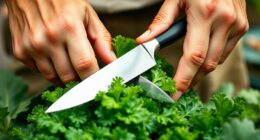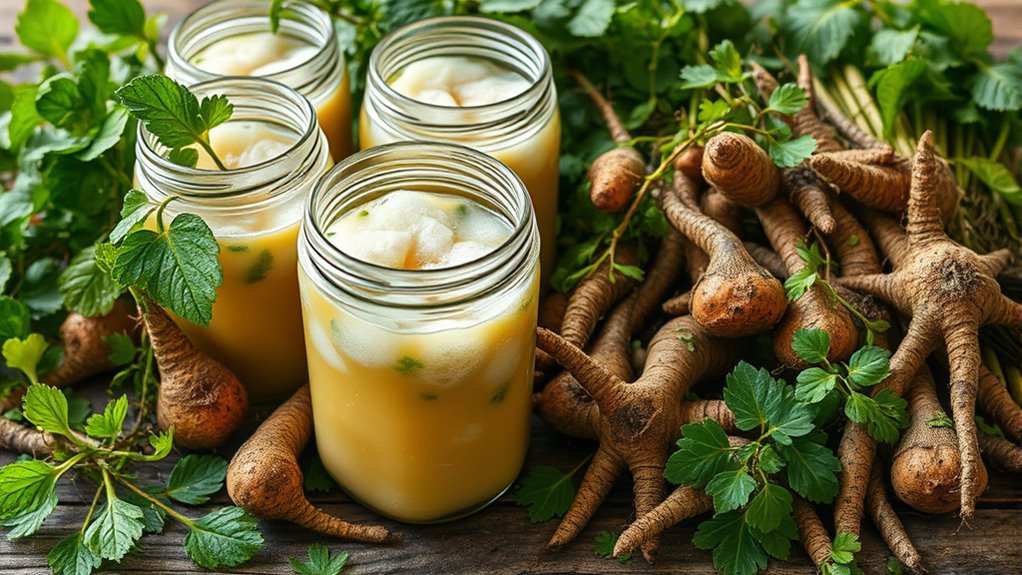

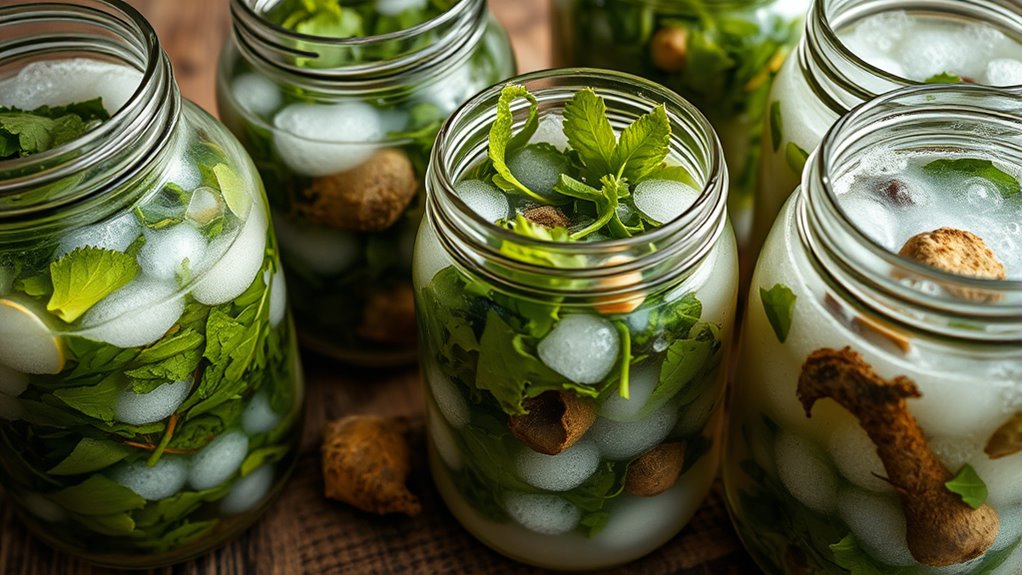
To ferment wild greens and roots, start by chopping or shredding your ingredients and salting them generously to draw out moisture. Massage or pound them to release juice, then pack everything tightly into a jar, ensuring they stay submerged under their liquid. Use a fermentation lid or cloth to keep out air and allow beneficial microbes to do their work. If you keep experimenting, you’ll uncover how to craft flavorful, probiotic-rich foods tailored to your taste.
Key Takeaways
- Clean, fresh wild greens and roots should be thoroughly washed before fermentation to remove dirt and microbes.
- Salt is essential to create an environment that inhibits unwanted bacteria and promotes probiotic fermentation.
- Shred or chop greens and roots to increase surface area, aiding in juice release and fermentation efficiency.
- Submerge vegetables completely in a salty brine or packed tightly in a fermentation vessel to prevent mold and spoilage.
- Ferment at room temperature away from direct sunlight, tasting periodically to achieve desired flavor and probiotic activity.
Have you ever wondered how foods like yogurt, sauerkraut, or kimchi develop their unique flavors? It’s all about fermentation—a natural, empowering process that transforms simple ingredients into vibrant, nourishing foods. When you immerse yourself in fermentation, you unlock a world where you control what goes into your food, breaking free from corporate processed options. Whether you’re interested in kombucha brewing or perfecting sauerkraut techniques, understanding the basics puts you in the driver’s seat of your food’s destiny.
Kombucha brewing is a prime example of fermentation that offers both health benefits and a creative outlet. You start with sweetened tea, which acts as the foundation. Adding a SCOBY—a symbiotic culture of bacteria and yeast—kicks off the fermentation process. As the SCOBY consumes the sugar, it produces beneficial acids, carbonation, and a tangy flavor that’s uniquely yours. The key is patience and attention: keeping your brewing vessel in a warm, dark spot, tasting regularly, and adjusting the flavor to suit your taste buds. This process isn’t about following rigid rules but about tuning in to what your kombucha wants to become. It’s liberation from artificial sodas, a step toward reclaiming your health and flavor freedom.
Start with sweet tea and a SCOBY to craft your own flavorful, health-boosting kombucha at home.
Sauerkraut techniques, on the other hand, are rooted in simple, accessible steps that empower you to preserve cabbage and other vegetables naturally. You shred your greens, salt them liberally, and massage until they release their juices. The salt not only enhances flavor but also creates an environment hostile to unwanted microbes while encouraging beneficial lactic acid bacteria to flourish. By pressing your mixture into a jar and ensuring it stays submerged, you invite fermentation to take over. The process is straightforward, but it transforms humble vegetables into a probiotic powerhouse. You’re in control, shaping the flavor profile through fermentation time and ingredients, rejecting the need for store-bought preservatives or additives.
Both kombucha brewing and sauerkraut techniques exemplify how fermentation grants you independence over your food. It’s about trusting nature’s process and your intuition. As you experiment, you discover that fermentation isn’t just about preservation; it’s about reclaiming your relationship with food, making it more vibrant, nourishing, and aligned with your desire for health and freedom. So, take charge, get your hands dirty, and let fermentation be your act of culinary rebellion—turning simple greens and roots into living foods that serve your body and spirit.
Frequently Asked Questions
Can I Ferment Wild Greens With Fruits?
Absolutely, you can ferment wild greens with fruits. Fruit pairing adds natural sweetness and complexity, elevating your fermentation. Just choose hearty wild greens and fresh fruits, then pack them into fermentation containers, ensuring they’re submerged and protected from air. This liberates your taste buds, blending wild flavors with fruity brightness. Experiment confidently—fermentation is about expression, so follow your intuition and enjoy the vibrant, nourishing results.
How Long Do Fermented Wild Roots Last?
Your fermented wild roots can last several months if stored properly. Focus on good storage methods—keep them in airtight jars in a cool, dark place or in the fridge to extend shelf life. Always check for signs of spoilage, like mold or off smells, to guarantee freshness. Proper storage keeps your wild fermented roots vibrant and ready to energize your culinary adventures for as long as possible.
Is Fermentation Safe for All Wild Greens?
Wild greens can be wonderful, but not all are safe for fermentation. You should conduct a thorough toxicity assessment before fermenting them to avoid dangerous toxins. While fermentation can be freeing and flavorful, it’s vital to guarantee safety first. If you’re unsure about a wild green’s safety, research or consult experts. Remember, careful caution creates confident, creative culinary adventures, transforming wild greens into healthy, hearty, and harmonious homemade ferments.
Do I Need Special Equipment for Fermentation?
You don’t need fancy equipment for fermentation, but proper sterilization helps prevent unwanted bacteria. Just make sure to sterilize your jars and utensils before starting. You’ll also want to control fermentation temperature; keep it steady to ensure successful fermentation. A simple glass jar with an airlock or cloth cover works perfectly. This way, you stay in control, liberate your wild greens, and create delicious, safe ferments every time.
Can I Ferment Wild Greens Without Salt?
Yes, you can ferment wild greens without salt, but it’s important to prioritize fermentation safety. Salt helps control bad bacteria and fosters good bacteria, ensuring safe fermentation and flavorful results. Without salt, your greens might develop unpredictable flavor variations or spoilage risks. If you choose to skip salt, consider using other ferment-safe methods like brine alternatives or controlling temperature carefully to protect your greens and enjoy their wild, liberated flavors.
Conclusion
Now that you know the fermentation basics, you’re equipped to turn wild greens and roots into delicious, probiotic-rich treasures. Just imagine, your kitchen transforming into a fermenting powerhouse, producing flavors so vibrant they could make a rainbow jealous! With a little patience and practice, you’ll master the art of fermentation, revealing nature’s hidden magic. So go ahead—dive in and let your wild ingredients shine. Your taste buds and gut will thank you for this epic culinary adventure!