To guarantee safe and efficient plant harvesting, always use sharp, well-maintained knives with comfortable grips, and handle tools carefully to avoid slips. Keep fingers away from the cutting edge, make controlled cuts with a steady hand, and position your body for balance. Properly honing and cleaning your blades prevents damage and injury. Mindful technique and regular maintenance make harvesting smoother and safer. If you keep these tips in mind, you’ll master a safer, more effective approach to harvesting.
Key Takeaways
- Always keep knives sharp and well-maintained to ensure safe, clean cuts and prevent slips during harvesting.
- Use proper technique with a stable stance, controlled motions, and fingers tucked away to avoid injuries.
- Choose knives with comfortable grips and inspect tools regularly for damage before use.
- Handle plants carefully, supporting with your non-dominant hand and making deliberate, confident cuts.
- Clean and sharpen knives immediately after use to maintain safety, efficiency, and prolong tool lifespan.
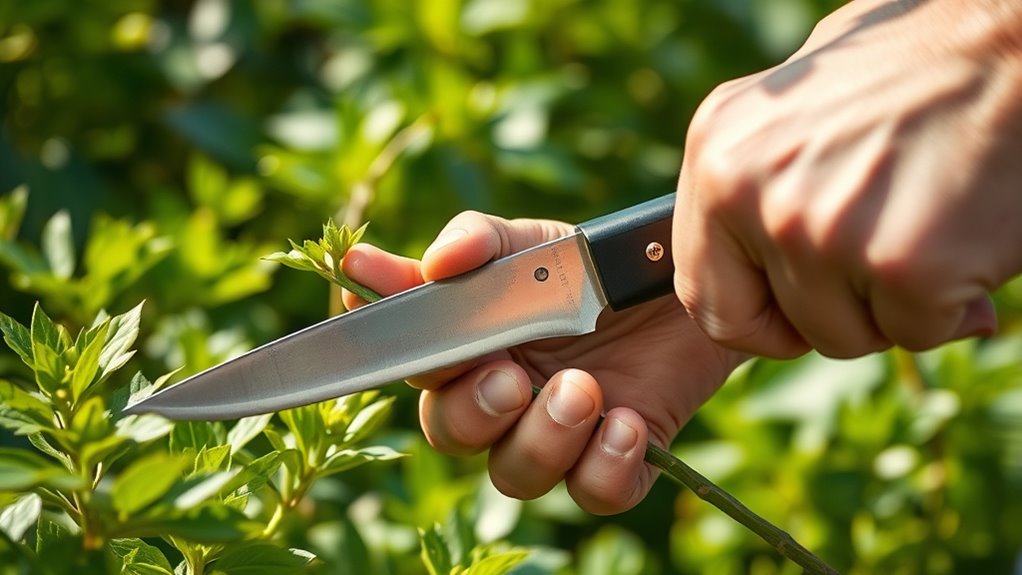
When harvesting plants, using a sharp and well-maintained knife is essential for safety and efficiency. A dull blade requires more force, increasing the risk of slips and injuries. Regular knife upkeep keeps your harvesting tools in top condition, ensuring clean cuts and reducing damage to your plants. To maintain your knife, clean it immediately after use to prevent sap and debris buildup, which can dull the edge or cause corrosion. Sharpen it regularly with a whetstone or sharpening tool, paying attention to the bevel angle to preserve the blade’s integrity. A properly honed knife not only makes your work smoother but also extends its lifespan, giving you greater control and confidence during harvesting. Additionally, understanding the importance of blade technology can help you choose the most effective tools for your needs.
Keep your knife sharp and clean for safe, efficient harvesting and healthier plants.
Your choice of harvesting tools influences both your safety and the quality of your harvest. Select a knife with a comfortable grip and a balanced weight to reduce fatigue and improve maneuverability. When handling your tools, keep your fingers away from the cutting edge and cut with controlled, deliberate movements. This minimizes accidental slips and ensures you make precise cuts that preserve the plant’s integrity. Always inspect your knife before use, checking for any damage such as chips or wobbling blades, which can compromise safety and efficiency. Replacing or repairing damaged tools promptly keeps your harvesting routine smooth and safe.
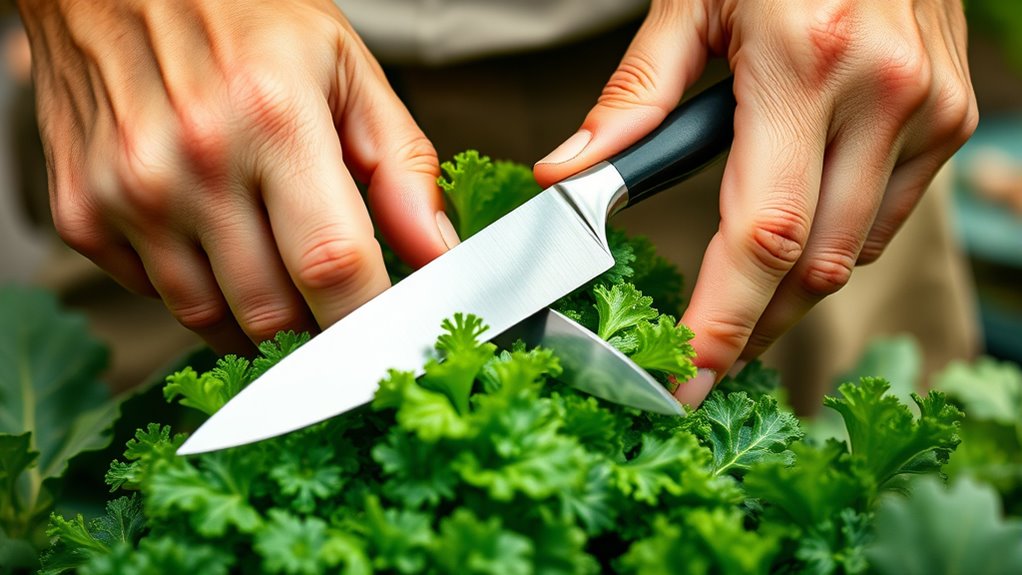
Practicing proper knife technique starts with your stance and grip. Stand with a stable posture, gripping the handle firmly but without excessive tension. Use your non-dominant hand to steady the plant, keeping your fingers tucked away from the blade’s path. When making cuts, position your hand so the blade slices cleanly through the stem or leaf in a single, confident motion. Avoid forcing the blade; instead, let the sharpness do the work. This not only protects you but also results in healthier plants by preventing crushing or tearing tissues. Consistent, careful technique allows you to harvest more efficiently and with less effort, freeing you from unnecessary struggle and injury.
In the end, mastering knife safety and technique is about respecting your tools and your plants. Take the time to keep your harvesting tools in prime condition, and approach each cut with mindfulness. This approach liberates you from the frustration of dull blades and accidental injuries, empowering you to harvest with precision and confidence. Proper knife maintenance paired with correct technique transforms your harvest into a smooth, safe, and satisfying process, letting you focus on the joy of cultivating and gathering your plants.
Frequently Asked Questions
How Often Should I Sharpen My Harvesting Knife?
You should sharpen your harvesting knife whenever you notice it becoming dull, usually every few weeks or as needed based on use. Regular blade maintenance keeps your knife sharp and effective, reducing fatigue and increasing safety. Sharpening frequency depends on how often you harvest and the materials you cut. Stay attentive to blade performance, sharpen promptly, and enjoy the freedom of effortless, precise cutting every time.
What Are the Signs of a Dull Knife?
A dull knife can feel like trying to cut through a steel wall—utterly frustrating! You’ll notice dullness indicators like slipping off plants, crushing instead of slicing, and requiring extra force. These signs scream for immediate blade maintenance, freeing you from the tyranny of ineffective cuts. When your knife struggles, you’re not harvesting efficiently; you’re fighting your tools. Keep your blade sharp, and reclaim your power over your harvest!
Can I Use the Same Knife for Different Plants?
You shouldn’t reuse the same knife for different plants without proper sanitation. Knife sanitation is vital to prevent cross contamination, especially when harvesting diverse crops. Always clean your knife thoroughly between uses, using soap and water or a disinfectant. This practice not only keeps your produce safe but also guarantees you stay liberated from worries about transmitting pests or diseases. Remember, a clean knife equals healthier plants and a more enjoyable harvesting experience.
How Should I Store My Harvesting Knives Safely?
You should store your harvesting knives safely to prevent accidents and keep them sharp. Don’t just toss them in a drawer; instead, use knife storage solutions like protective sheaths or a designated knife block. Safety storage tips include keeping knives out of reach of children and ensuring they’re clean and dry before storage. This way, you maintain control over your tools and enjoy harvesting with confidence and freedom.
What Protective Gear Is Recommended During Harvesting?
You should wear protective gloves and eye protection during harvesting to stay safe and feel liberated. Gloves shield your hands from cuts and plant irritants, giving you freedom to work confidently. Eye protection keeps you safe from debris and accidental splashes, allowing you to focus on the task at hand. Embrace these safety measures to enjoy harvesting without worry, making your experience both secure and empowering.
Conclusion
By following these knife safety tips and mastering proper techniques, you’ll become a plant-harvesting hero, avoiding accidents and ensuring healthy, thriving plants. Remember, a sharp knife is your best friend—without it, you’re fighting a losing battle. Stay focused, handle your tools with care, and always prioritize safety. With practice, you’ll harvest like a pro, turning your garden into a flourishing paradise—more vibrant than a rainbow after a storm!