
When home canning foraged foods, you should use acid canning methods for foods with a pH of 4.6 or lower, like berries and tomatoes, as these are safe with water bath canning. For foods with a higher pH, such as many wild vegetables or low-acid items, pressure canning is essential to eliminate harmful bacteria and spores. Understanding the acidity of your foraged foods helps guarantee safety and shelf stability—learn more about these techniques to can confidently.
Key Takeaways
- Test the pH of foraged foods to determine if they are safe for water bath canning (pH ≤ 4.6).
- Use acid canning for high-acid foods like berries and tomatoes for safe, simple preservation.
- Apply pressure canning for low-acid foods or wild harvests with pH above 4.6 to kill harmful bacteria.
- Proper jar sterilization prevents microbial contamination regardless of canning method.
- Understanding acidity levels guides safe preservation choices, ensuring food safety and shelf stability.
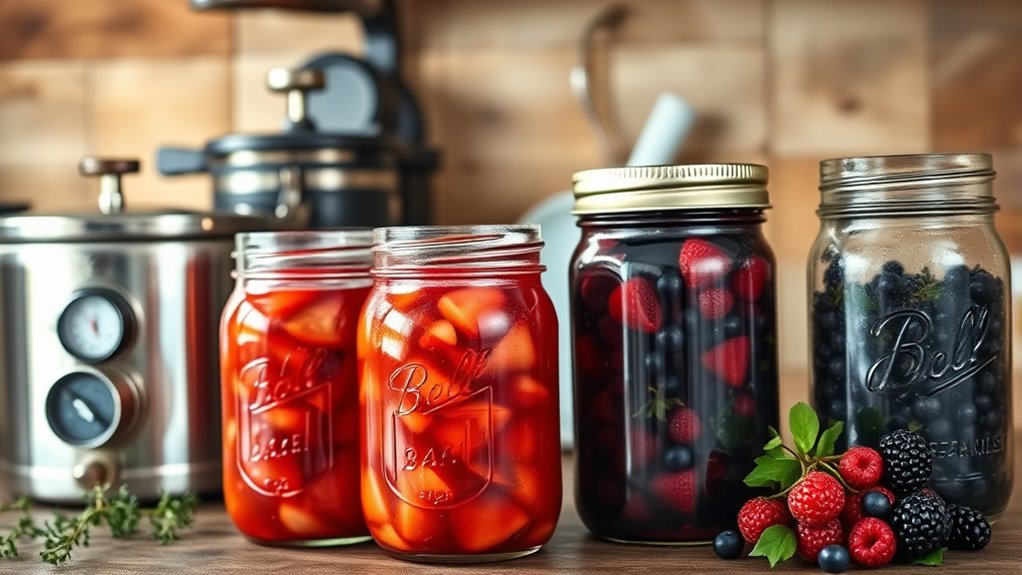
Have you ever wondered how to safely preserve the wild foods you forage? You’re driven by a desire to reclaim your independence from store-bought preservatives and corporate food systems. But with that freedom comes responsibility—especially when it comes to home canning. Ensuring your jars are properly sterilized and understanding the pH of your foods are essential steps to keep your canned treasures safe and shelf-stable.
Jar sterilization is your first line of defense. You need to start with clean, sterile containers to prevent bacteria, molds, or yeasts from taking hold. Boiling your jars and lids in water for at least 10 minutes is the simplest way, but you can also use a dishwasher’s sterilize cycle if it reaches the right temperature. Once sterilized, keep the jars hot until you fill them to prevent contamination. This process isn’t just about hygiene; it’s about controlling your environment so that your wild foods stay safe for long-term storage.
Start with clean jars; boil for 10 minutes or use a sterilize cycle to prevent contamination.
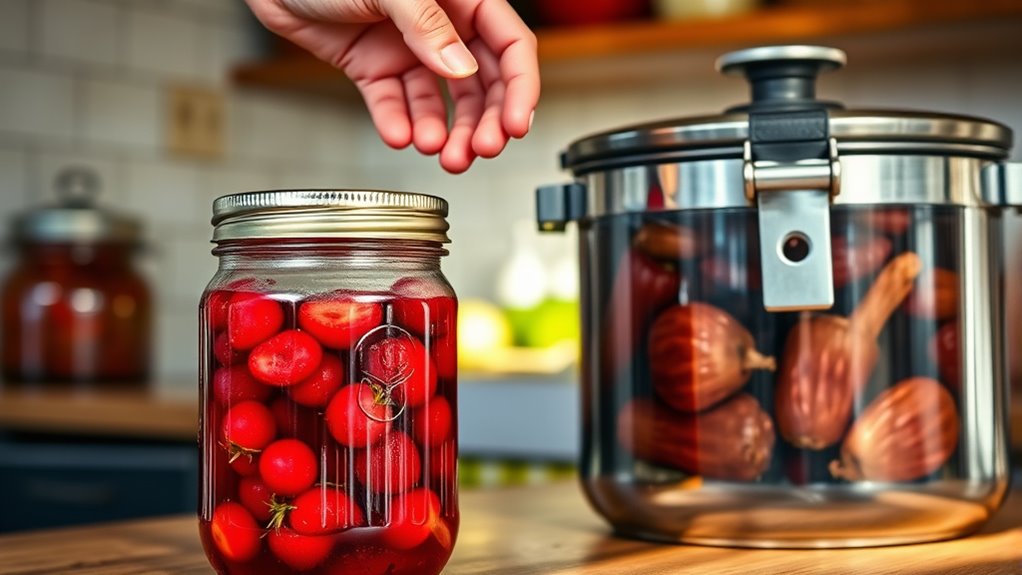
Another indispensable element is pH testing. Many foraged foods are naturally acidic, but their acidity can vary widely. To determine whether you need to preserve via acid or pressure canning, you must test the pH level. Using pH test strips or a digital pH meter, you’ll measure the acidity of your concoctions. Foods with a pH of 4.6 or lower are considered acidic and can be safely processed in a water bath canner. This method relies on the natural acidity to inhibit microbial growth, providing a safer route for preserving berries, tomatoes, and pickled items. If your pH exceeds 4.6, you’re playing with a different set of rules—pressure canning becomes necessary to destroy spores of bacteria like Clostridium botulinum. Knowing the pH isn’t just a technicality; it’s your liberation from unnecessary risks and your ticket to safe, delicious preserves.
Choosing between acid and pressure canning hinges on these tests. Acid canning lets you work with the natural properties of your wild harvest, preserving flavors and textures in a straightforward water bath. Pressure canning, on the other hand, is more versatile but requires meticulous attention to processing times and pressure levels. It’s about knowing your foods and respecting their chemistry.
In this journey toward food independence, mastering jar sterilization and pH testing empowers you to preserve your wild foods confidently. It’s about taking control of what you consume, ensuring safety without sacrificing your freedom to forage and create. When you understand the science behind preservation, you become the master of your pantry, turning wild harvests into safe, nourishing treasures. Additionally, understanding the importance of acidity in preserving foods helps you make informed decisions that safeguard your health and ensure the longevity of your canned goods.
Frequently Asked Questions
Can I Can Wild Mushrooms Safely at Home?
You can’t safely can wild mushrooms at home because of mushroom toxicity risks. Proper canning safety requires pressure canning to destroy dangerous spores and bacteria, which is vital for mushrooms. Without this, you risk botulism or other illnesses. Instead, consider drying or freezing wild mushrooms for safer preservation. Always identify mushrooms with certainty and follow tested guidelines to guarantee your home-canned creations are safe to enjoy.
Are There Any Foraged Foods That Shouldn’T Be Canned?
Like Pandora’s box, some foraged foods aren’t meant for your pantry. You shouldn’t can poisonous berries or toxic fungi, as they pose serious health risks. While your spirit seeks freedom through preservation, safety must come first. Avoid risking contamination or poisoning by steering clear of these dangerous finds. Instead, focus on safe, edible wild plants and fungi, and always verify their safety before canning to keep your culinary adventures truly liberated.
How Do I Identify Safe Foraged Produce for Canning?
To identify safe foraged produce for canning, focus on clear edible identification by consulting reputable field guides and local experts. Avoid toxin exposure by learning to distinguish edible plants from look-alikes and poisonous varieties. Trust your senses—smell, taste, and sight—and double-check with trusted resources. This knowledge empowers you to freely gather and preserve wild foods, transforming foraging into a safe, liberating culinary adventure.
What Are Common Mistakes to Avoid in Home Canning?
Avoid the trap of rushing or skipping steps, as it can compromise your canning success. Always prioritize proper sterilization techniques and pH testing to guarantee safety. Don’t underestimate the importance of accurate acidity levels—mistakes here can lead to unsafe preservation. By staying diligent and attentive to details, you embrace the freedom of enjoying your foraged bounty safely, instead of risking spoilage or health issues.
Is It Safe to Can Foraged Foods Without a Pressure Canner?
You shouldn’t can foraged foods without a pressure canner, as it’s unsafe and risks dangerous bacteria like botulism. Canning safety relies on proper preservation techniques, especially for low-acid foods. Using a pressure canner guarantees you reach the necessary temperatures for safe preservation. Don’t compromise your freedom to enjoy wild harvests—trust the right equipment and methods to keep your canned foods safe and delicious.
Conclusion
By understanding the differences between acid and pressure canning, you can confidently preserve your foraged foods safely. Remember, following proper methods isn’t just about taste—it’s about safety for you and your loved ones. Are you willing to take the necessary steps to enjoy your wild harvest without risk? With a little knowledge and care, you’ll guarantee every jar is a safe, delicious reminder of your foraging adventures. Happy canning!