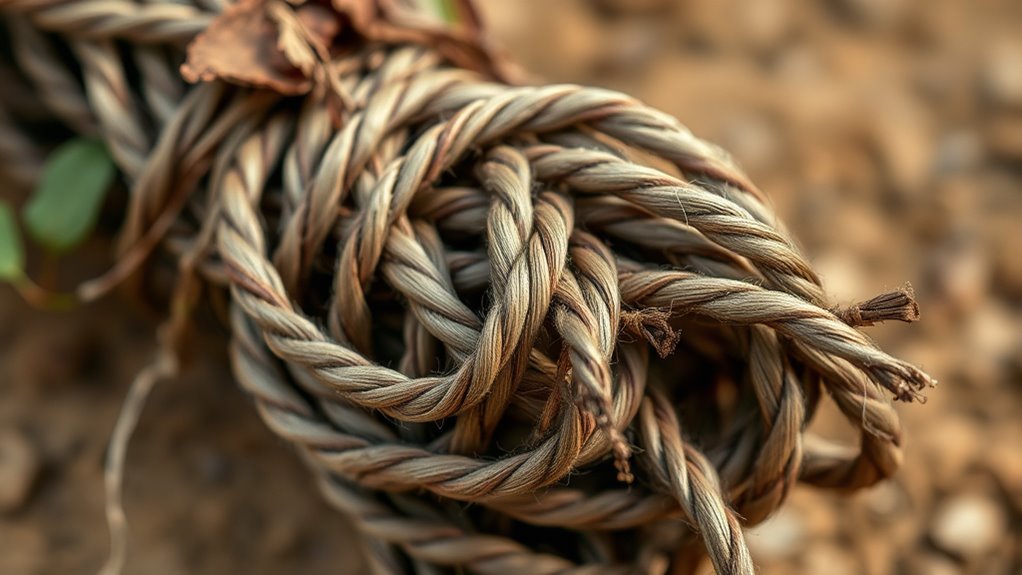
To twist nettle and dogbane fibers into cordage, start by harvesting mature stalks and soaking or retting them to loosen the fibers. Once cleaned, comb or hackle the fibers to straighten and soften them. Then, spin the fibers into threads using a spindle, twisting tightly for strength. Ply or braid the threads to create durable cordage. Mastering these traditional techniques can help you produce resilient cords—continue on to discover more about each step and its significance.
Key Takeaways
- Harvest plant parts like stems or bark at peak maturity, then soak or rett to loosen fibers.
- Retting breaks down pectins, making fiber separation easier and cleaner for twisting.
- Use combing or hackling to straighten and soften fibers, preparing them for spinning.
- Spin fibers into threads with a spindle, then twist or braid for added strength and durability.
- Traditional methods emphasize sustainability, utilizing every plant part for effective, resourceful cordage creation.
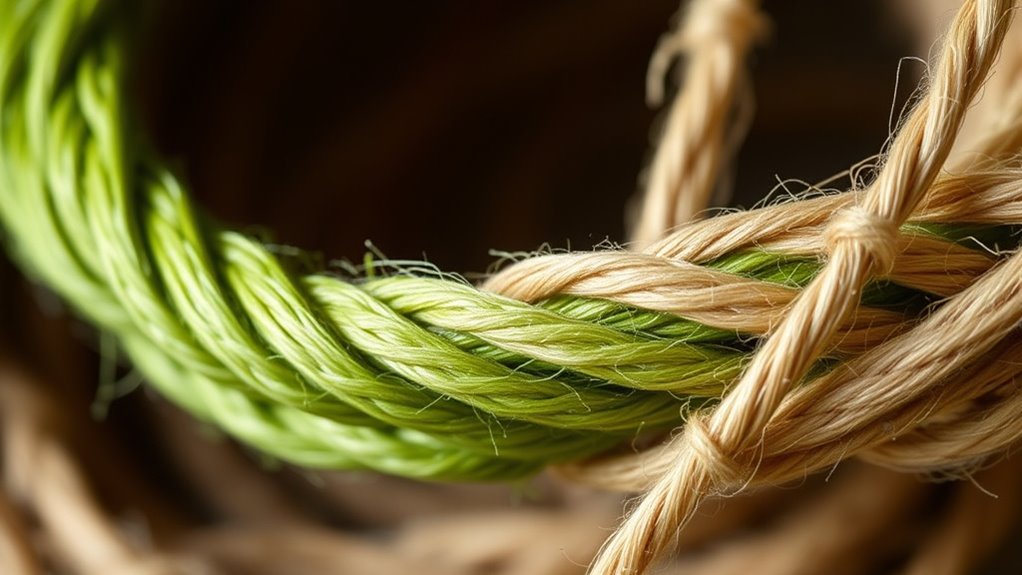
Cordage is a fundamental tool used to secure, lift, and connect objects in countless applications. If you’re seeking liberation from reliance on modern synthetic ropes, understanding natural fiber processing and the roots of historical cordage methods empowers you to craft your own durable, eco-friendly cords. By delving into these traditional techniques, you reconnect with a time when humans relied on the fibers around them to build, hunt, and survive. You gain independence from industrial supply chains and embrace a more sustainable, self-sufficient approach to your needs.
Processing natural fibers like nettle and dogbane begins with harvesting the right plant parts—stems, leaves, or bark—at their peak. Once gathered, you strip away the outer layers, revealing the core fibers, which are often intertwined with natural resins or pith. Instead of relying on machinery, you manually prepare these fibers by soaking, retting, or scraping them to loosen the cellular structure. Retting, for instance, involves soaking plant material in water to break down pectins that hold fibers together, making them easier to extract. This process is simple but effective, and it connects you directly to traditional practices used for generations.
Once the fibers are cleaned and separated, you need to soften and align them through combing or hackling, stretching and teasing the fibers into a uniform strand suitable for spinning. This step is vital because it transforms rough plant material into a workable thread. You then spin the fibers into cordage using a simple spindle or drop spindle, creating strong, twisted threads that can be further braided or plied. The twisting process, often done by hand, adds tensile strength and resilience, making your cordage capable of bearing weight and enduring tension. When you master this, you reclaim an ancient skill and reduce dependence on manufactured cordage.
Historically, cordage methods varied across cultures, but the core principles remained constant: harvest, process, spin, and twist. Early societies relied heavily on natural fiber processing to produce cords for fishing, hunting, and shelter. These methods, passed down through generations, highlight a sustainable relationship with nature—harvesting only what’s needed, utilizing every part of the plant, and creating tools that last. Embracing these traditional techniques not only frees you from modern constraints but also deepens your respect for the ingenuity of our ancestors. By mastering natural fiber processing and understanding historical cordage methods, you forge a tangible connection to the past and forge your own path toward self-reliance.
Frequently Asked Questions
Can Nettle and Dogbane Fibers Be Dyed Naturally?
Yes, you can dye nettle and dogbane fibers with natural dye sources. To achieve vibrant and lasting colors, use natural dye sources like plants, roots, or minerals. Employ color preservation techniques such as mordanting to lock in hues and prevent fading. This way, you embrace your creative freedom, transforming fibers into beautiful, eco-friendly textiles that celebrate your connection to nature and your desire for sustainable, liberated crafting.
How Long Do Twisted Nettle and Dogbane Cords Last Outdoors?
You’ll find that twisted nettle and dogbane cords can last several years outdoors, but their fiber durability varies with exposure. While they resist some weather, prolonged sunlight, rain, and soil contact can weaken their outdoor longevity. Embrace the freedom from synthetic cords, knowing that with proper care, these natural fibers can serve you well for years, blending resilience with the liberation of eco-friendly, biodegradable materials.
Are Nettle and Dogbane Fibers Suitable for Making Clothing?
Yes, nettle and dogbane fibers are suitable for making clothing, but their fiber durability varies. You can achieve better results by applying proper fiber processing techniques, like retting and careful spinning. These fibers offer a natural, liberating choice for eco-conscious wearers seeking sustainable options. Keep in mind, with proper treatment, their strength and flexibility make them comfortable and durable for clothing, enhancing your freedom to wear natural, handmade garments.
What Tools Are Best for Twisting These Fibers?
Imagine you’re crafting strong, flexible cordage from nettle and dogbane fibers. You’ll want a simple spindle or a drop spindle to master fiber preparation and twisting techniques. These tools allow you to control tension and spin the fibers evenly, giving you freedom from commercial cords. With patience, you can transform raw fibers into sturdy, natural cordage, empowering your connection to traditional craftsmanship and self-reliance.
Can These Fibers Be Used for Musical Instrument Strings?
Yes, you can use these fibers for musical instrument strings. Their fiber strength offers decent durability, but keep in mind they may not match the long-term resilience of metal or synthetic strings. If you seek liberation from conventional materials, twisting nettle or dogbane fibers can give you a natural, eco-friendly alternative. Just make certain you reinforce them properly for the best musical instrument durability and to produce the desired sound quality.
Conclusion
So, next time you’re stranded with nothing but a stick and some weeds, remember you’ve got all the tools to make your own cordage—if you’re feeling ambitious enough to twist nettle and dogbane fibers. Who knew that those pesky plants could save your bacon? Or, at the very least, make you look like an outdoor hero in front of your friends. Happy twisting! After all, who needs store-bought rope when nature’s got your back?