To repair your basket using reed, willow, and waxed thread, start by evaluating the damage and gathering authentic, eco-friendly materials. Use willow or reed for replacing broken or frayed sections, shaping them to match the original weave. Secure your repairs with waxed thread, which offers durability and flexibility. Incorporate traditional hand techniques for a seamless look that honors craftsmanship. If you want to restore your basket naturally while respecting its history, continue exploring these timeless methods.
Key Takeaways
- Use natural reed or willow for authentic, eco-friendly basket repairs that preserve cultural value.
- Incorporate waxed thread for durable, flexible stitching to reinforce broken or weak areas.
- Follow traditional hand manipulation techniques for seamless, sustainable repairs without adhesives.
- Maintain a dust-free workspace with HEPA filtration to ensure a clean, safe repair environment.
- Embrace a mindful, slow process that revitalizes your basket while honoring craftsmanship and environmental principles.
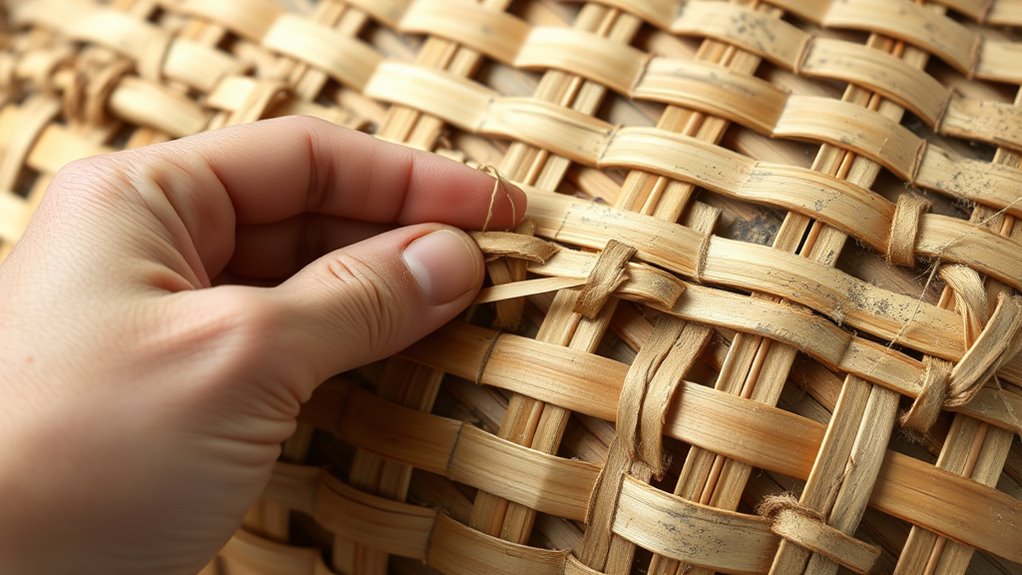
If your basket has started to show signs of wear or damage, repairing it yourself can save money and extend its lifespan. You have the power to breathe new life into your basket, reconnecting with a craft that has a rich history rooted in human ingenuity. Basket weaving dates back thousands of years, with ancient civilizations using natural materials like reed, willow, and grasses to create functional art. Knowing this history can inspire you to approach repairs with respect for tradition and a desire for sustainable practices. By choosing eco-friendly repair methods, you’re not only preserving your basket but also reducing waste and avoiding synthetic, chemical-laden fixes. This is your chance to embrace a more liberated approach—one that honors the environment and your craftsmanship.
When it comes to repairing, understanding the materials is essential. Reed and willow are traditional choices, valued for their strength and flexibility. Reeds are often harvested sustainably, making them an environmentally friendly option that aligns with your desire to live in harmony with nature. Willow, meanwhile, has been favored for centuries due to its resilience and ease of manipulation. Using these natural materials for repairs keeps your basket authentic and environmentally responsible. Waxed thread, another indispensable element, provides durability and flexibility, allowing you to stitch and reinforce weak spots without relying on synthetic adhesives or glues. This approach not only preserves the integrity of your basket but also keeps your repair process aligned with eco-conscious values.
Additionally, incorporating HEPA filtration or other natural materials can help ensure that your workspace remains free from dust and allergens during the repair process, promoting a healthier environment for you and your household. Repairing your basket with these traditional materials connects you to centuries of artisans who perfected the craft. It’s empowering to take control of your belongings, transforming them through skill and sustainable practices. As you manipulate reed or willow, you’re engaging in an act of liberation—breaking free from disposable culture and embracing a slow, mindful process of restoration. The use of eco-friendly repair methods ensures you’re making choices that honor the earth, minimizing environmental impact while revitalizing your cherished basket. This act of repair becomes a statement against waste, a proof of your commitment to sustainability and craftsmanship.
In essence, fixing your basket with natural, eco-friendly materials isn’t just about mending; it’s about reclaiming agency over your belongings and reconnecting with a centuries-old tradition. By understanding the history of basket weaving and applying environmentally conscious methods, you gain the confidence to repair with purpose and pride. Your basket isn’t just an object—it’s a symbol of resilience, tradition, and care, all within your grasp to restore and cherish for years to come.
Top picks for "basket repair reed"
Open Amazon search results for this keyword.
As an affiliate, we earn on qualifying purchases.
Frequently Asked Questions
How Do I Identify the Type of Reed Used in My Basket?
You can identify your basket’s reed type by examining its color, texture, and flexibility. Recycling natural materials often reveal variations, so choose sustainable threads that match the original. Feel the reed’s weight—wider, thicker reeds are usually rattan or reed, while thinner ones are willow. Liberate your craft by understanding these differences, empowering you to choose the right materials for repairs, and embrace eco-friendly, natural solutions that honor your creative freedom.
Can I Repair a Broken Willow Handle Myself?
Yes, you can repair a broken willow handle yourself. Start by carefully removing any loose or damaged sections, then reinforce the handle with additional willow or sturdy material. Weave or bind it securely using waxed thread or twine for handle reinforcement. This simple basket restoration process empowers you to restore your basket’s strength and beauty, giving you a satisfying sense of liberation from reliance on others and prolonging its life.
What Tools Are Essential for Basket Weaving Repairs?
You’ll need essential tools like scissors, a needle, and pliers to perform basket weaving repairs, embracing historic basket repair methods and basket weaving techniques. These tools grant you the freedom to mend and restore with precision, breaking free from reliance on professionals. With a little practice, you can confidently repair broken willow handles or reed sections, reclaiming your basket’s beauty and functionality. Let these tools empower your creative spirit and DIY mastery.
How Long Does a Typical Basket Repair Take?
A typical basket repair takes about a few hours, but if you’re channeling your inner artisan, it might stretch into a day—because who wants quick fixes when you can indulge in basket dyeing and reconnect with historical styles? Embrace the liberation from mass-produced sameness, knowing each stitch restores not just the basket but your spirit. So, set aside time, enjoy the process, and transform your basket into a work of art.
Are There Eco-Friendly Waxed Threads Available for Repairs?
Yes, eco-friendly waxed threads are available for repairs. You can choose sustainable materials like biodegradable options that give you the freedom to repair your baskets responsibly. These threads are crafted to reduce environmental impact, allowing you to enjoy your creative freedom while staying eco-conscious. By selecting eco-friendly waxed threads, you embrace a sustainable lifestyle and help protect the planet for future generations.
Conclusion
Now that you’ve mastered the basics of reed, willow, and waxed thread repair, imagine the possibilities. Your basket, once fragile, now stands strong—ready to hold your treasures or carry your daily essentials. But the real magic begins when you step back and see what you’ve created. Will this be the start of your next project, or just a one-time fix? Either way, your skills have opened a door to endless creative opportunities—are you ready to explore?