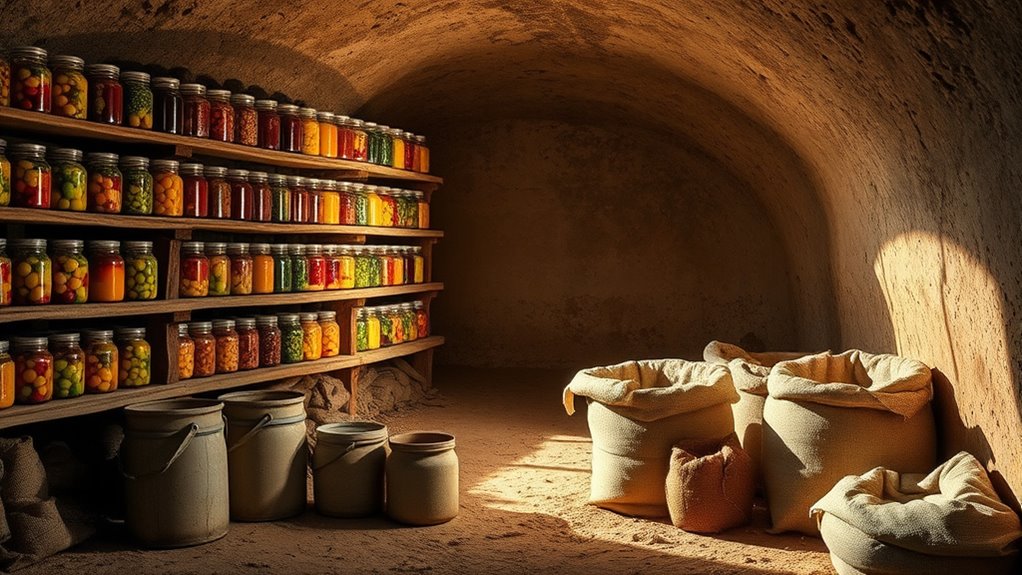

To store wild foods effectively, consider using root cellars, sand buckets, and fermentation jars. Root cellars create a cool, humid underground environment perfect for root vegetables like carrots and potatoes. Sand buckets hold tubers and bulbs with damp sand, extending their freshness. Fermentation jars allow you to preserve vegetables and herbs as probiotic-rich foods that last at room temperature or in cool, dark spots. Keep exploring these methods to maximize your wild harvest’s pantry life.
Key Takeaways
- Root cellars utilize underground, cool, and humid environments to preserve root vegetables for months.
- Sand buckets provide portable, moisture-controlled storage for tubers and bulbs without refrigeration.
- Glass jars are ideal for fermenting wild edibles, creating probiotic-rich, shelf-stable foods.
- Proper storage methods extend the freshness of wild harvests, reducing spoilage and waste.
- Combining traditional techniques with fermentation supports sustainable, self-reliant wild food preservation.

Storing wild food properly is essential to enjoy its benefits long after foraging. When you’ve identified wild edibles through careful wild edible identification, you gain the power to sustain yourself naturally. But knowing what to do next—how to preserve your harvest—is just as vital. Proper storage methods unlock the potential of your foraged foods, turning fleeting abundance into long-term nourishment. Whether you’re considering traditional root cellars, sand buckets, or glass jars, each technique offers a way to maintain freshness, flavor, and vitality.
Root cellars are a timeless solution that harnesses natural cooling and humidity. Digging into the earth, you create a cool, dark environment perfect for storing root vegetables like carrots, potatoes, and beets. These underground chambers keep produce at steady temperatures, slowing down decay and preserving nutrients. To optimize storage, consider layering your crops with straw or sand to prevent moisture buildup and mold. This method allows you to keep wild roots fresh for months, giving you the freedom to enjoy your foraged bounty well beyond the season. It’s a simple, sustainable approach that respects the land and your independence.
Sand buckets are another clever, portable storage option. Fill a bucket with clean, damp sand, then nestle your wild harvest inside, covering them completely. This technique creates a humid environment that prevents dehydration and shriveling. It’s especially handy for storage in sheds or basements, where maintaining consistent conditions can be tricky. Sand buckets are ideal for items like tubers and bulbs, extending their life without refrigeration. Plus, they’re easy to set up and move around, giving you control over your food storage and reducing reliance on commercial systems. This method empowers you to keep your wild foods accessible and fresh on your terms.
Jars—particularly glass canning jars—are perfect for preserving wild foods through fermentation techniques. Fermentation is not only a method of preservation but also a way to boost the health benefits of your harvest. By fermenting vegetables, berries, and herbs, you turn them into probiotic-rich foods that can be stored at room temperature or in cool, dark places. This process requires some knowledge of wild edible identification—knowing which plants ferment well and how to prepare them safely. With proper fermentation techniques, you create delicious, shelf-stable supplies that support your vitality and independence. Jars also give you the satisfaction of creating your own fermented staples, free from preservatives or additives.
In the end, mastering these storage techniques transforms your foraging efforts into a sustainable, liberating lifestyle. You take control of your food, ensuring that every wild edible you identify can serve you long after the harvest. By combining traditional methods with fermentation techniques, you preserve not just the food but your freedom to live off the land on your own terms.
Frequently Asked Questions
How Long Can Different Root Vegetables Typically Be Stored?
You can store root vegetables for several months if you keep temperature monitoring steady and prevent pests. Carrots last 3-5 months, while potatoes stay good for 2-6 months, depending on conditions. Be vigilant about pest prevention, especially in root cellars, to prolong freshness. Properly curing and maintaining cool, dark storage helps you enjoy your harvest longer, giving you the freedom to access nourishing food whenever you need it.
What Are the Best Materials for Building a Root Cellar?
Imagine your root cellar as a fortress for your harvest, built with sturdy stone or brick that breathes through ventilation techniques. These materials help regulate moisture control and keep your treasures fresh. Wood can work too, if well-sealed, but stone and brick offer a natural barrier against moisture and pests. You hold the key to your food’s longevity, creating a sanctuary where freshness endures and you reclaim your independence.
How Do I Prevent Spoilage in Sand Bucket Storage?
To prevent spoilage in sand bucket storage, you need to focus on moisture control and pest prevention. Keep the sand dry by sealing the bucket tightly and storing it in a cool, dry place. Regularly check for moisture buildup or pests, and replace the sand if needed. This way, your wild foods stay fresh longer, giving you the freedom to enjoy your harvest without worry.
Which Foods Are Best Suited for Jar Preservation?
You should preserve vegetables, fruits, and herbs in jars using proper pickling techniques to guarantee safety and flavor. Always sterilize your jars thoroughly before filling them, which prevents spoilage and bacterial growth. You get freedom from preservatives and store your bounty naturally, knowing your preserved foods stay fresh longer. Embrace jar preservation for independence, making your own sustainable, delicious supplies that empower you to enjoy wild foods year-round.
How Do Environmental Factors Affect Storage Longevity?
Environmental factors like moisture control and temperature regulation directly impact your storage longevity. Keep moisture levels low to prevent mold and spoilage, and maintain a cool, stable temperature to slow down deterioration. By actively managing these conditions, you free your preserved foods from premature decay, ensuring they stay fresh longer. Take control of your environment, and your wild harvest will reward you with extended freshness and maximum nourishment.
Conclusion
As you open that cool, earthy root cellar or sift through sand buckets, you feel the weight of nature’s bounty cradled in your hands. The aroma of stored roots and the quiet stillness of jars remind you of self-reliance and harmony with the land. With each carefully stored harvest, you’re ready for winter’s chill, confident that nature’s hidden treasures will nourish you long after harvest moon has set. Your wild food storage becomes a sanctuary of sustenance.