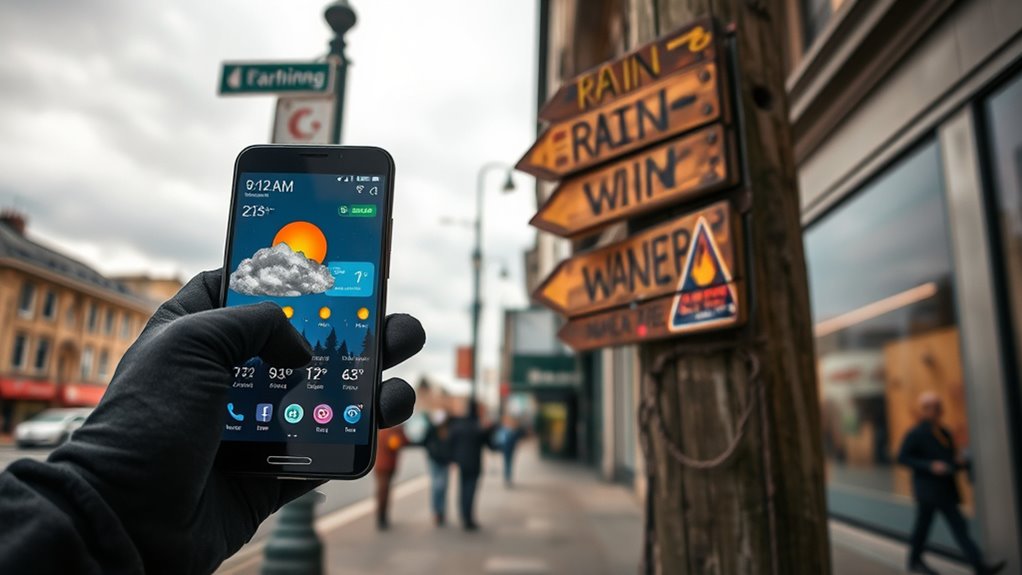

To effectively understand weather changes, combining apps with on-the-ground signs is essential. Use weather forecasts and satellite images for big-picture patterns, but pay attention to local cues like darkening skies, wind shifts, or temperature drops for real-time updates. Relying on both helps you make better decisions and stays prepared for rapid shifts. Keep exploring how blending technology with environmental awareness can improve your weather insight even further.
Key Takeaways
- Use weather apps for macro forecasts while observing local signs like cloud changes and wind shifts for real-time updates.
- Combine digital data with on-the-ground cues to improve accuracy and responsiveness to immediate weather conditions.
- Rely on environmental signs, such as darkening skies or sudden wind shifts, to supplement and verify app predictions.
- Stay informed with technology but trust personal observations for more localized, immediate weather awareness.
- Integrate both approaches to develop a holistic understanding, enhancing decision-making and preparedness.
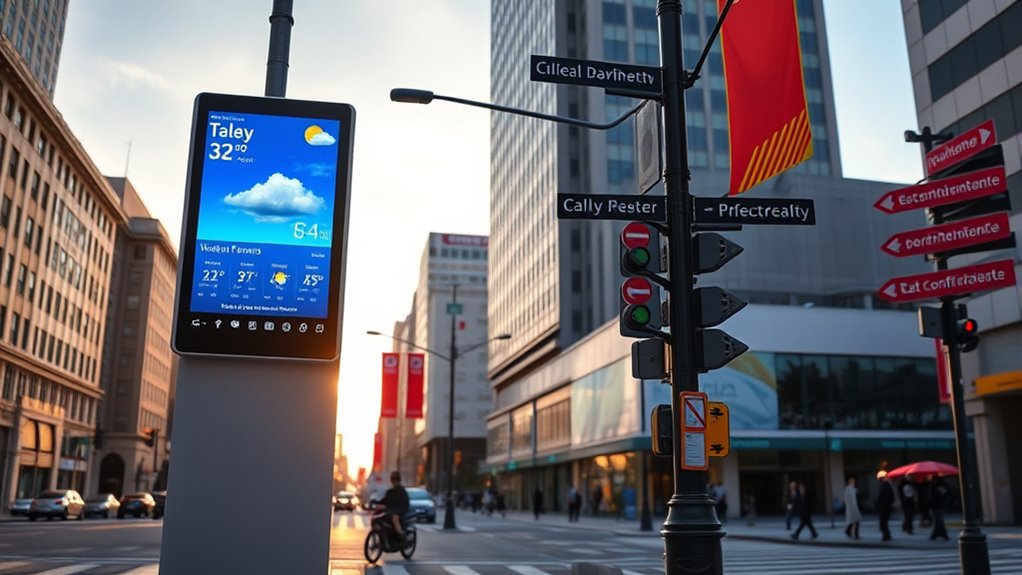
Weather apps have become your go-to tools for quick forecasts, but on-the-ground signs still play a vital role in providing real-time, location-specific information. You might rely on your phone’s weather update, but nothing replaces the raw, immediate cues from the environment around you. These signs—darkening skies, shifting winds, or sudden drops in temperature—can alert you to changes that digital forecasts might miss or underestimate. They’re your immediate connection to the weather’s current reality, offering a sense of liberation from dependency on screens and algorithms. Recognizing local weather cues can often give you more accurate insights than generalized data, especially in rapidly changing conditions. Satellite imagery and climate modeling have revolutionized how meteorologists predict weather, offering broad, detailed views of atmospheric conditions. Satellite imagery provides a clear picture of cloud formations, storm development, and movement patterns, giving you a macro understanding of what’s happening above. Climate modeling, on the other hand, uses this data to simulate future weather scenarios, helping forecast long-term trends and extreme events. While these technological tools are powerful and increasingly accurate, they still operate on a broad scale, sometimes missing the subtle, localized signs that directly impact your day-to-day life.
That’s where on-the-ground signs come into their own. You notice the subtle shift in wind direction or the sudden chill that hints at an approaching storm. Perhaps you see the way the clouds gather in a specific formation or the way the air feels heavier, signaling an impending change. These signs are your personal, immediate feedback loop with the environment—an empowering way to stay in tune with your surroundings and make informed decisions. They remind you that weather isn’t just a set of data points but a living, breathing system that you can read and respond to directly.
Noticing subtle wind shifts and cloud formations keeps you connected to the weather’s immediate story.
The perfect balance lies in combining these two worlds. Use weather apps and climate models to understand the larger patterns and forecast upcoming conditions, but stay attuned to the signs on the ground. This approach liberates you from over-reliance on digital tools, giving you the power to read and interpret your environment instantly. When you learn to trust your senses alongside technological insights, you regain control and confidence over your plans, no matter what the forecast says. Ultimately, it’s about embracing a more holistic, freeing relationship with weather—one that respects both the big picture and the immediate reality.
Frequently Asked Questions
How Do Weather Apps Determine Their Accuracy?
Weather apps determine their accuracy by analyzing satellite data and using advanced algorithms with high precision. You can trust these apps because they process vast amounts of real-time information, helping you stay ahead of weather changes. Their ability to combine satellite images with precise algorithms means you get reliable forecasts. So, when you check your weather app, you’re tapping into a system designed for accuracy and your peace of mind.
What Materials Are Best for Durable On-The-Ground Signs?
You should choose materials like aluminum, high-density polyethylene, or weather-resistant plastics for durable on-the-ground signs. These materials excel in weather resistance and withstand the elements, giving you long-lasting durability. Aluminum resists rust, while plastics handle extreme conditions without fading or cracking. This way, you gain the freedom to place signs confidently outdoors, knowing they won’t falter under harsh weather, keeping your message clear and reliable.
Can Weather Apps Predict Localized Weather Changes?
Yes, weather apps can predict localized weather changes by leveraging satellite imagery and weather models. You gain real-time insights into sudden shifts, empowering you to make informed decisions and escape the constraints of uncertainty. These tools analyze data across various scales, giving you a clearer view of your environment. Embrace this technology to stay ahead of weather surprises and experience the liberation that comes with trusted, localized forecasts.
How Do Signs Impact Driver Safety During Severe Weather?
Signs markedly impact your safety during severe weather by enhancing visual visibility and guiding your driver behavior. Bright, clear signs alert you to hazards like floods, icy roads, or fallen trees, prompting safer decisions. They act as liberation tools, giving you control over your journey despite challenging conditions. Staying attentive to these signs helps you navigate safely, reducing risks and empowering you to respond swiftly during tough weather, keeping you confident and secure on the road.
Are There Eco-Friendly Options for On-The-Ground Signage?
Yes, you can choose eco-friendly options like signage made from sustainable materials and biodegradable signage. These options allow you to make a positive impact on the environment while maintaining effective communication. By opting for eco-conscious signs, you empower yourself to promote safety and sustainability simultaneously. Embrace these green alternatives and experience the liberation of knowing you’re helping protect the planet while keeping everyone informed and safe during severe weather.
Conclusion
By combining weather apps with on-the-ground signs, you harness the wisdom of both the sky and the street—like Icarus learning from the sun and the ground beneath his wings. This practical blend keeps you better prepared, orienting yourself amidst uncertainties with insight. Remember, relying solely on one source is like trusting Daedalus’s wings without the feathers—fragile and risky. Embrace both tools, and you’ll stay one step ahead, grounded yet soaring through whatever weather comes your way.