TL;DR

Get garden gear delivered free with Prime
- Fast, free delivery on millions of items
- Prime Video, Amazon Music and more included
- Member-only deals all year
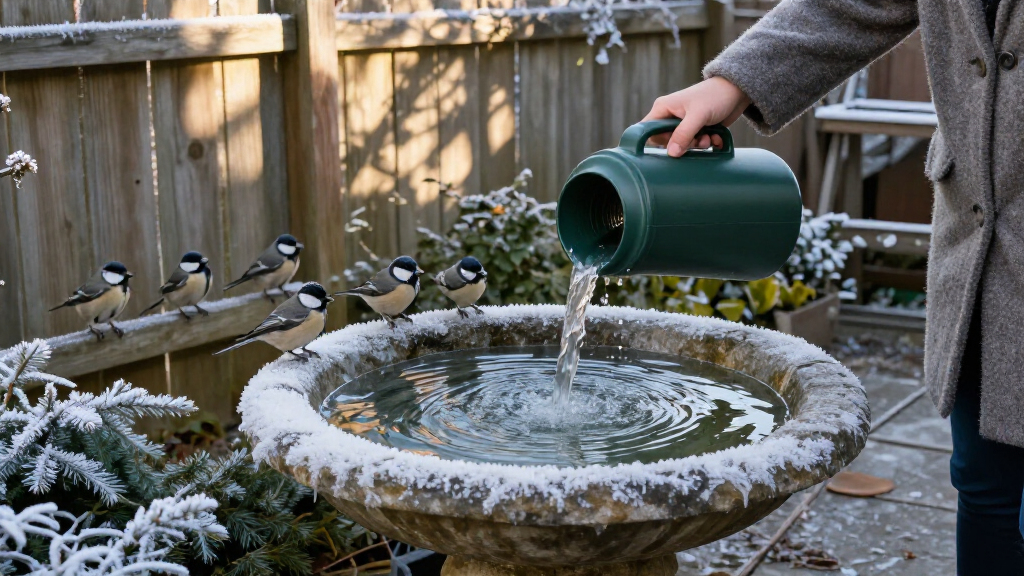
Gardening Know How has published four methods for keeping bird-bath water available in winter: relocate the bath to a sunnier, sheltered spot, add a dark stone, float a movable object, or use a thermostatic de-icer. The first three may slow freezing, while a properly selected de-icer is intended to prevent it; the report does not provide comparative test results.
Gardening Know How has published four ways to keep bird-bath water from freezing in winter, recommending a sunnier sheltered location, a dark rock, a floating object, or a purpose-built thermostatic de-icer. The advice matters for people who want to maintain an accessible water source for birds when natural water may freeze, though the report does not cite tests comparing how well the methods work.
The report recommends moving a bath from its summer position in partial shade to a sunny winter location, while considering cold winds. It suggests positioning the bath about six feet from a south-facing wall, which may provide shelter and reflect or release stored heat. Because the sun sits lower in winter, the report advises checking where sunlight actually falls during the colder months.
A second option is adding a dark, dense stone that can absorb sunlight and release heat as the air cools. Gardening Know How says the rock should be at least four inches across, protrude above the water, and occupy no more than one-third of the bath’s water area. A third suggestion is to float a light object that moves with a breeze, such as a ping-pong ball in a sheltered spot or a tennis ball where it is windier; the article also suggests a rubber duck for many gardens.
For a more direct approach, the report recommends a thermostatic bird-bath de-icer that switches on in cold conditions and turns off as temperatures rise. It says a 60-to-120-watt unit is suitable for preventing freezing, and advises checking that the cord reaches an appropriate location and that the product fits the bath. The source also says to keep the water topped up, clear fallen leaves, and scrub the bath weekly, particularly if many birds use it.
Keeping Winter Water Accessible
The report frames unfrozen water as useful to birds when other sources are frozen. It says birds need water for drinking and for bathing and preening, which helps maintain feathers that insulate them and support flight. The article also notes that birds eating seeds and nuts may need water to digest their food. These are the source’s explanations for why keeping a bath available can matter during cold weather.
For householders, the four options differ in effort and reliability. Sunlight, a stone, and a floating object are passive measures intended to slow ice formation, while an appropriately installed heater actively prevents freezing. The source does not establish that any one approach will keep water ice-free in every climate, so results may depend on sunlight, wind, temperature, bath size, and equipment.
Popular right now

Dyson Ball Animal 3 Corded Upright Vacuum

Dyson Cyclone V10 Origin Cordless Vacuum
Philips 5500 Series Fully Automatic Espresso Machine with LatteGo
As an affiliate, we earn on qualifying purchases.
From Summer Shade to Winter Sun
Gardening Know How’s advice centers on adapting a bird bath to seasonal conditions. Partial shade can help limit algae growth in summer, but the article says a sunnier position may be more useful in winter. It also points out that the best winter location can differ from the summer one because the sun’s path changes with the season.
The recommendations range from simple placement changes to powered equipment. The report advises choosing a de-icer designed for bird baths rather than assuming a product marketed for chicken coops is suitable. It names example wattages and products, but those are recommendations in the source, not independent product testing or endorsements. The supplied report does not give a date for publication.
“You only need to prevent the water from freezing, not keep it warm.”
— Gardening Know How
How Well Each Method Works
The supplied report does not provide controlled comparisons, freezing-temperature thresholds, or evidence that the passive methods will keep a bath ice-free during a prolonged or severe cold snap. It says the methods can slow or prevent freezing, but does not quantify how much time they may add before ice forms. Local weather and the bath’s exposure are likely to affect results.
The source also does not provide detailed electrical-safety instructions for installing a de-icer. Anyone using a powered unit should follow its manufacturer’s directions and confirm that the equipment is suitable for outdoor use and for the specific bath. The report’s advice to clean the bath weekly is not accompanied in the supplied material by a cleaning method or disinfectant guidance.
Check Water Through Cold Spells
Gardeners following the advice can first assess winter sunlight and wind around the bath, then choose a passive measure or a suitable thermostatic heater. Whatever method they use, the report recommends checking and topping up the water, clearing fallen leaves, and scrubbing the bath weekly. Those steps address water levels and cleanliness, but they do not remove the need to check whether the bath has frozen after temperatures drop.
No further testing, follow-up report, or timetable for additional guidance is specified in the source. The practical outcome will depend on local conditions and whether the selected method keeps the water available.
Key Questions
What are the four suggested ways to keep a bird bath from freezing?
Gardening Know How suggests moving the bath to a sunnier, sheltered spot, adding a dark stone, floating a movable object, or using a thermostatic bird-bath de-icer.
Will a floating ball stop a bird bath freezing?
The report says a floating object can disrupt ice-crystal formation and slow freezing. It does not claim that a ball will keep water ice-free in all conditions or provide comparative test results.
What should I look for in a bird-bath de-icer?
The report recommends a thermostatic unit designed for bird baths that turns on when temperatures fall and switches off as they rise. It gives a suggested range of 60 to 120 watts and says to check the cord length and fit for the bath.
How often should a bird bath be cleaned in winter?
Gardening Know How recommends scrubbing it once a week, particularly when many birds are visiting, and clearing fallen leaves. The supplied source does not specify a cleaning product or detailed cleaning procedure.
Source: gardeningknowhow.com