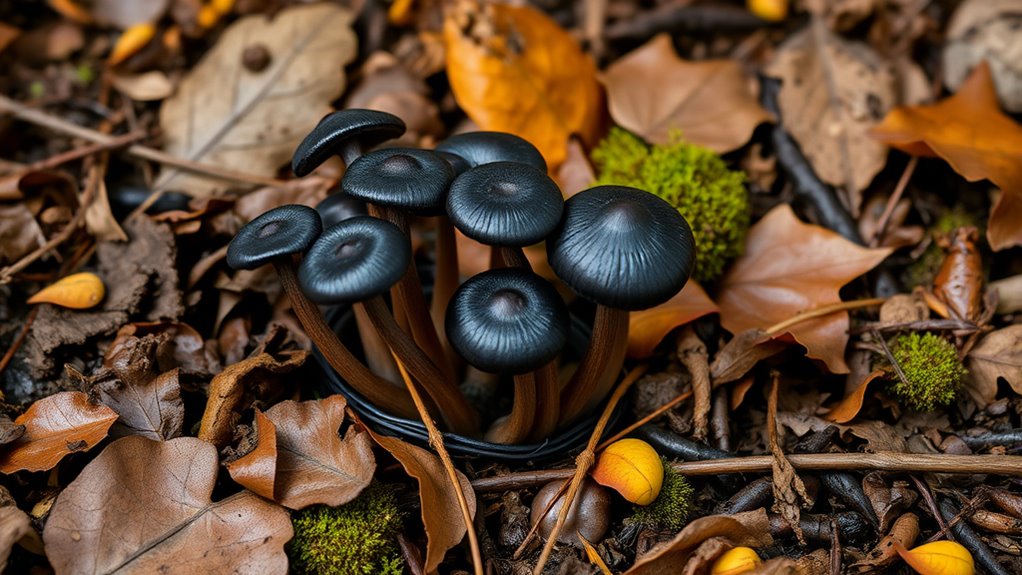

To find black trumpets in leaf litter, look in deciduous forests after rain or during damp seasons. Move slowly over the forest floor, carefully scanning for dark, trumpet-shaped fungi nestled among leaves, twigs, and moss. Gently twist or cut them at the base to harvest without damaging the environment. Proper identification and sustainable practices help make sure you find these flavorful mushrooms again—keep exploring, and you’ll discover more tips for successful foraging.
Key Takeaways
- Search in deciduous forests among leaf litter, moss, and twigs, especially after rain or during damp seasons.
- Move slowly and scan the forest floor carefully to spot their distinctive trumpet shape and dark color.
- Use gentle twisting or cutting with a small knife at the base to harvest, leaving roots to promote regrowth.
- Wear gloves to prevent skin irritation and avoid disturbing the habitat to support sustainable foraging.
- Proper identification is essential to differentiate black trumpets from look-alikes and ensure safe foraging.
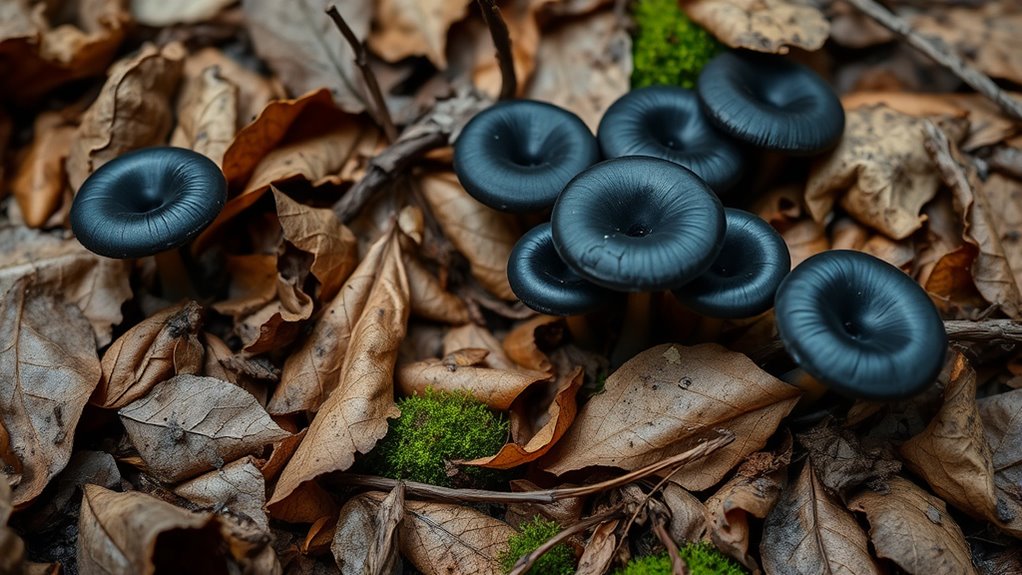
Have you ever discovered the striking black mushrooms known as black trumpets? These mysterious fungi hide quietly in leaf litter, waiting for the right moment to reveal their dark, trumpet-shaped caps. If you’re seeking liberation from mundane ingredients, learning how to find and harvest black trumpets can open new culinary doors. The key lies in mastering foraging techniques that respect nature’s rhythm while allowing you to connect deeply with the wild landscape around you. These mushrooms grow primarily in deciduous forests, nestled among fallen leaves, twigs, and moss. To spot them, you need patience and a keen eye, scanning the forest floor carefully, especially after rain or during the damp seasons. When foraging, move slowly and avoid disturbing the habitat—black trumpets are delicate, and overharvesting can harm future growth. Always check local guidelines and guarantee proper identification; misidentifying can lead to dangerous mistakes. Incorporating knowledge of the sustainable harvesting of wild mushrooms can help ensure these fungi remain available for future foragers.
Once you’ve located these fungi, harvest with purpose. Use a gentle twist or a small knife to cut the mushroom at its base, leaving the root in the ground to promote future growth. Wearing gloves is a good idea to avoid any skin irritation, and always double-check your finds to confirm they’re true black trumpets—distinct with their dark, elongated, trumpet shape and rich, velvety surface. Proper foraging techniques not only protect the ecosystem but also ensure you get the best quality mushrooms for your culinary endeavors.
Speaking of culinary uses, black trumpets hold a special place in the kitchen. Their smoky, earthy flavor intensifies when cooked; they add depth to soups, stews, and sauces. You can sauté them with garlic and butter or dry and grind them into a powder to sprinkle over dishes, elevating simple meals into gourmet experiences. Because they have a strong flavor profile, a little goes a long way, making them a versatile ingredient that guarantees your culinary creativity. Incorporate black trumpets into risottos, pasta, or even omelets—each dish benefits from their unique richness. They also work well dried, stored for later use, and rehydrated for a burst of flavor in any recipe.
Frequently Asked Questions
How Long Do Black Trumpets Typically Grow Underground?
Black trumpets typically grow underground for about 3 to 10 days, depending on environmental factors. During this underground growth duration, they form mycorrhizal relationships with tree roots, fueling their development. You can tap into this secret life by understanding their underground timeline, which helps you find and harvest them at the right moment. Embrace the liberation of foraging, knowing that patience and awareness reveal these elusive, underground treasures.
Are Black Trumpets Edible Raw or Only Cooked?
Black trumpets are best enjoyed cooked, as raw consumption can cause digestive issues and diminishes their rich flavor profile. Did you know their intense, smoky aroma develops only through heat? Cooking release their full potential, allowing you to savor their deep, earthy notes. So, liberate your palate—don’t eat them raw. Instead, sauté, grill, or roast to truly experience their complex, satisfying taste.
What Are Common Look-Alikes to Black Trumpets?
When foraging for black trumpets, you should watch out for look-alikes like jack-o’-lantern mushrooms, which are toxic, and certain coral fungi. Mushroom identification requires caution, as mistaken identities can be dangerous. Always double-check features like shape, color, and gill structure, and never consume a mushroom unless you’re 100% sure. Foraging safety is about respecting nature’s complexity, so trust your research and err on the side of caution to keep your liberation from fear alive.
Can Black Trumpets Be Cultivated Commercially?
You can cultivate black trumpets commercially, using specialized cultivation techniques that mimic their natural leaf litter environment. Visualize lush, dark fungi thriving under a canopy of decaying leaves, ready to be harvested. As market demand rises, growing black trumpets becomes a liberating pursuit, freeing you from seasonal limits. With patience and care, you’ll produce these exquisite mushrooms, offering a sustainable source that satisfies both your passion and market needs.
When Is the Best Time of Year to Find Black Trumpets?
You’ll find black trumpets best during late summer to fall, when seasonal foraging thrives. Keep an eye on environmental factors like moisture levels and leaf litter, which signal their presence. After a rain, these mushrooms emerge, inviting you to explore the forest floor. Embrace the freedom in foraging—trust your senses to discover these elusive fungi, and enjoy the liberation that comes with connecting directly with nature’s cycles.
Conclusion
You might think black trumpets are just rare finds, but the truth is, they’re more accessible than you believe—hidden in leaf litter waiting for you to discover them. Some say they’re a gift from nature, a sign of healthy forest floors. Imagine the excitement of uncovering one yourself, knowing you’ve uncovered a piece of the forest’s secret. So, next time you walk through the woods, trust the theory—they might just be closer than you think.