To identify chaga in the wild, look for a black, rough exterior resembling burnt charcoal growing on birch trees, with a vibrant, rusty-orange interior tissue. It often appears as a mass or crust on the bark. When harvesting, only take mature chaga and never harm the host tree. Sustainable harvesting protects the forest and ensures future growth. Keep exploring to learn more about ethical wildcrafting and cultivation techniques.
Key Takeaways
- Identify chaga by its black, rough exterior on birch trees and vibrant orange interior.
- Harvest only mature, well-established chaga growths to ensure tree health.
- Take only a portion of the fungus, avoiding complete removal to prevent ecosystem disruption.
- Prioritize sustainable practices by selecting healthy trees and avoiding overharvesting.
- Cultivate chaga in controlled environments to reduce wild harvesting pressure and support conservation.
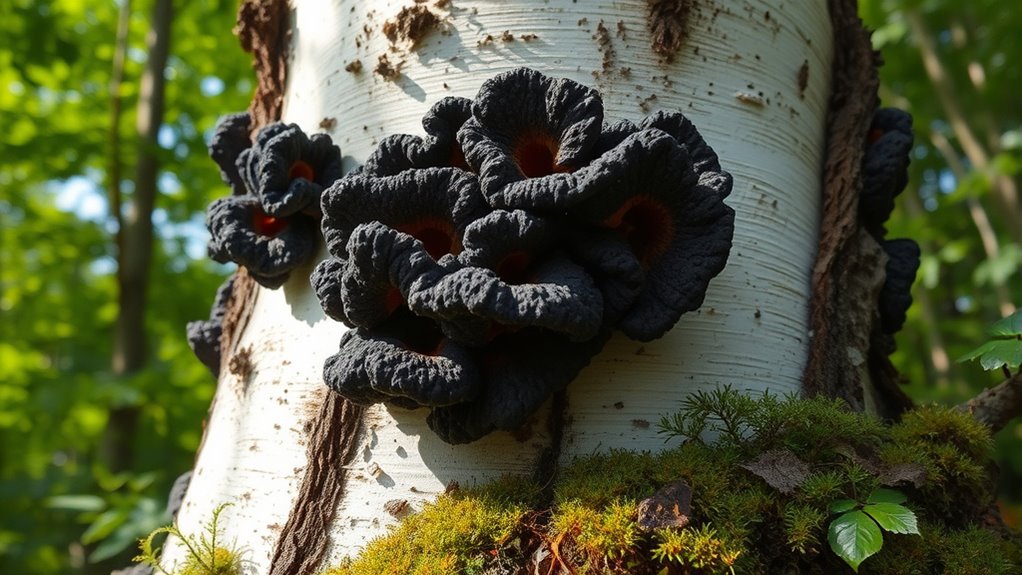
Are you confident you can spot chaga in the wild? If not, it’s time to sharpen your eye and embrace the principles of wildcrafting ethics. Recognizing chaga requires more than just knowing its appearance; it’s about respecting the environment and practicing sustainable harvest methods. When you venture into the forest for wildcrafting, remember that your goal isn’t to deplete the resource but to coexist with nature’s cycles. Chaga, a parasitic fungus that grows on birch trees, can be identified by its distinctive black, rough exterior, often resembling burnt charcoal. Inside, it reveals a vibrant, rusty-orange tissue that’s rich with medicinal properties. But don’t just look at the surface—consider the health of the tree and surrounding ecosystem. Take only what you need, leaving plenty behind to ensure future growth and biodiversity. Engaging with vetted sustainable harvesting techniques helps protect these ecosystems and ensures the longevity of wild chaga populations.
Understanding fungal cultivation techniques can also deepen your connection to this powerful mushroom. While wildharvesting is rewarding, it’s equally important to explore sustainable cultivation methods, especially if you seek a more controlled and ethical approach. Fungal cultivation techniques allow you to grow chaga at home or on a farm, reducing pressure on wild populations. These techniques involve inoculating sterilized birch logs with chaga spawn, creating a symbiotic environment that mimics nature without harming mature trees. By employing these methods, you contribute to the preservation of wild chaga habitats, ensuring that future generations can benefit from this gift of nature. Remember, cultivating chaga isn’t just about production; it’s about respecting the delicate balance of forest ecosystems.
As you develop your wildcrafting practice, keep the principles of ethics at the forefront. Steer clear of overharvesting, which can damage trees and disrupt local ecosystems. Instead, select mature, well-established chaga growths, and harvest only a portion of the fungus—never strip a tree completely. This mindful approach supports the health of the forest and aligns with your desire for liberation from destructive practices. Whether you’re wildcrafting or cultivating, your goal should be to foster harmony with nature. Respect the land, adhere to sustainable practices, and recognize that your actions have ripple effects. With intentionality and care, you can enjoy the benefits of chaga while ensuring its continued vitality for future generations.
Frequently Asked Questions
How Can I Differentiate Between True Chaga and Look-Alike Fungi?
You can differentiate true chaga from look-alike fungi by examining its unique fungus morphology and identification markers. True chaga has a rugged, black, crusty exterior that resembles burnt charcoal, often growing on birch trees. Look for a dense, conk-like structure with a rough surface and a soft, orange-brown interior. Avoid fungi with smooth or brightly colored surfaces, as they’re likely look-alikes. Trust your eye for these markers to confidently identify genuine chaga.
Are There Specific Seasons Best for Harvesting Chaga Sustainably?
You’ll find that the best seasonal timing for harvesting chaga aligns with late fall and early winter when the fungus is most active and visible. By harvesting during these times, you embrace sustainable practices that support mushroom health and forest balance. This timing not only sustains the chaga but also liberates you from unnecessary harm, allowing nature’s cycle to continue thriving. Celebrate this harmony with the environment and harvest with intention.
What Are the Legal Regulations for Wild Chaga Collection in Different Regions?
You need to check regional laws before harvesting wild chaga, as regulations vary widely. In some areas, you require harvest permits or specific permissions, while others ban collection altogether. Always research local rules and obtain necessary permits to harvest sustainably and legally. Respect the land and its regulations to ensure future generations can experience the freedom of wild chaga. Stay informed, follow regional laws, and harvest responsibly.
How Does Harvesting Impact Local Chaga Populations Long-Term?
If you harvest chaga too often, you risk long-term damage to its populations. Frequent harvesting can cause habitat disturbance, preventing mature chaga from regenerating naturally. Over time, this could lead to a significant decline in local chaga numbers, threatening the very ecosystems that support it. To truly free yourself and preserve nature’s balance, you must harvest responsibly, respecting sustainable limits and giving chaga the chance to thrive for generations to come.
Can Chaga Be Cultivated Sustainably Outside Its Natural Environment?
Yes, you can cultivate chaga sustainably outside its natural environment using specialized cultivation techniques. These methods minimize environmental impact by reducing wild harvesting pressure and allowing you to grow chaga on suitable substrates. By adopting controlled cultivation, you help conserve wild populations and enjoy a steady supply. This approach empowers you to harvest responsibly, respecting nature’s balance while ensuring access to this valuable medicinal mushroom.
Conclusion
By learning to identify chaga correctly and harvesting sustainably, you help protect this valuable mushroom and its ecosystem. Did you know that wild chaga populations have declined by over 70% in some regions due to overharvesting? By practicing responsible gathering, you guarantee future generations can enjoy its health benefits. Remember, your mindful approach makes a difference—so keep learning, harvesting wisely, and supporting sustainable practices to keep chaga thriving in the wild.