
To tell chanterelles from jack-o’-lanterns, look at their shapes and colors. Chanterelles have irregular, wavy, funnel-shaped caps that are golden yellow or orange, with soft, forked ridges running down the stem. Jack-o’-lanterns feature bright orange caps with deep, gill-like grooves underneath. Spotting these features helps you differentiate them safely. Want to learn more about how to confidently identify each mushroom? Keep exploring these key differences.
Key Takeaways
- Chanterelles have wavy, funnel-shaped caps with soft, forked ridges underneath, unlike the bright orange, deeply grooved caps of Jack-o’-lanterns.
- Underneath, chanterelles feature blunt, decurrent ridges, whereas Jack-o’-lanterns have pronounced, true gill-like structures.
- Chanterelles are typically golden yellow to orange with a solid, firm stem, unlike the bright orange, ridged caps of Jack-o’-lanterns.
- Visual cues such as wavy caps and soft ridges help distinguish chanterelles from the deep grooves and gills of Jack-o’-lanterns.
- Proper identification based on these features ensures safe culinary use and avoids poisonous look-alikes.
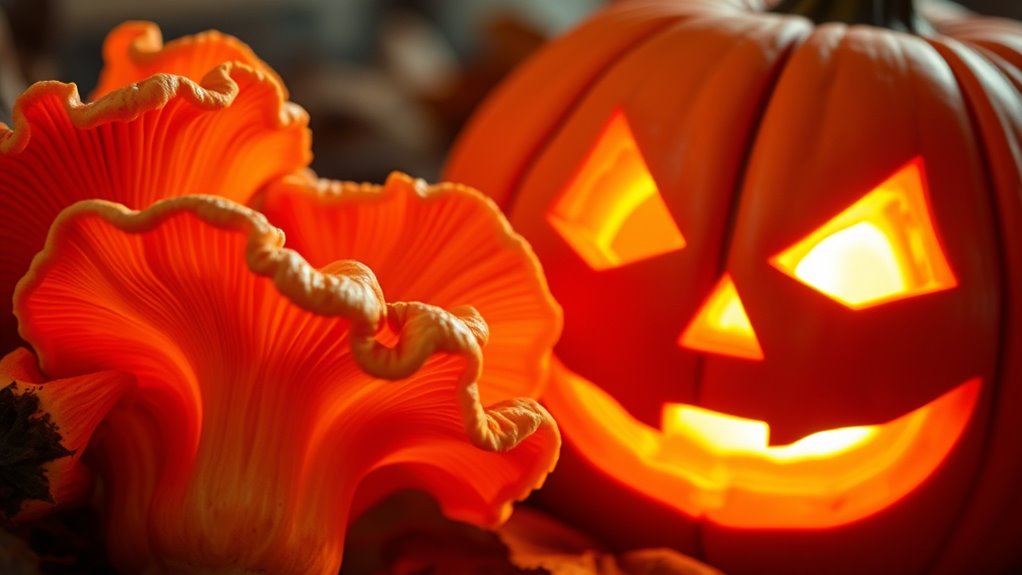
Have you ever wondered how to tell apart the delicious chanterelles from the spooky jack-o’-lanterns? It’s a vital question if you’re craving a culinary adventure without risking your health. Chanterelles are a prized delicacy, celebrated for their rich flavor and tender texture, making them a favorite in gourmet dishes. But beware—poisonous look-alikes lurk in the shadows, mimicking their appearance to deceive even seasoned foragers. Recognizing the real deal isn’t just about avoiding danger; it’s about liberating your kitchen from fear and embracing the joy of foraging confidently. When it comes to culinary uses, chanterelles shine in sautés, creams, and risottos, adding a unique, fruity aroma that elevates any dish. They’re versatile, complementing everything from eggs to meats, and their distinct flavor makes them worth the effort to identify correctly.
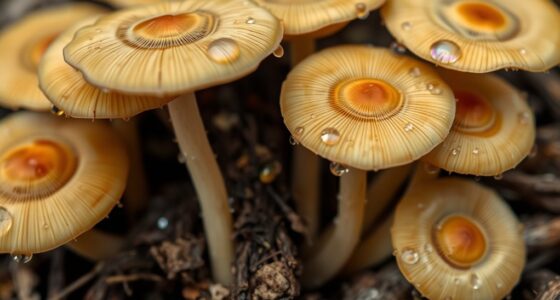
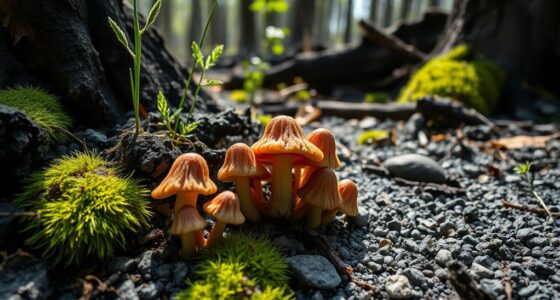
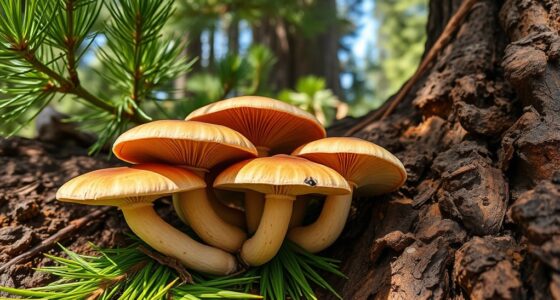
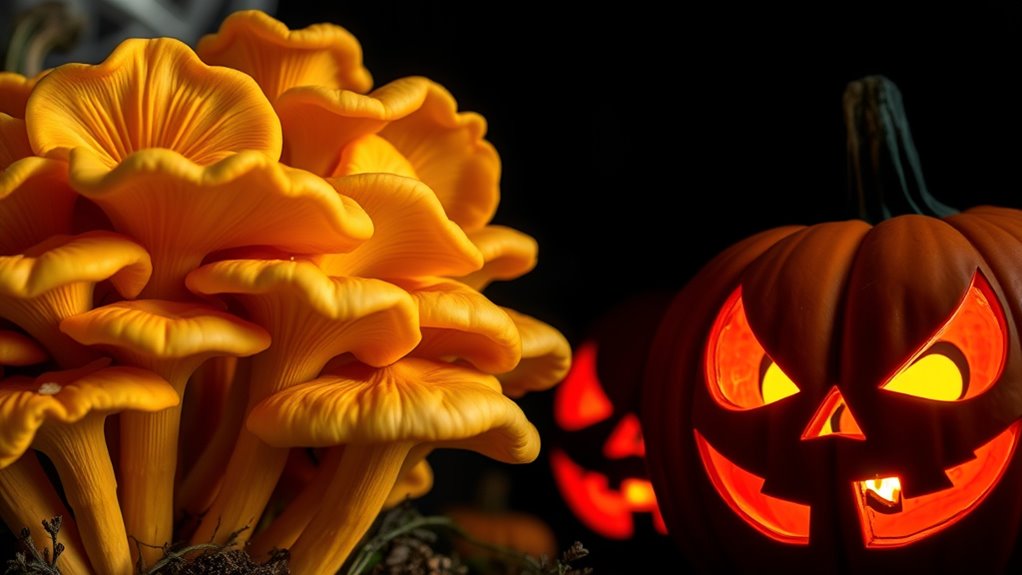
The key to distinguishing true chanterelles from their poisonous look-alikes lies in their physical features. Unlike the jack-o’-lantern mushroom, which sports a bright orange cap with deep grooves and a gills-like structure underneath, genuine chanterelles have a more irregular, wavy cap, often with a funnel shape. Their color varies from golden yellow to orange but lacks the distinct ridges of the false counterparts. Underneath, instead of gills, they display forked, blunt ridges that run down the stem, a signature characteristic of true chanterelles. These ridges are soft and decurrent, meaning they run down the stem, unlike the false ones that often have more pronounced gills and a different texture. The stem of a real chanterelle is solid, firm, and often the same color as the cap, providing another visual cue to help you identify them.
Understanding these differences empowers you to forage with confidence, liberating you from the paralyzing fear of poisoning. Remember, the danger isn’t just in misidentification; it’s in the hesitation that comes from uncertainty. When you know what to look for—wavy caps, forked ridges, and a sturdy stem—you open yourself to a world of culinary exploration. Chanterelles aren’t just about taste; they’re about the freedom to gather and cook what nature offers without second-guessing every step. Their culinary uses are vast, and with the right knowledge, you can confidently incorporate them into your dishes, knowing you’re celebrating nature’s bounty safely. So go ahead, venture out, and enjoy the liberation that comes with mastering the art of identifying these beautiful fungi.
Frequently Asked Questions
Are Chanterelles Safe to Eat Raw?
You can eat chanterelles raw, but it’s not usually recommended for the best edible preparation. They have a delicate, slightly fruity flavor profile that shines when cooked, releasing more aroma and tenderness. Eating them raw might cause stomach upset for some people, so it’s safer and more flavorful to sauté or cook them thoroughly. Embrace the culinary freedom—try them cooked to unseal their full potential and enjoy their true taste.
Can Jack-O’-Lanterns Be Used in Cooking?
Absolutely, you can use Jack-o’-lanterns in cooking, just like pumpkins in Halloween decorations and pumpkin carving techniques. Scoop out the insides, remove seeds, and prepare the flesh for soups, pies, or roasted dishes. Embrace your culinary freedom by experimenting with the vibrant orange flesh, turning spooky decorations into delicious meals. Let go of the ordinary, and creatively transform your Jack-o’-lanterns into tasty treats that celebrate your love for Halloween and cooking alike.
How Long Do Chanterelles Stay Fresh?
You can enjoy chanterelles for about 1 to 2 days if you want to maximize their freshness. To extend their fresh mushroom lifespan, store them in a paper bag in the refrigerator, which helps with mushroom preservation. Keep in mind, once they start to darken or develop a slimy texture, it’s time to let go. For the best flavor, consume them quickly and avoid prolonged storage.
Are There Any Toxic Look-Alikes for Chanterelles?
Yes, there are toxic look-alikes you need to be aware of during mushroom identification. For example, jack-o’-lantern mushrooms resemble chanterelles but are poisonous, so never rely on color alone. Always check for gills, stem structure, and spore color to avoid accidental ingestion. Trust your senses and knowledge, because misidentifying mushrooms can be dangerous. Stay informed, stay safe, and enjoy foraging with confidence.
What Are the Best Storage Methods for Chanterelles?
You might think storing chanterelles is complicated, but with the right mushroom preservation methods, it’s simple. Keep them in a paper bag in the fridge to maintain freshness, avoiding plastic which traps moisture. For longer storage, try drying or freezing. Proper storage techniques let you enjoy their delicate flavor longer, freeing you to savor your harvest without worry. Just be sure they’re clean and dry before storing to prevent spoilage.
Conclusion
In your foraging journey, remember the essential variations between chanterelles and jack-o’-lanterns. By observing their unique shapes, colors, and gill structures, you protect yourself from peril and pursue pure pleasure. Pay close attention, practice patience, and prioritize safety over speed. With careful caution and conscious comprehension, you can confidently differentiate, delight in, and delightfully discover these fungi’s fascinating features without fear. Ultimately, awareness and caution create confident, conscious, and cautious collectors.