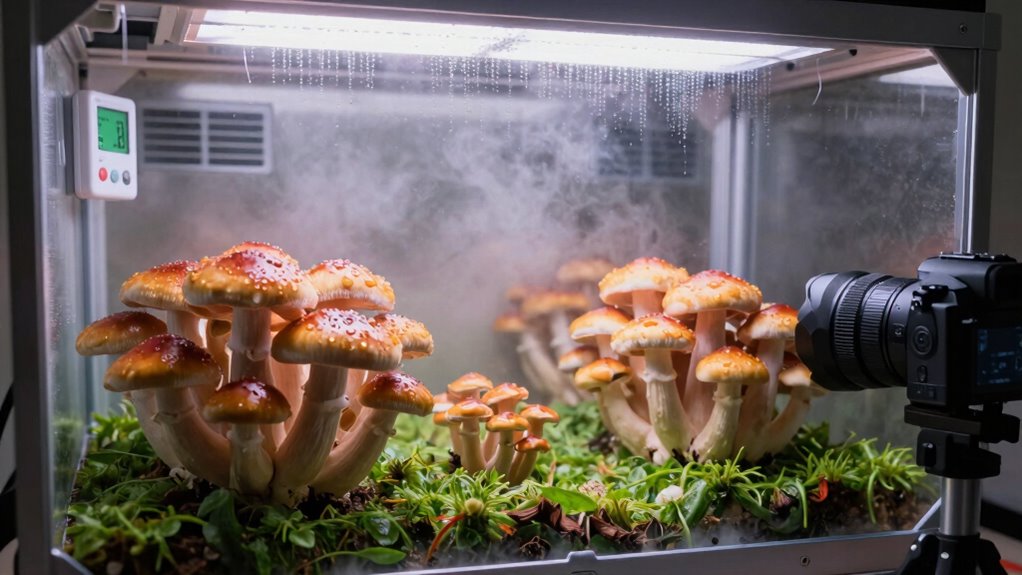

To grow mushrooms successfully, choose a grow tent that’s large enough and well-sealed to maintain stable humidity and temperature. Use humidifiers or misting systems to keep humidity levels consistent, avoiding fluctuations that stress the mushrooms. Proper ventilation with oscillating fans or exhaust filters helps remove excess CO₂ and prevent contaminants. By controlling light, humidity, and airflow correctly, you’ll create an ideal environment. Continue exploring to discover how to fine-tune each step for your best harvest.
Key Takeaways
- Select a sealed grow tent with proper ventilation to maintain stable humidity and temperature for mushroom growth.
- Use humidifiers or misting systems within the tent to keep humidity levels optimal and prevent fluctuations.
- Incorporate adjustable exhaust fans and HEPA filters to ensure fresh air exchange and control airborne contaminants.
- Diffuse low-intensity LED lighting with consistent 12-hour cycles to promote fruiting without stressing mushrooms.
- Regularly monitor environmental conditions to balance humidity, airflow, and temperature for healthy mushroom development.
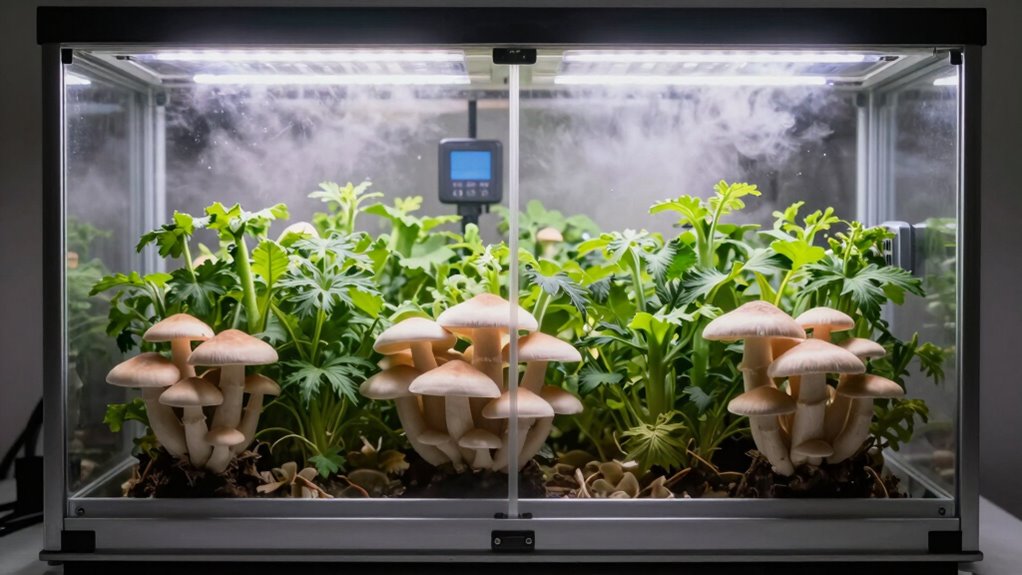
Creating the ideal environment for mushroom cultivation often starts with choosing the right grow tent and managing humidity levels effectively. Your grow tent acts as a controlled microclimate, so selecting one that provides ample space and proper sealing is essential. Once set up, you need to focus on factors that influence mushroom growth, especially lighting enhancement and ventilation strategies. Proper lighting isn’t about intense illumination but rather about providing the right spectrum and duration. Mushrooms don’t require direct sunlight; instead, diffuse low-intensity light helps trigger fruiting without stressing the mycelium. Use energy-efficient LED lights that mimic natural daylight, and keep light cycles consistent, usually 12 hours on and 12 hours off, to simulate natural conditions. This balance encourages healthy growth and prevents overstimulation, which can hinder development. Maintaining a stable environment also involves monitoring temperature alongside humidity to optimize growth conditions. Additionally, consistent humidity levels are crucial, so employing humidifiers or misting systems can help maintain the ideal microclimate within your grow tent. Proper humidity control techniques are essential to avoid fluctuations that could stress the mushrooms.
Ventilation strategies are equally critical in maintaining an ideal environment. Mushrooms produce carbon dioxide, and excess buildup can stall growth or lead to contamination. To avoid this, incorporate active ventilation systems—like oscillating fans or exhaust filters—that promote fresh air exchange without creating drafts or temperature fluctuations. You want to maintain a steady airflow, which helps regulate humidity and prevents the formation of mold or bacteria. Additionally, consider using exhaust fans with HEPA filters to control airborne contaminants, creating a cleaner environment that’s less prone to pests or mold spores. When designing your ventilation setup, verify it’s capable of maintaining consistent air exchange rates aligned with your mushroom species’ needs. Proper ventilation management ensures your environment remains conducive to healthy mushroom development. Implementing airflow regulation techniques can further optimize the environment and reduce the risk of contamination.
mushroom grow tent with ventilation
As an affiliate, we earn on qualifying purchases.
As an affiliate, we earn on qualifying purchases.
Frequently Asked Questions
How Do I Measure Humidity Levels Accurately Inside a Grow Tent?
You can measure humidity levels accurately with humidity sensors designed for grow tents. Place the sensor at the mushroom’s level for precise readings. To guarantee accuracy, regularly calibrate your sensors using calibration methods like salt solutions or calibration kits. This way, you’ll maintain ideal humidity levels, preventing mold or dryness, and ensuring healthy mushroom growth. Always check sensor readings against calibration standards for the best results.
What Are the Best Humidity Levels for Different Mushroom Species?
Think of mushroom species as delicate dancers, each with their own perfect humidity rhythm. For instance, oyster mushrooms thrive at 85-95% humidity, while shiitakes prefer 80-85%. Adjust your grow tent’s humidity preferences to match these needs, ensuring each species performs its best. Maintaining these ideal levels creates a harmonious environment, letting your mushrooms flourish like a well-choreographed ballet in a controlled, nurturing space.
Can Humidity Fluctuations Harm Mushroom Growth?
Humidity fluctuations can harm mushroom growth by stressing the fungi and disrupting their development. To prevent this, you should focus on humidity stabilization within your grow tent. Proper ventilation optimization helps maintain consistent moisture levels and prevents sudden changes. By controlling these factors, you create a stable environment that supports healthy mushroom growth, reduces the risk of contamination, and guarantees better yields.
How Often Should I Monitor Humidity in My Grow Tent?
You should monitor humidity daily, because even tiny fluctuations can throw your mushroom party into chaos. Keep an eye on air circulation and temperature regulation, as they directly impact humidity levels. Use a hygrometer for precise readings, and check it at least once a day—preferably more if your setup’s wild. Staying vigilant guarantees your fungi stay happy, healthy, and ready to fruit without a drama-filled humidity meltdown.
Are There Automatic Humidity Control Systems Available?
Yes, automatic humidity control systems are available. You can use devices with automatic sensors and humidity controllers that monitor and adjust humidity levels in real-time. These systems help maintain ideal conditions without constant manual intervention, ensuring your mushrooms grow in a stable environment. They are especially useful for consistent results and reducing your workload, making it easier to create the perfect humidity balance inside your grow tent.
Conclusion
In summary, mastering humidity control within your grow tent is essential for thriving mushroom cultivation. By maintaining the right environment, you’ll find your mushrooms flourish like a well-tended garden of Eden. Remember, even in this modern age, the basics of nature still hold true—balance and patience are your best allies. So, keep a close eye on humidity levels and adjust as needed, and soon you’ll be harvesting bountiful, delicious mushrooms, just like the old masters did in their secret orchards.