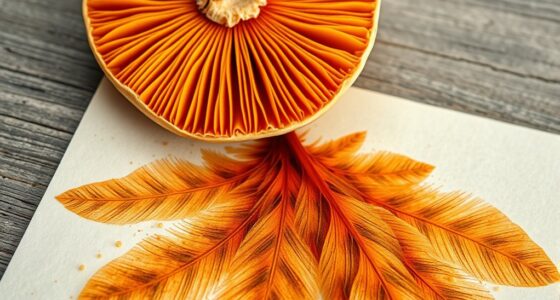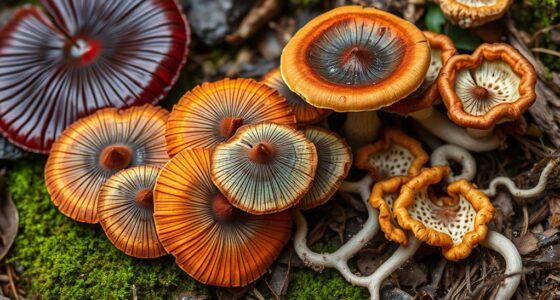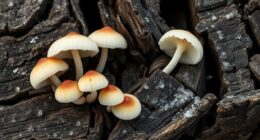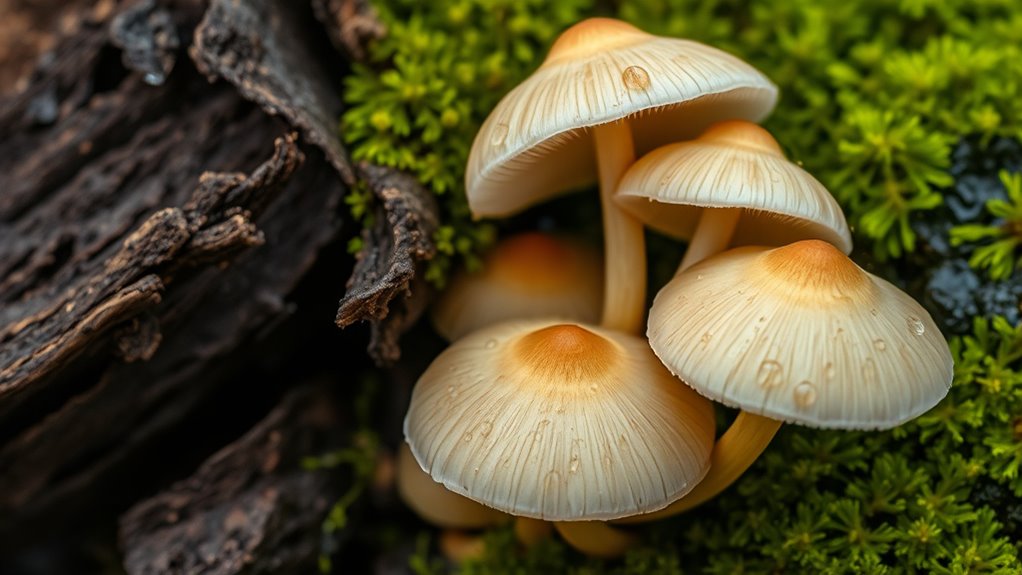
Honey mushrooms, or Armillaria, are easily recognized by their honey-colored caps, sweet aroma, and growth in clusters on decaying wood. Be sure to carefully check gill and veil details to confirm identification and avoid toxic look-alikes. Proper knowledge and cautious harvesting are vital, as misidentification can lead to health issues. If you want to understand more about safely identifying and using honey mushrooms, keep exploring what expert guides and experienced foragers say.
Key Takeaways
- Honey mushrooms (Armillaria) have honey-colored caps, gills underneath, and grow in clusters on decaying wood.
- Proper identification is crucial; distinguish them from toxic look-alikes using reputable guides or expert advice.
- Be cautious when harvesting wild honey mushrooms to avoid misidentification and potential poisoning.
- Cultivating honey mushrooms at home offers a safer alternative with controlled growing conditions.
- Responsible foraging and cultivation support safety, sustainability, and enjoyment of this edible fungus.
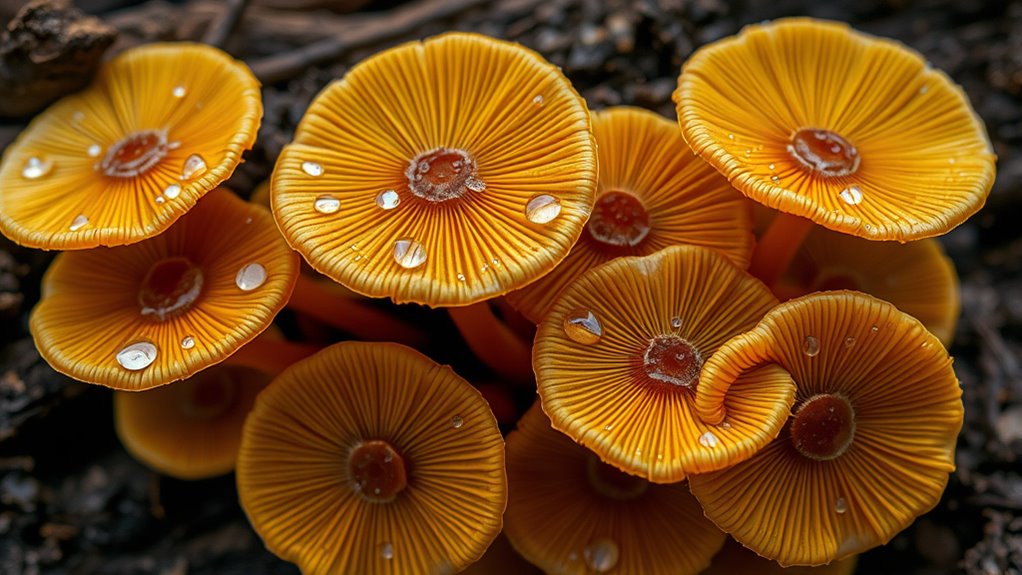
Honey mushrooms are a popular wild edible known for their distinctive golden color and sweet aroma. They inspire a sense of freedom, offering you a chance to connect with nature’s bounty and take control of what you consume. But with this power comes responsibility. Foraging safety is paramount when hunting for honey mushrooms in the wild. These fungi grow in clusters on decaying wood, often in forests or wooded areas, and they’re easy to mistake for other, potentially toxic species. Before you venture out, educate yourself thoroughly on their appearance, noting the honey-colored cap, the fine, almost web-like veil on young specimens, and the gills underneath. Remember, a single misidentification can have serious consequences, so always double-check with reputable guides or experienced foragers. It’s crucial to harvest only mature, healthy specimens, avoiding any that show signs of mold, damage, or abnormal colorations. Never pick mushrooms blindly; a cautious approach ensures your safety and preserves the environment. Once you’ve safely identified honey mushrooms, you might consider mushroom cultivation as an empowering alternative to wild foraging. Cultivating your own honey mushrooms at home gives you control over the process, reducing risks associated with misidentification and environmental contaminants. With proper techniques, you can grow these fungi on logs or in controlled indoor environments, turning the act of mushroom gathering into a sustainable, self-sufficient practice. Cultivation also allows you to experiment with different substrates, optimizing flavor and yield, and it offers a sense of liberation from dependency on wild populations. Whether you’re foraging or cultivating, always keep in mind that honey mushrooms thrive in specific conditions, preferring moist, shaded areas and decaying hardwood. If you’re new to mushroom cultivation, start small—using sterilized substrates and following detailed guides ensures success. This approach not only enhances safety but also deepens your connection to the process, empowering you to harvest with confidence and independence. Remember, mushroom safety isn’t just about avoiding poison; it’s about reclaiming your right to forage responsibly and sustainably. By learning to cultivate these fungi, you’re taking a meaningful step toward self-sufficiency and environmental stewardship. Honey mushrooms can be a delicious, rewarding addition to your culinary repertoire, but it’s essential to approach them with respect and caution. With knowledge and care, you can enjoy the liberating experience of foraging or cultivating your own honey mushrooms, savoring their sweet aroma and golden hue while maintaining control over your food sources. This balance of adventure and safety allows you to fully embrace the freedom that wild and cultivated mushrooms offer, enriching your life through mindful, empowered choices. Additionally, understanding the contrast ratio of your growing environment can influence the development of your cultivated mushrooms, ensuring optimal conditions for quality yields.
Frequently Asked Questions
Are Honey Mushrooms Edible Raw or Only Cooked?
You shouldn’t eat honey mushrooms raw because raw consumption can cause stomach upset or allergic reactions. Cooking them thoroughly neutralizes toxins and enhances their nutritional benefits, making them safer and tastier. By choosing to cook honey mushrooms, you reveal their full flavor and enjoy their health perks like antioxidants and vitamins. Don’t risk your health—prepare them properly, and you’ll enjoy their delicious, nourishing qualities safely.
How Can I Distinguish Honey Mushrooms From Toxic Look-Alikes?
To distinguish honey mushrooms from look-alike toxins, focus on identification tips like observing their honey-colored caps, gills that run down the stem, and the presence of a partial veil. Look for firm, fibrous stems and a smell reminiscent of fresh honey. Avoid ambiguous features, and always double-check with reliable guides. By sharpening your identification skills, you free yourself from fear and confidently enjoy safe, delicious foraging.
What Are the Best Methods for Storing Honey Mushrooms?
To store honey mushrooms, you should use proper storage techniques that preserve their freshness and flavor. Keep them in a paper bag in the refrigerator to allow airflow and prevent moisture buildup. For longer preservation, consider drying or freezing. Drying involves slicing and air-drying or using a dehydrator, while freezing entails blanching briefly before sealing in airtight containers. These preservation methods guarantee you can enjoy your harvest longer and feel liberated from immediate consumption.
Can Honey Mushrooms Cause Allergic Reactions?
Ever wonder if honey mushrooms can trigger allergic reactions? They can, as they sometimes provoke an immune response in sensitive individuals. You might experience symptoms like skin irritation, swelling, or respiratory issues. Isn’t it freeing to know your body’s reactions? To stay safe, always try a small amount first and consult a healthcare professional if you notice any adverse effects. Staying informed empowers you to enjoy foraging without worry.
Are Honey Mushrooms Safe for Children or Pregnant Women?
Honey mushrooms aren’t recommended for children or pregnant women because of potential allergic reactions and toxicity risks. For child safety, avoid giving them wild mushrooms, as misidentification can be dangerous. During pregnancy, consider pregnancy considerations carefully—these mushrooms may cause stomach upset or allergic responses. To stay safe and free from worries, always consult a healthcare professional before including wild mushrooms in your diet, especially for vulnerable populations.
Conclusion
Think of honey mushrooms as a double-edged sword in your forest garden. Like a wise old sage, they can nourish your body or, if misidentified, turn into silent adversaries. With careful attention and respect for their nature, you become the gardener of your own well-being, forging a delicate balance. Embrace their beauty and caution alike, knowing that mastering their secret language transforms you into both a protector and a student of nature’s intricate symphony.