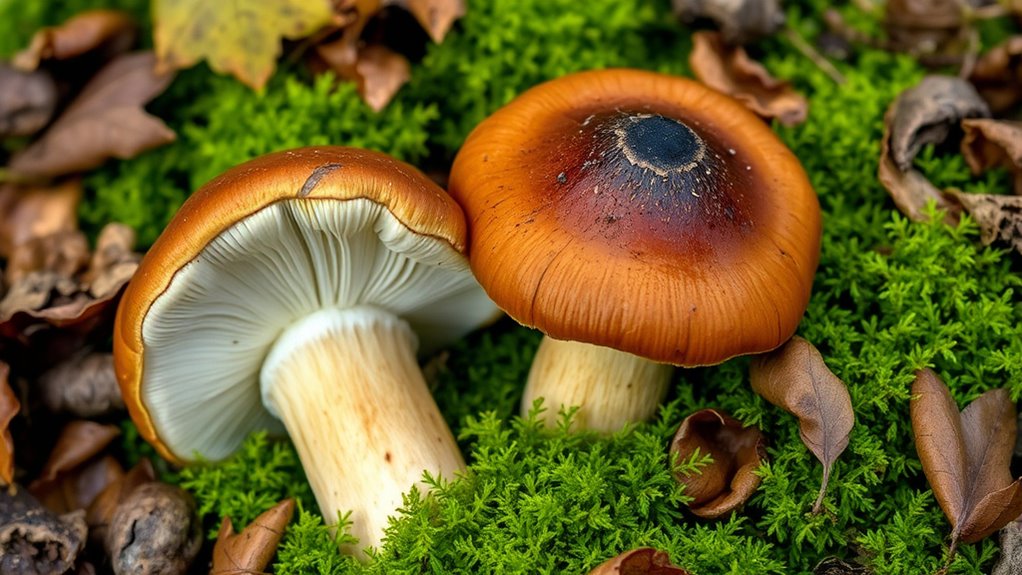

To identify the king bolete, look for a thick, bulbous stalk that’s often bulbous at the base and a convex to flat brown cap with a cracked surface. Its white to cream-colored pores underneath are tightly packed, not gills. These mushrooms thrive in mature coniferous or broad-leaved forests with well-drained, sandy soils. If you keep exploring, you’ll discover more tips on safely and sustainably harvesting this flavorful fungi.
Key Takeaways
- Recognize King Bolete by its bulbous, often swollen stalk and cracked, brownish convex to flat cap.
- Grows mainly in mature forests near conifers and broad-leaved trees on well-drained, sandy soils.
- Identify by dense, white to cream-colored pores underneath, not gills, and firm white flesh that turns slightly yellow when cut.
- Use gentle twisting or cutting at the base to harvest, avoiding pulling to protect future growth.
- Confirm proper identification to prevent confusion with toxic look-alikes and ensure safe, delicious culinary use.
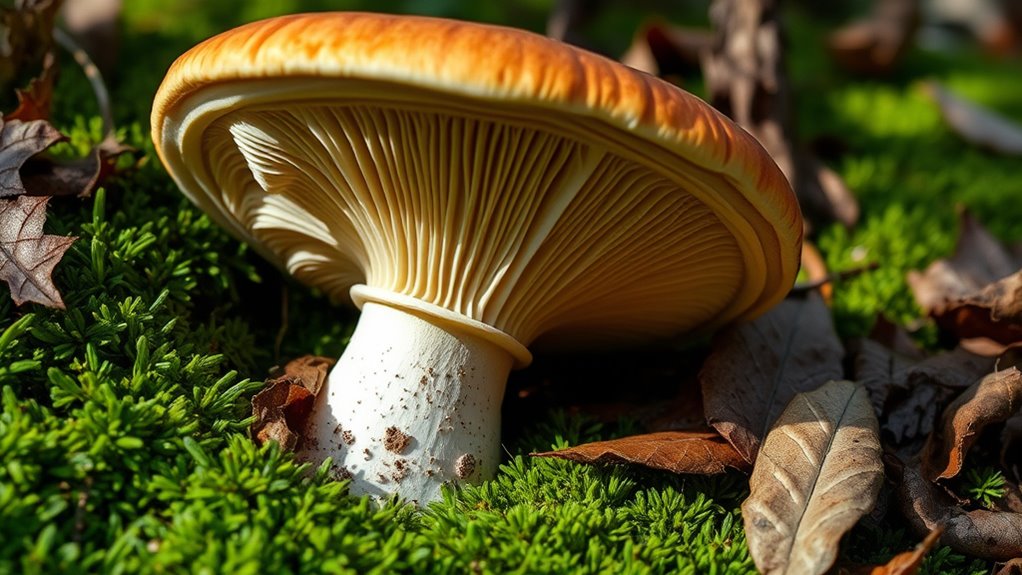
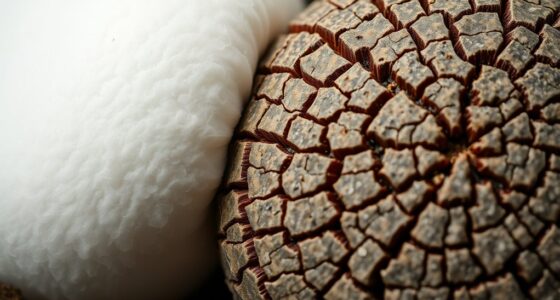
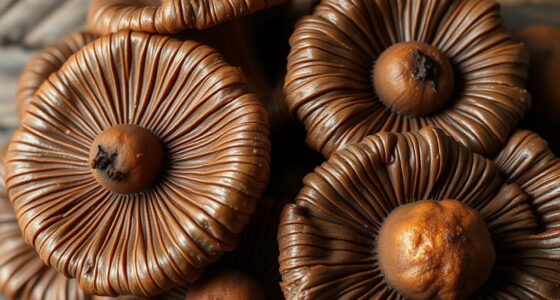
Are you confident you’re correctly identifying the King Bolete? It’s essential to be certain because, in the world of foraging, misidentification can mean the difference between a delicious find and a dangerous mistake. The King Bolete, or Porcini, is a prized mushroom celebrated for its robust flavor and versatility in the kitchen. To access its potential, you need to master the right foraging techniques that will help you distinguish it from look-alikes. Start by observing its distinctive features: a thick, bulbous stalk that can be bulbous at the base, and a cap that ranges from convex to flat, usually covered in a cracked, brownish surface. The underside reveals tightly packed, white to cream-colored pores, not gills. The flesh is firm and white, turning slightly yellow when cut. These details are your clues, and paying close attention guarantees you’re gathering what you seek.
Identify King Bolete by its thick, bulbous stalk and cracked brown cap with white pores underneath.
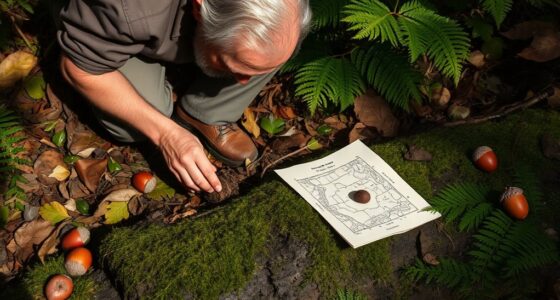
When foraging for King Boletes, your techniques should be deliberate and cautious. Look in mature forests, especially near conifers and broad-leaved trees, where these mushrooms thrive. Search the ground carefully, avoiding overly mossy or heavily decayed areas, as the best specimens grow in well-drained, slightly sandy soil. Always check for a thick, sturdy stalk and the characteristic pore surface underneath the cap. Gently twist or cut the mushroom at the base—never pull—so you don’t disturb the mycelium, which supports future growth. Remember, the goal is not just to find one, but to develop a sustainable practice that respects the environment. Proper foraging techniques empower you to harvest responsibly, guaranteeing these treasures remain plentiful.
Once you’ve identified a King Bolete, its culinary uses are virtually limitless. Its rich, nutty flavor enhances everything from simple sautés to complex risottos. You can dry them for later use, intensifying their umami and adding depth to broths and sauces. Fresh, they’re perfect sliced and added to pasta, combined with garlic and herbs, or sautéed with butter and served alongside meats. Because of their meaty texture, they often replace meat in vegetarian dishes, making them a liberating ingredient that elevates any meal. Keep in mind that proper cleaning—brushing off dirt and trimming the stem—is vital before cooking. When you understand their culinary versatility, you gain the power to transform humble ingredients into gourmet dishes, reclaiming the kitchen from processed foods and embracing your culinary sovereignty.
Mastering the identification of King Bolete access a world of culinary freedom. It means you’re no longer bound to store-bought mushrooms but can harvest and prepare nature’s bounty with confidence. By honing your foraging techniques and understanding its uses, you reclaim control over what you eat, connecting more deeply with the natural world and your own culinary instincts.
Frequently Asked Questions
Are King Boletes Available Year-Round?
King boletes aren’t available year-round; their seasonal availability peaks in late summer to fall. You can maximize your harvest by following seasonal cues and harvesting tips, ensuring you pick them at their prime. During colder months, they’re scarce, so plan your foraging trips accordingly. Embrace the thrill of hunting these mushrooms when they’re in season, and enjoy the liberation of gathering nature’s bounty at the right time.
How Can I Differentiate King Bolete From Similar Species?
You can differentiate a king bolete from toxic look-alikes by paying close attention to its thick, white stalk with a reticulated pattern near the top and its brown, spongy underside. Be cautious of false identification, as some species mimic its appearance but are toxic. Always check for a robust, meaty texture and a pleasant aroma. When in doubt, consult an expert—avoiding toxic look-alikes keeps your foraging safe and enjoyable.
Is It Safe to Eat King Bolete Raw?
You shouldn’t eat king bolete raw because cooking methods release its full flavor and guarantee safety. Raw consumption can cause stomach upset due to natural toxins, so always cook it thoroughly. When prepared properly, king bolete offers amazing nutritional benefits like antioxidants and vitamins. Embrace the freedom of savoring this mushroom’s rich taste by sautéing or roasting, knowing that proper cooking protects your health and enhances its earthy, satisfying profile.
Do King Boletes Have Any Look-Alikes That Are Toxic?
You might think King Boletes have no toxic look-alikes, but beware—some false boletes can be harmful. To stay safe, learn identification tips like checking for a thick, white pore surface and a smooth, brown cap. Toxic look-alikes often stain blue or have a slimy texture. Trust your judgment, but when in doubt, skip it. Your freedom to forage relies on knowing what’s safe and what’s not.
What Is the Best Way to Store Fresh King Boletes?
To preserve fresh king boletes, refrigerate them promptly using proper refrigeration techniques. Place the mushrooms in a paper bag to absorb moisture and keep airflow steady, preventing spoilage. Avoid plastic, which traps moisture and accelerates decay. For longer storage, consider mushroom preservation methods like drying or freezing. This approach guarantees your king boletes stay fresh, flavorful, and ready to enjoy whenever you choose to release their deliciousness.
Conclusion
Now that you know how to spot the king bolete, you’re practically a mushroom detective! Remember, when you confidently identify this prized fungus, you uncover a treasure more valuable than gold—nature’s gourmet gift. But stay vigilant: a single mistake could turn your adventure into a nightmare. Trust your senses, respect the mushroom’s power, and enjoy the hunt. With knowledge in hand, you’re unstoppable—like a true king of the forest!