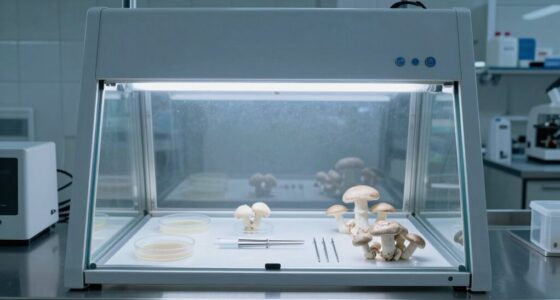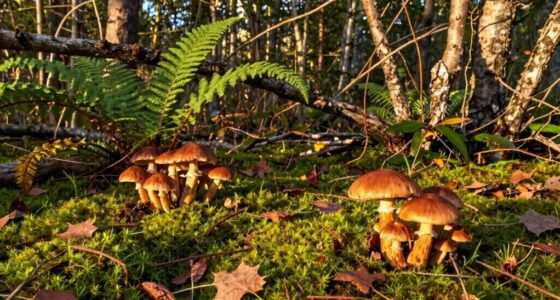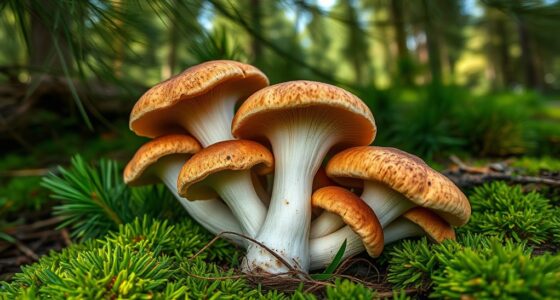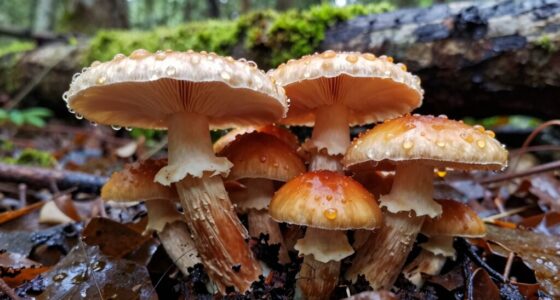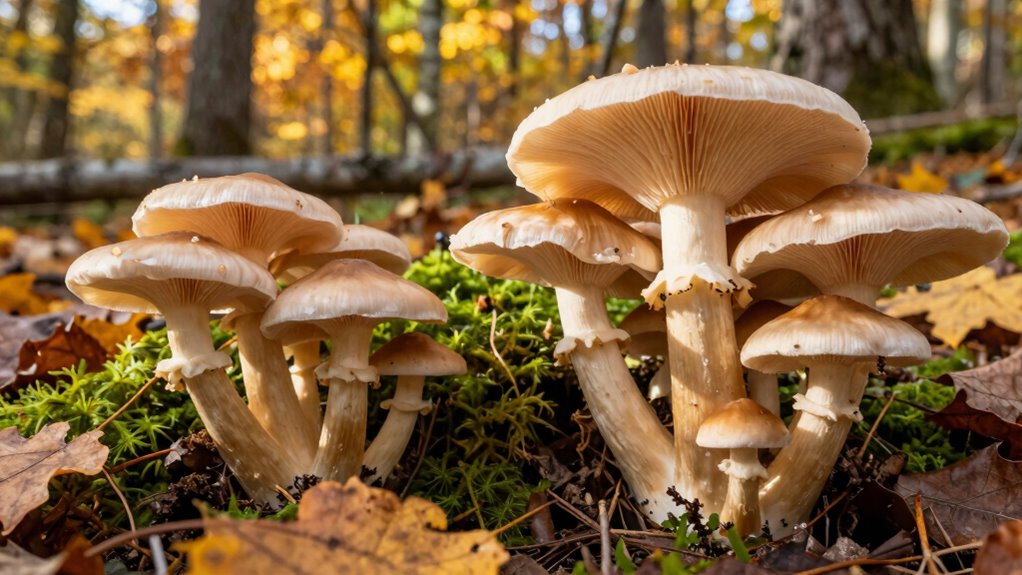
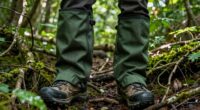
To think about mushroom seasons regionally, start by observing your local climate, including temperature, rainfall, and humidity, as these factors directly influence mushroom fruiting times. Pay attention to weather patterns from year to year, like wet springs or dry spells, which can shift seasons. Recognize microclimates and environmental cues that signal fungi growth. By understanding these regional and seasonal variations, you’ll improve your foraging success and discover more about how conditions shape mushroom availability.

Get garden gear delivered free — and shop member deals
- Fast, free delivery on millions of items
- Access to Prime Big Deal Days deals on October 6–7
- Prime Video, Amazon Music and more included
Key Takeaways
- Consider local climate patterns, including temperature, rainfall, and humidity, as they directly influence mushroom fruiting times.
- Recognize regional seasonal shifts, which may cause mushrooms to appear in different months than in other areas.
- Monitor weather fluctuations annually to anticipate changes in mushroom availability and adjust foraging plans accordingly.
- Identify microclimates within regions that may foster earlier or more abundant mushroom growth.
- Observe environmental cues and environmental changes to better predict and adapt to regional mushroom season variations.
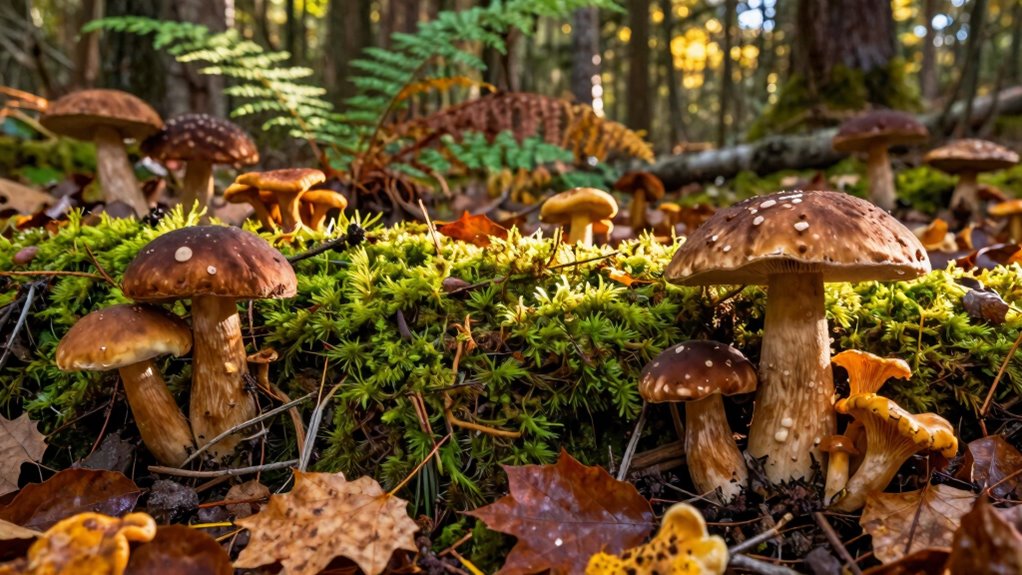
Understanding mushroom seasons requires more than just knowing the calendar dates; it involves recognizing how regional climate, weather patterns, and local ecosystems influence when different fungi appear. When you’re wild foraging, you quickly realize that mushrooms don’t follow a strict timetable everywhere. Instead, their growth depends heavily on the conditions unique to each area. Climate variations—such as temperature, rainfall, humidity, and seasonal shifts—play a major role in determining when mushrooms fruit. For instance, a rainy spring might produce a bountiful harvest in one region, while the same season in another area results in a sparse yield. It’s these climatic nuances that shape the timing of mushroom emergence, making local knowledge essential for successful foraging.
In some regions, the arrival of fall signals the start of mushroom season, but in others, it might be late summer or even early winter. You need to pay attention to how weather patterns fluctuate from year to year. A particularly wet summer can extend the mushroom season longer than usual, encouraging fungi to fruit later than expected. Conversely, an unusually dry spell can cause the season to shorten or delay mushroom growth altogether. Recognizing these climate variations helps you anticipate when and where certain species are likely to appear, reducing the guesswork involved in wild foraging. Additionally, understanding the climatic factors that influence fungal growth can improve your ability to predict seasonal shifts more accurately. Observing local weather patterns over time further enhances your seasonal awareness and foraging success. Developing an understanding of microclimates within your region can also help you identify specific spots where mushrooms are more likely to thrive at particular times. Being aware of weather fluctuations and their impact on fungal growth is crucial for planning your foraging trips effectively. Recognizing these environmental cues can also help you adapt your foraging strategies to changing conditions.
As an affiliate, we earn on qualifying purchases.
Frequently Asked Questions
How Do Climate Changes Affect Regional Mushroom Seasons?
Climate variability and ecological shifts directly impact your mushroom seasons. As temperatures rise or fall unexpectedly, mushrooms may fruit earlier, later, or become less predictable. Changes in rainfall patterns also influence spore growth and soil conditions, altering regional availability. You’ll notice these shifts in timing and abundance, making it essential to stay adaptable. Monitoring local climate trends helps you anticipate these changes, ensuring you’re ready to harvest when mushrooms are ripe.
Are Certain Mushroom Species More Seasonal Than Others?
Yes, certain wild mushroom species are more seasonal than others. For example, edible varieties like chanterelles and morels typically appear during specific times in spring and summer, while others like shiitake may be cultivated year-round. You notice that many wild mushrooms thrive only after particular weather conditions—such as rain or temperature shifts—making their seasons predictable. Understanding these patterns helps you harvest edible varieties at their peak, ensuring freshness and safety.
How Do Local Foraging Laws Impact Mushroom Harvesting?
Local foraging laws greatly impact your mushroom harvesting. You need to obtain foraging permits where required, as these legal restrictions protect ecosystems and guarantee sustainable gathering. Ignoring regulations can lead to fines or loss of foraging rights. Always check with local authorities or landowners before you harvest, and respect designated areas and limits. Staying informed and compliant helps preserve mushroom populations and keeps your foraging adventures legal and enjoyable.
Can Indoor Cultivation Alter Regional Mushroom Availability?
Indoor cultivation can definitely alter regional mushroom availability by expanding the mushroom market beyond seasonal limits. With proper cultivation techniques, you can grow mushrooms indoors year-round, regardless of outdoor conditions. This guarantees a steady supply, making mushrooms accessible even when they’re not naturally in season locally. So, if you’re looking to supplement local harvests or meet demand, indoor cultivation offers a flexible solution that can influence regional availability considerably.
How Does Urbanization Influence Mushroom Growth Cycles?
Urban expansion gently shifts mushroom growth cycles, often making them less predictable. Pollution effects from dense city life can subtly disrupt fungi’s natural timing, leading to earlier or delayed harvests. You might notice fewer wild mushrooms in heavily urbanized areas, as pollution and habitat loss limit their growth. While some species adapt, overall, urbanization tends to complicate traditional mushroom seasons, prompting you to seek alternative cultivation methods or more rural environments for reliable foraging.
Conclusion
Now that you understand how mushroom seasons vary by region, you’re probably wondering what’s next. Will this knowledge lead you to hidden foraging spots or surprise you with elusive fungi? The season’s shift could reveal rare finds if you stay alert and adaptable. Keep your eyes open and your senses sharp—something extraordinary might be just around the corner. The next mushroom season could change everything you thought you knew about foraging. Are you ready to discover what’s waiting?
Fall yard work Picks
leaf blowers
As an affiliate, we earn on qualifying purchases.