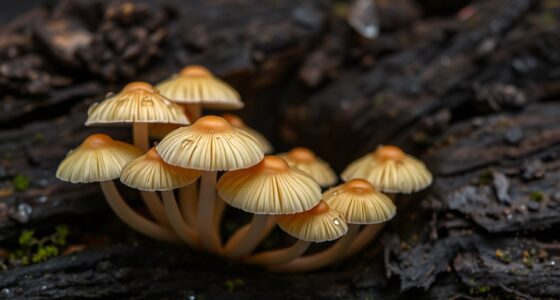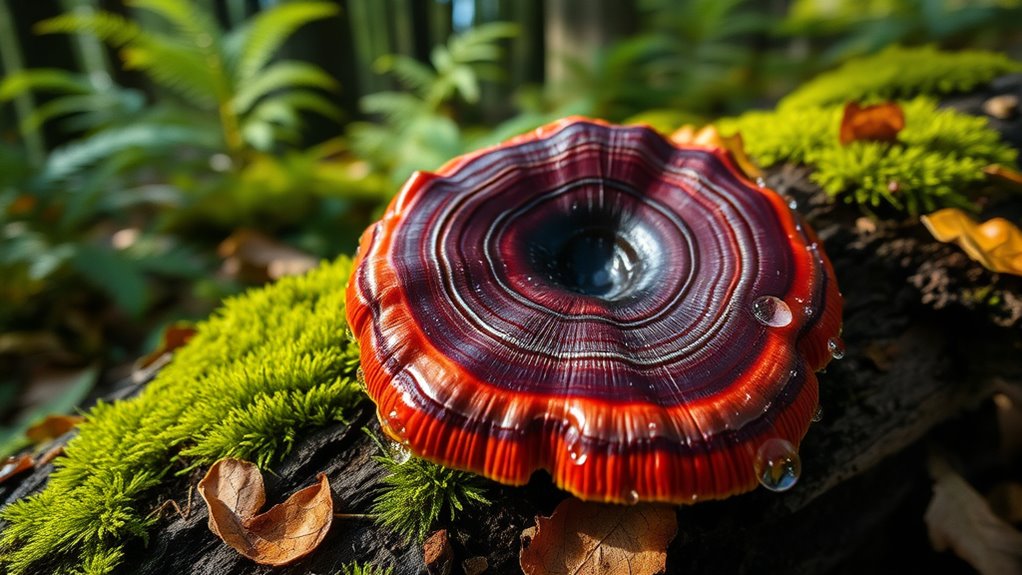

To identify and harvest reishi mushrooms ethically, focus on their distinctive shiny, reddish-brown to dark varnished surfaces on hardwoods like oaks and maples, often forming perennial fans or logs. Look for mature, vibrant specimens showing healthy growth to avoid damaging trees or environment. Use gentle tools and harvest only what you need, leaving enough behind for future growth. Embracing responsible practices helps protect forest health—if you keep exploring, you’ll uncover more ways to harvest sustainably.
Key Takeaways
- Recognize mature Reishi by its shiny, reddish-brown, varnished surface on hardwood hosts.
- Harvest responsibly using clean tools, avoiding damage to trees and surrounding mycelium.
- Focus on collecting only healthy, well-formed specimens to support sustainable populations.
- Limit harvests per location to prevent overharvesting and preserve forest ecosystems.
- Practice reverence and care to ensure future availability and ecological balance of wild Reishi.
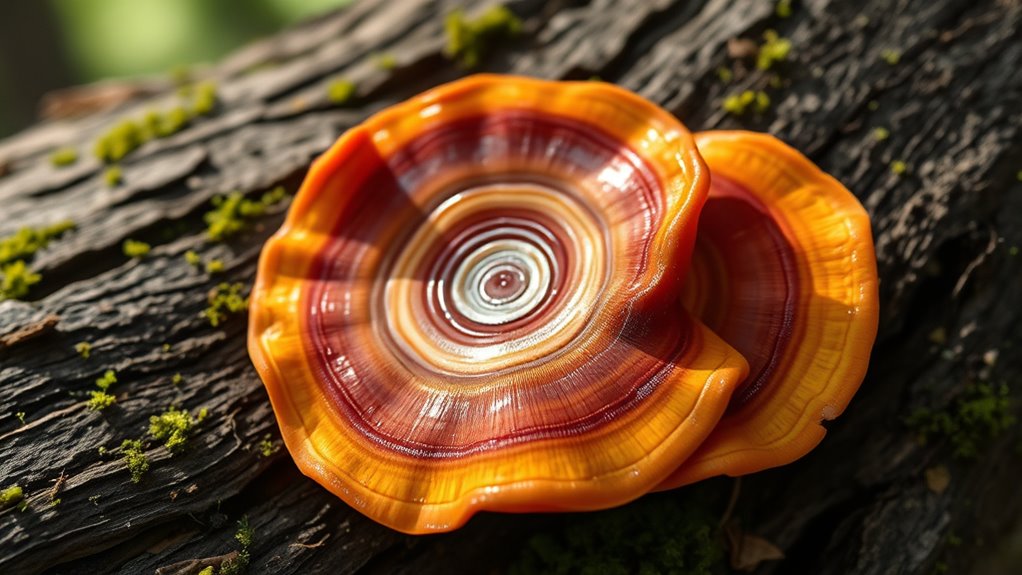
Have you ever wondered where reishi mushrooms grow naturally? These remarkable fungi typically thrive on decaying hardwoods in forested environments, especially in temperate and subtropical regions. Understanding their natural habitat is essential if you seek to harvest them responsibly. Wild harvesting requires a keen eye and respect for the ecosystem, ensuring you don’t disturb the delicate balance of the forest. Reishi often grows on oaks, maples, and other hardwood trees, forming perennial fans or logs with a shiny, varnished appearance. Recognizing these signs helps you identify mature specimens without damaging the surrounding flora or the mycelial network beneath the surface. Techniques include observing the growth patterns and signs of health in the fungus, which are crucial for sustainable harvesting.
Practicing conservation ethics is fundamental to maintaining the independence and vitality of wild mushroom populations. It’s tempting to pick as many as possible, but doing so can threaten local populations and disrupt forest health. Instead, approach wild harvesting as a form of reverence and responsibility. Only collect what you need, leaving plenty behind to ensure sustainability. Avoid overharvesting from a single location, and always leave the environment as you found it, or better. This mindset aligns with the broader goal of honoring nature’s cycles and respecting the intrinsic rights of the forest to regenerate.
When harvesting reishi, look for well-formed, vibrant specimens that display the characteristic reddish-brown to dark varnished surface. Use clean tools to gently remove the mushroom, making sure not to damage the host tree or the mycelium beneath. Remember, the goal isn’t just to gather, but to connect with the forest in a way that promotes its ongoing health and your liberation from the destructive cycles of overexploitation. By practicing ethical wild harvesting, you foster a relationship rooted in respect and mutual benefit, empowering you to access nature’s gifts without depleting or damaging them.
Incorporating conservation ethics into your harvesting practices allows you to engage with reishi mushrooms as more than just medicinal resources; they become symbols of harmony and sovereignty with the environment. This conscious approach helps preserve the wild populations so future generations can benefit from their healing properties. It’s about cultivating a mindful relationship with nature—acknowledging that true liberation comes from respecting the ecosystems that sustain us all. By honoring these principles, you take a stand against exploitation and help ensure that reishi and other essential fungi continue to thrive in the wild, supporting both the forest and your journey toward greater freedom.
Understanding their natural habitat is essential if you seek to harvest them responsibly, as it helps prevent unintentional damage to mycelial networks and maintains forest health.
Top picks for "reishi wild polypore"
Open Amazon search results for this keyword.
As an affiliate, we earn on qualifying purchases.
Frequently Asked Questions
Can Reishi Be Safely Harvested Without Harming the Environment?
Yes, you can harvest reishi safely without harming the environment by choosing sustainable practices. Opt for cultivation when possible, as it reduces ecological impact compared to wild harvesting. If you gather from the wild, do so responsibly by selectively taking only mature mushrooms and avoiding overharvesting. This way, you support ecological balance and ensure reishi remains available for future generations, freeing yourself from environmental guilt while enjoying this powerful fungi.
What Tools Are Best for Sustainable Reishi Collection?
Using a sharp, clean knife or pruning saw is your best bet for sustainable reishi collection, as it minimizes harm to the fungi and surrounding environment. Studies show that responsible harvesting supports fungi conservation efforts and adheres to harvesting regulations. You’re free to enjoy nature’s bounty while ensuring future generations can also benefit. With mindful tools, you protect the wild, embracing your freedom to harvest ethically and sustainably.
How Can I Differentiate Reishi From Look-Alike Fungi?
To differentiate reishi from look-alikes, focus on mushroom morphology and fungi ecology. Reishi typically has a woody, convex cap with a shiny, reddish-brown surface and a tough, leathery texture. It grows on hardwoods, especially oaks, thriving in specific ecological niches. Study these features carefully, trusting your intuition and connection to nature, so you can freely harvest reishi while respecting its role in the forest’s balance.
Are There Legal Restrictions on Wild Reishi Harvesting?
Did you know that many regions restrict wild reishi harvesting? You must check local legal regulations before collecting, as some areas require harvesting permits to protect wild populations. By respecting these laws, you help conserve this valuable fungus and enjoy your foraging experience freely. Skipping permits could lead to fines or environmental harm, so stay informed and authorized—your freedom to gather wild reishi depends on it.
How Does Harvesting Impact Reishi Populations Long-Term?
You might think harvesting reishi harms populations, but sustainable harvesting and conservation strategies can safeguard these fungi long-term. By selectively collecting mature specimens and leaving younger ones, you help ensure reishi populations thrive. Implementing practices like rotating harvest sites and avoiding overharvesting empowers you to contribute to conservation efforts. Your responsible actions support the natural balance, allowing you to enjoy reishi’s benefits while freeing wild populations for future generations.
Conclusion
As you venture into the wild, remember that harvesting reishi is like tending a sacred garden—respect and patience guarantee its continued presence. By practicing ethical foraging, you’re helping to preserve these ancient polypores for generations to come. Think of yourself as a steward of the forest’s quiet wisdom, honoring the delicate dance between nature and sustenance. With mindful steps, you become part of an ongoing story, echoing the timeless harmony of the wild.