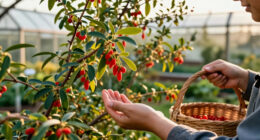
To identify reishi in the wild, look for fan-shaped or kidney-shaped caps growing on decaying hardwood like oak, maple, or beech trees, especially on old, rough bark. They have a distinctive lacquered appearance and often develop in natural forest settings. Harvest responsibly by only collecting mature mushrooms, avoiding damage to the host tree, and leaving enough behind for reproduction. If you continue exploring, you’ll gain more tips on sustainable foraging and preserving these valuable fungi.

Get garden gear delivered free with Prime
- Fast, free delivery on millions of items
- Prime Video, Amazon Music and more included
- Member-only deals all year
Key Takeaways
- Identify mature Reishi by its distinctive fan-shaped or kidney-shaped caps on decaying hardwoods like oak and maple.
- Look for a lacquered appearance and growth on old, rough-barked, decaying trees in forested environments.
- Harvest responsibly by only collecting fully developed mushrooms and avoiding damage to host trees.
- Support ecosystem health by leaving enough specimens for spore dispersal and natural reproduction.
- Practice sustainable foraging to maintain forest biodiversity and ensure long-term availability of Reishi.

Have you ever wondered where reishi mushrooms grow in the wild? You’re about to discover a world teeming with these powerful fungi, thriving in specific environments that support their unique life cycle. Reishi, or Ganoderma lucidum, prefers the wild habitat of decaying hardwoods—especially oak, maple, and beech trees. These trees provide the perfect foundation for reishi’s growth, offering both nourishment and stability. When you venture into forests or woodlands, look for old, dead or dying trees with rough, cracked bark. It’s within these natural settings that reishi develops its distinctive, lacquered appearance, often forming fan-shaped or kidney-shaped caps on the wood’s surface. The wild habitat isn’t just crucial for the mushroom’s growth; it’s also essential for maintaining the delicate balance of the ecosystem, supporting countless other species and fostering biodiversity. Recognizing the nutrients in decaying wood that support reishi’s development can deepen your understanding of its ecological role.
As you seek out reishi in its natural environment, remember that ethical harvesting is key. This means respecting the wild habitat and ensuring your collection doesn’t harm the forest or the mushroom population. You want to avoid tearing or damaging the host tree more than necessary, as reishi plays a beneficial role in decomposing dead wood and returning nutrients to the soil. Instead, learn to identify mature specimens—those that are fully developed but not overharvested—and harvest them responsibly. Cut only what you need, leaving enough behind to allow the mushroom to release spores and reproduce naturally. When you practice ethical harvesting, you’re not just taking from the wild; you’re contributing to the preservation of these essential ecosystems and ensuring others can experience the same liberation you seek through natural healing.
Understanding the wild habitat of reishi helps you connect deeply with nature’s intelligence and resilience. It’s about recognizing the importance of balance—respecting the forest’s rhythms and not disrupting its harmony. By approaching reishi with reverence and care, you align with a path of sustainable and conscious foraging. This approach empowers you to gather what you need without depleting the resource or harming the environment. The wild environment offers an abundant, authentic source of reishi, but it requires you to be mindful and responsible. When you do so, you forge a stronger bond with the earth, embracing liberation through harmony with nature. The journey into the wild isn’t just about collecting mushrooms—it’s about honoring their role in the natural world and your own path to wellness.
As an affiliate, we earn on qualifying purchases.
Frequently Asked Questions
Is Wild Reishi More Potent Than Cultivated Varieties?
Wild reishi often contains higher levels of bioactive compounds than cultivated reishi, making it potentially more potent. When you seek the true power of reishi, choosing wild specimens can uncover deeper health benefits. Cultivated reishi may be more accessible, but it might lack the same potency. Trust your intuition and connect with wild reishi to harness its full potential and liberation from limitations.
What Tools Are Best for Safely Harvesting Reishi?
Think of harvesting tools as your trusted compass on a journey to freedom. Use a sharp, clean knife or pruning shears to gently cut reishi at the base, avoiding damage to the wild patch. Prioritize ethical collection by leaving some fruiting bodies behind, ensuring the forest’s harmony. With mindful tools and respect, you tap into nature’s power without stealing from its soul, fostering a true liberation of spirit and environment.
How Can I Distinguish Reishi From Similar Look-Alikes?
To distinguish reishi from look-alikes, pay close attention to its fan-shaped, woody cap and smooth, shiny surface. Look for a kidney or kidney-bean shape, with contrasting white pores underneath. Use careful look-alike identification to guarantee harvesting safety, avoiding toxic varieties. Trust your intuition and observation skills, and always double-check with reliable guides. This way, you can confidently harvest reishi, embracing your freedom while respecting its delicate ecology.
Are There Legal Restrictions on Foraging Reishi in Certain Areas?
Think of foraging like crossing a guarded garden; some areas hold treasures but require permits to access. You must check local laws about foraging permits and restrictions in protected areas before harvesting reishi. Ignoring these rules risks fines or losing your freedom to explore wild places. Respect the boundaries set by authorities, and you’ll enjoy your wild harvests with the liberation that comes from following the law and honoring nature’s rules.
What Is the Best Time of Year to Find Reishi in the Wild?
You’ll find reishi most abundant in late summer to fall, typically from August through October, when seasonal timing aligns with ideal environmental factors like humidity and decaying hardwoods. This is your prime window to liberate yourself from restrictions and connect with nature’s healing gifts. Keep an eye on the weather, as damp, cooler days foster the growth of these powerful polypores, making now the perfect moment to seek them out.
Conclusion
As you venture into the wild, remember that harvesting reishi is like tending a garden—your careful actions help sustain the forest’s balance. I once watched a forager carefully select only fallen logs, leaving enough behind for the ecosystem to thrive. Just as a gardener nurtures growth, your mindful approach preserves these mushrooms for future generations. By respecting nature’s rhythm, you become a steward, ensuring reishi’s wisdom remains abundant for those who come after you.
Fall yard work Picks
leaf blowers
As an affiliate, we earn on qualifying purchases.