
TL;DR

Get garden gear delivered free — and shop member deals
- Fast, free delivery on millions of items
- Access to Prime Big Deal Days deals on October 6–7
- Prime Video, Amazon Music and more included
Outdoor string lights add soft ambient lighting to patios, decks, and gardens, but the right set depends on weather ratings for the full product, power source, brightness, and cable layout. Measure your route, plan secure supports, and follow the manufacturer’s instructions so the lights look inviting and stay safely installed.
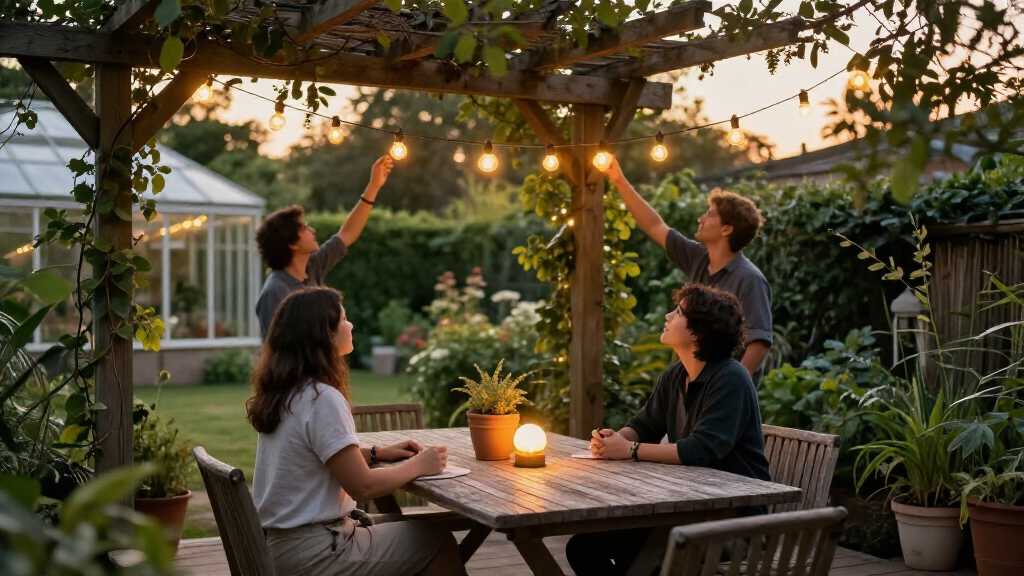
One loose cable can turn a cozy patio into a frustrating tangle, while a well-planned strand can make dinner outside feel like a little occasion. Outdoor string lights are a simple way to add a warm glow to patios, decks, balconies, and gardens.
This guide walks you through choosing bulbs and power sources, measuring your layout, hanging lights with proper support, and caring for them through changing weather. A few minutes of planning can save you from dim corners, sagging cables, or a plug that was never meant to get wet.
Check outdoor ratings for plugs, sockets, connectors, and cables, not just bulbs.
Compare lumens for brightness and kelvin for color; LED sets do not always dim or offer replaceable bulbs.
Choose plug-in, solar, or battery power based on outlet access, sunlight, and desired run time.
Measure the full cable route and plan support points before buying or hanging a strand.
Inspect for damage and store removable lights according to the manufacturer’s instructions.
Choose bulbs that match the mood you want
Outdoor string lights create ambient lighting for relaxed evenings, and the best bulbs balance the atmosphere you want with the light you need. LEDs generally use less electricity and last longer than incandescent bulbs, though the actual brightness, lifespan, and replaceability vary by model. For example, warm white LEDs can soften a small balcony, while a brighter, focused light may work better over a grill or outdoor table.
Check lumens for light output and kelvin for color temperature. Lower kelvin values look warmer; higher values look cooler. These numbers help you predict how the space will feel: a low-output, warm strand can make a seating area inviting, but may not provide enough task light to see food or steps clearly. If you want flexibility, look for dimming, but confirm the set supports it: an LED label alone does not promise dimming or replaceable bulbs.
Incandescent bulbs give off a familiar warm glow, but they use more energy and can become hot. That heat can matter in a tight or enclosed spot, so follow clearance and installation instructions. Shatter-resistant bulbs are useful where a stray ball or a gust might knock a strand, though they do not make the cable or sockets damage-proof; check the maker’s product details and inspect the whole set.
Check the whole set before trusting it outdoors
Outdoor string lights are suitable for your space only when the full set, including plugs and connectors, is rated for the exposure it will face. An IP rating describes protection from dust and water, but it does not mean a product can withstand every storm, temperature, or installation. For instance, bulbs may tolerate rain while the plug connection still needs a sheltered location. That distinction affects where you can place the power connection and whether the set suits an exposed garden or only a covered patio.
Read the product instructions and rating details for the cable, sockets, plugs, and any connector points. Keep connections away from standing water, use only outdoor-rated extension cords, and replace damaged cables instead of taping over a fray. A weak or unrated connection can undermine an otherwise suitable strand, so plan the route around protected connection points before hanging it. If you plan a permanent installation, follow local electrical guidance.
“Outdoor” on the package is a starting point. Check the ratings and instructions for every part that will be exposed to weather.
Whether lights can stay up all year depends on the manufacturer’s guidance and your local climate. A mild covered porch and a windy, icy garden put very different demands on the same strand. Wind can pull on supports, while repeated wet and freeze-thaw conditions can stress materials; seasonal removal may extend service life when the set is not rated for those conditions.
Pick a power source that fits your patio
Outdoor string lights run on plug-in, solar, or battery power, and each option suits a different layout. Plug-in sets provide steady power, but you need a suitable outdoor outlet and a safe route for the cable. Their dependable output is useful for longer evenings, though the outlet location can dictate the layout. Solar models avoid outlet wiring, while battery sets can reach a balcony corner or garden nook with no nearby socket; both trade continuous, predictable operation for greater placement flexibility and dependence on stored energy.
| Power source | Works well when | Check before buying |
|---|---|---|
| Plug-in | You want steady operation near an outdoor outlet | Outlet location, cable route, and outdoor ratings |
| Solar | You can place the panel where it gets daylight | Panel position, battery capacity, and expected run time |
| Battery | You need flexible placement without an outlet | Recharge or replacement needs and operating time |
For example, a solar panel tucked under a deep balcony roof may receive too little sunlight to keep the lights glowing into the evening. The tradeoff is that moving the panel into a sunny spot may require a longer lead or a different mounting location. Solar performance also changes with season, shade, panel placement, and battery condition; short winter days can mean shorter run times. Compare expected run time with how long you use the space, rather than assuming a full charge will last through every evening.
Smart features such as timers, app controls, voice commands, or color changes can add convenience. Compatibility varies by model, so check the manufacturer’s specifications before expecting the lights to work with your existing smart-home system. A timer can reduce unnecessary operating hours, while app controls add little if the set’s power source or wireless connection cannot support them where the lights are installed.
Measure your layout so the lights hang neatly
To choose the right length of outdoor string lights, measure the actual route, account for the hanging pattern, and leave enough cable to reach the power source without pulling it taut. A straight line across a six-foot patio edge needs less length than a zigzag across the same space. The extra length in a zigzag also changes where the bulbs fall, so mapping the path helps avoid dark gaps and a final span that cannot reach its support. Sketching the route first can help you catch a plug that ends up on the wrong side of the seating area.
- Mark the path. Decide whether you want straight runs, a zigzag, or a strand around the perimeter. A perimeter can spread light across a seating area, while a single run is simpler but may leave the far side dim.
- Measure each span. Follow the planned cable route, including turns and the distance to the outlet or solar panel. Measure along the route rather than across open space, since corners and the approach to the power source use cable too.
- Plan your supports. Choose secure attachment points and suitable hooks, anchors, poles, or guide wire for the surface. Support spacing affects how much a strand sags and how much load each point carries; use the manufacturer’s guidance to avoid asking the cable itself to bridge too far.
- Check the slack. Allow a gentle drape, but do not stretch the cable tightly or let it carry more weight than the instructions allow. Some slack accommodates a graceful shape, while too much can sag into people’s path or put strain on connections.
- Confirm connectability. Join multiple sets only when the manufacturer permits it and within the stated limits. A longer connected run can simplify coverage, but exceeding the limit may overload the set or cause unreliable operation.
Imagine a small deck where the outlet sits by the door and the table occupies the far corner. A perimeter layout could light the seating evenly, while a single taut line might leave one end dark and put unnecessary strain on the cable. The best route balances coverage with manageable spans and a convenient connection point.
Hang the strand securely, even without trees
Secure outdoor string lights by supporting the cable at planned points with appropriate mounting hardware, rather than stretching the strand between distant anchors. The supports carry the pull and weight of the run; if the cable is used as the structural line, tension can stress sockets and connections as well as the cable itself. Walls, trees, and purpose-built poles can all work when the support suits the surface and the expected load. On a treeless balcony, for example, suitable wall anchors or a guide wire between secure points can create a tidy route.
Follow the manufacturer’s installation instructions, protect connections as directed, and keep the cable clear of standing water and walkways. A well-supported route is less likely to sag into a walkway or shift in wind, which helps protect both the wiring and people using the space. Do not overload an outlet or use damaged wiring. If you are unsure whether a permanent fitting or electrical setup meets local requirements, get guidance from a qualified professional.
Smart timers and dimmers can make the finished setup easier to use, but add them only if the lights and controls are compatible. A timer can switch on a warm glow before guests arrive and reduce the time lights are left on; it cannot fix an unsuitable outdoor rating or a loose support point.
Keep your lights working through the seasons
Outdoor string lights last longer when you inspect and store them as their maker directs. Periodically check cables, sockets, bulbs, support points, and connectors for damage or looseness. After a windy spell, take a quick look for a shifted hook or a strand that has started to sag. Finding a problem early can prevent a small support issue from pulling on the wiring or turning into a broken connection.
Clean the set only as the manufacturer instructs, and store removable lights somewhere dry if they are not designed for year-round exposure. Avoid methods or cleaners the instructions rule out, since they may damage seals or finishes. Before putting them away, a quick inspection can reveal a cracked bulb or frayed cable that might otherwise surprise you next spring.
Seasonal care depends on the rating and conditions. A sheltered patio may allow longer use than an exposed garden, but no light set should be left in conditions its instructions rule out. Removing a strand before severe weather can reduce wear on both the cable and its supports; if you leave it installed, check it afterward and address any damage before using it again.
Frequently Asked Questions
Can outdoor string lights stay up all year?
It depends on the product’s weather rating, manufacturer instructions, and your local climate. Inspect the cables, sockets, and supports regularly, especially after harsh weather.
Are outdoor string lights waterproof?
Some sets resist water to a specified level, but “waterproof” is not a universal guarantee. Check the IP rating and the instructions for plugs, sockets, and connectors as well as the bulbs.
Are LED or incandescent string lights better?
LEDs generally use less electricity and last longer, while incandescent bulbs offer a familiar warm appearance but use more energy and can become hot. Compare the product specifications, including brightness, lifespan, and whether bulbs are replaceable.
How many string lights do I need?
Measure the route the cable will follow, including zigzags, turns, and the distance to the power source. Add enough length for a gentle drape without pulling the cable taut.
Do solar string lights work in winter or shade?
They may run for less time when daylight is limited or the panel sits in shade. Panel placement, battery capacity, battery condition, and seasonal sunlight all affect performance.
Conclusion
Start with the route, the power source, and the full set’s weather ratings; then choose a glow that suits the way you use the space. A little planning turns a strand of bulbs into a welcoming pool of light, with no cable pulled tight across the evening.
Fall yard work Picks
leaf blowers
As an affiliate, we earn on qualifying purchases.