TL;DR
Savvy Gardening recommends transplanting peonies in fall, when they are entering dormancy and cooler weather gives roots time to establish before the ground freezes. Choose a sunny, well-drained site, dig widely around the root clump, and retain at least three buds on each division; the exact date depends on local conditions.
Peonies are best transplanted in fall, as they begin to go dormant, according to a gardening report from Savvy Gardening. Moving them in cooler weather gives roots time to settle before the ground freezes and can help gardeners relocate plants that have become shaded or divide them for additional plantings.
The report says to look for a period after the heat of summer has passed but while several weeks, or about a month, remain before the ground freezes. The calendar date will differ by climate, and the source does not give a single date that applies everywhere. The aim is to avoid exposing a newly moved plant to intense heat while allowing it time to establish roots.
Before digging, cut the foliage close to ground level with sharp garden shears. Choose a site with at least six hours of direct sun and well-drained soil, leaving about three to four feet between plants. The report advises accounting for trees and shrubs that could shade the area as they grow.
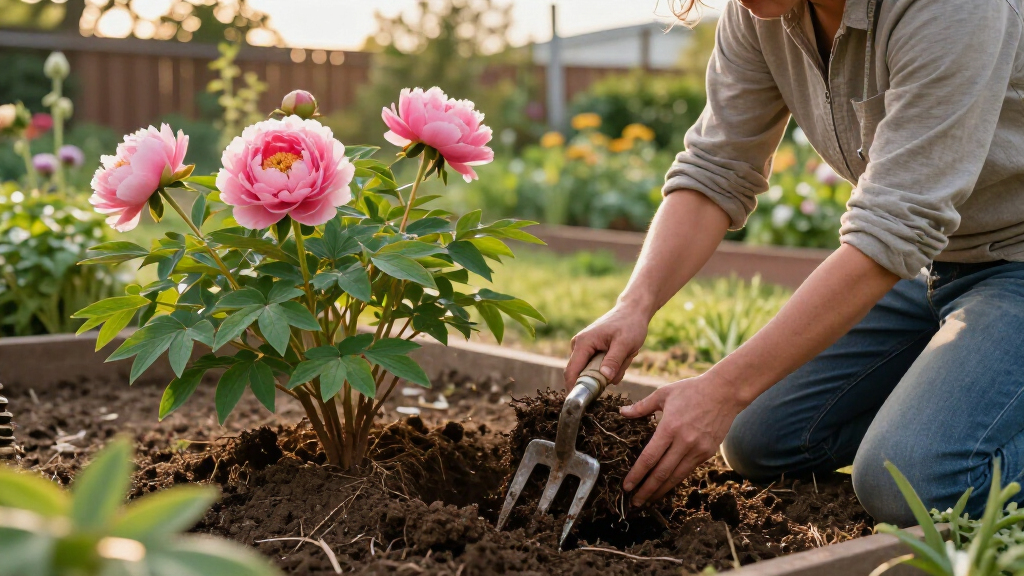
To lift the plant, dig a circular trench at least 10 inches from the clump, then work the spade underneath it. The report recommends preserving roughly six to 10 inches of root system around the clump. If dividing, clear away loose soil so the roots and buds are visible, and remove rotten areas. Each division should have at least three buds, with five preferred, and a substantial root system. Replant promptly, taking care not to leave the roots exposed for longer than necessary.
Fall Timing Protects Root Establishment
Timing matters because a transplanted peony has to recover from being lifted and establish roots in its new location. In fall, the plant is heading into dormancy rather than putting energy into new leaves and flowers, while cooler conditions reduce the stress of summer heat. The remaining time before the soil freezes gives roots an opportunity to settle.
Good timing and careful handling also matter for future flowering. Savvy Gardening warns that transplanting at the wrong time or dividing carelessly can reduce a plant’s blossom potential. The advice is particularly relevant to gardeners whose plants have lost sunlight as surrounding trees or shrubs have grown, or who want to divide a large clump to share or spread through the garden.
As an affiliate, we earn on qualifying purchases.
Why Peonies Need a Careful Move
Peonies can persist in gardens for many years, but their locations may become less suitable as the garden changes. The Savvy Gardening writer describes moving plants after a changing tree canopy left them with less light. Transplanting can also be a way to divide an established plant, though the report says clumps around three to five years old are easier to handle than larger, more cumbersome root systems.
Dividing is optional: a peony can be moved without being split. The report says division encourages new root growth, but each resulting section needs enough buds and roots to support regrowth. A gardener who wants a divided plant to produce strong blooms should retain at least three buds per section, ideally five.
If the prepared planting site is not ready, the report says dormant divisions can be held for up to a week. It describes wrapping each division in several layers of moist newspaper or placing the roots in a large pot with barely damp sterile medium, such as coconut coir. Keep them in a cool, shady place and move them to the prepared hole when it is ready.
“Peonies will transplant best when the plants are going into dormancy.”
— Savvy Gardening report
Local Weather Sets the Exact Window
The report does not name a specific week or month for transplanting because the suitable window depends on local climate. It also does not provide a universal temperature threshold or a precise number of days before frost. Gardeners need to judge when their peonies are entering dormancy and how much time remains before the ground freezes.
The guidance describes general techniques, not a guarantee that a moved or divided peony will bloom immediately. Results may depend on the plant’s condition, how much root is retained, the new site and local growing conditions. The source gives no detailed instructions for planting depth, watering frequency or aftercare beyond choosing a suitable location and allowing time for roots to establish.
Prepare the Site Before Digging
Gardeners planning a move should first identify a sunny, well-drained site and check that it will not be shaded as nearby plants mature. Once the peony is entering dormancy and the weather has cooled, cut back its foliage and lift the root clump carefully. If dividing, inspect the roots and keep enough buds and root mass on each section before replanting.
Where the new location is not ready, the report’s short-term holding methods offer a way to keep dormant roots cool and lightly moist for up to a week. The immediate next step is to plant them in the prepared spot before the soil freezes. The report does not specify a follow-up schedule, so local growing conditions will determine how quickly the plants reestablish.
Key Questions
When is the best time to transplant peonies?
Fall, as the plant enters dormancy, is the recommended time. Move it after intense summer heat has passed and early enough for roots to settle before the ground freezes. The date depends on local climate.
Do I have to divide a peony when I move it?
No. The report says a peony can be transplanted without division. If you do divide it, retain at least three buds per section, with five preferred, and keep a substantial root system.
How much sun and space do peonies need?
Choose a well-drained site with at least six hours of direct sun. The report recommends leaving about three to four feet between plants and considering future shade from growing trees and shrubs.
How long can peony roots wait before planting?
The report says dormant divisions can be held for up to a week in a cool, shady spot. It suggests wrapping them in moist newspaper or potting them in barely damp sterile medium, then planting them once the site is ready.
Source: rss