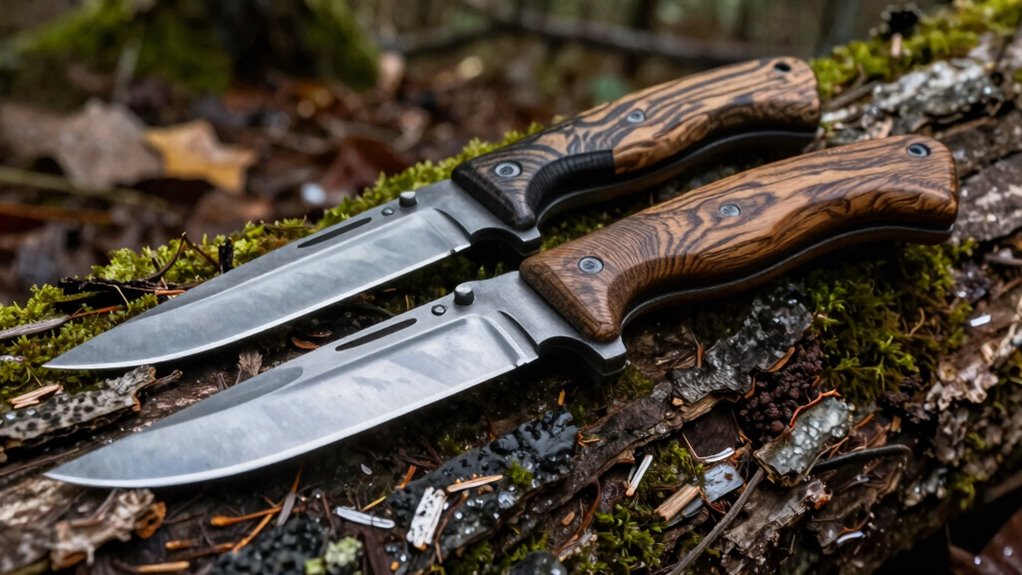

When choosing fixed blade bushcraft knives, you want a sturdy blade made from high-quality steel like carbon or stainless, which offers durability, sharpness, and corrosion resistance. An ergonomic handle enhances control, reduces fatigue, and guarantees safety during tough tasks. Reliable knives resist chips, stay sharp, and function well in unpredictable outdoor conditions. Focusing on these features helps you find a dependable tool for shelter building, fire prep, and food processing—keep exploring to discover more about top options and tips.

Get garden gear delivered free with Prime
- Fast, free delivery on millions of items
- Prime Video, Amazon Music and more included
- Member-only deals all year
Key Takeaways
- High-quality steel ensures the blade remains sharp and resistant to chipping during demanding outdoor tasks.
- Ergonomically designed handles improve control, reduce fatigue, and prevent slipping in wet conditions.
- Reliable blade material resists corrosion, maintaining performance in harsh, unpredictable environments.
- Overall construction focused on durability and robustness guarantees dependability in shelter building and firewood preparation.
- Well-designed bushcraft knives act as effective, trusted tools, minimizing maintenance and maximizing field efficiency.
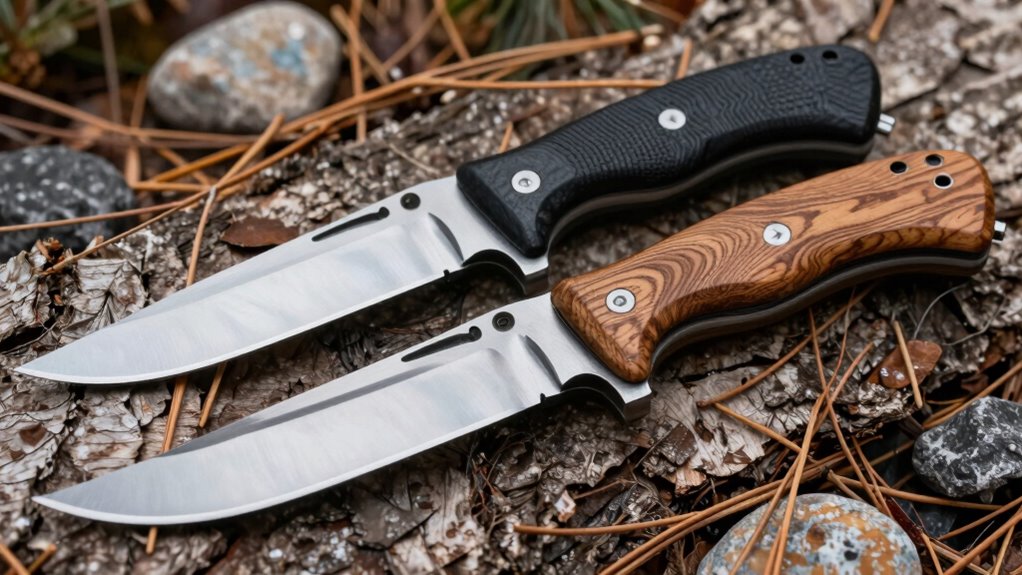
When it comes to outdoor survival and wilderness skills, fixed blade bushcraft knives are an essential tool that every adventurer should have. Their durability, simplicity, and reliability make them invaluable when you’re out in the wild, facing unpredictable conditions. One of the key factors that determine a knife’s performance in the field is its blade material. You want a blade made from high-quality steel, such as carbon steel or stainless steel, which offers the right balance of hardness, edge retention, and corrosion resistance. A well-chosen blade material ensures that your knife stays sharp through heavy use, whether you’re carving wood, preparing food, or making fire kindling. The toughness of the steel also plays a role in preventing chips or breaks during demanding tasks, giving you confidence in its resilience.
Equally important is handle ergonomics, which directly impacts your control and comfort during prolonged use. A handle that fits well in your hand reduces fatigue and the risk of slipping, especially when your hands are wet or sweaty. Look for handles made from durable materials like hardwood, Micarta, or rubberized composites, which provide a secure grip without feeling bulky. The shape of the handle is essential; it should contour to your grip, allowing for precise control during delicate tasks like fine carving or batoning. Good handle ergonomics also help distribute pressure evenly across your hand, preventing hotspots and blisters. When you hold the knife, the handle should feel balanced and natural, making it easier to apply force when needed without sacrificing maneuverability.
In the field, you don’t want to worry about your knife failing you. That’s why the combination of a reliable blade material and well-designed handle ergonomics is so critical. A blade that stays sharp and resists corrosion means less maintenance and more time focusing on your task. Meanwhile, a handle that fits comfortably in your hand ensures you maintain control and safety, especially during intensive work. Both elements work together to make your knife a trusted companion in tough conditions. Whether you’re making shelter, processing firewood, or preparing food, your fixed blade bushcraft knife should feel like an extension of your hand—robust, reliable, and ready for whatever challenge the wilderness throws your way.
fixed blade bushcraft knife high carbon steel
As an affiliate, we earn on qualifying purchases.
As an affiliate, we earn on qualifying purchases.
Frequently Asked Questions
How Do I Choose the Right Fixed Blade Knife for My Environment?
To select the right fixed blade knife for your environment, consider your tasks first. Opt for a blade length that suits your needs—shorter blades for finer work, longer ones for heavy-duty tasks. Also, evaluate sheath design; a secure, easily accessible sheath guarantees safety and quick access. Think about your environment’s conditions, like moisture or dirt, and choose a knife with corrosion-resistant features. This way, your knife remains reliable in the field.
What Maintenance Is Required to Keep the Knife Reliable?
To keep your knife reliable, you must stay vigilant. Regularly sharpen the blade to guarantee clean cuts and avoid damage, and always inspect for dullness. Don’t forget rust prevention—wipe the knife after use, especially if exposed to moisture, and store it in a dry place. With consistent care, your knife will perform flawlessly, ready for anything the wild throws at you. Keep up the maintenance, and your blade’s reliability will never waver.
Are There Specific Blade Materials Better for Durability?
Yes, certain blade steels are better for durability. Look for high-quality blade steel like S30V or 1095, which offer excellent edge retention and toughness. Steel with good corrosion resistance, like stainless steels, helps prevent rust, especially in wet environments. Choosing the right steel guarantees your knife stays reliable during tough tasks, minimizing maintenance and extending its lifespan. Always clean and oil your blade to maintain its performance and durability.
How Does Handle Material Affect Field Performance?
Think of your knife’s handle as the steady hand guiding your adventure. Handle material influences field performance by offering ergonomic comfort, reducing fatigue during long tasks. Durable materials resist corrosion, much like armor protecting a knight, ensuring your knife stays reliable. Choosing ergonomic handle ergonomics and corrosion-resistant materials means better control, less slipping, and longer-lasting use, so you can focus on your task rather than worrying about wear and tear.
Can a Fixed Blade Knife Be Used for Survival Situations?
Yes, a fixed blade knife is essential for survival situations. You can use it to create an emergency shelter, cut branches, and prepare wood for fire starting. Its durability and reliability make it perfect for tough tasks, ensuring you can build shelter quickly and safely. Whether you’re carving tools or preparing food, a fixed blade knife is a versatile tool that can considerably increase your chances of survival in the wild.
Conclusion
In the end, a fixed blade bushcraft knife isn’t just a tool—it’s your steadfast companion in the wilderness. Its reliability whispers promises of survival and adventure, standing as a silent guardian through thick and thin. When you hold one, you’re not just wielding steel, but embracing the spirit of resilience and self-reliance. So, choose wisely and trust in its unwavering strength—after all, in the wild, your knife is your lifeline, your true north.
Halloween Picks
halloween
As an affiliate, we earn on qualifying purchases.