TL;DR

Get garden gear delivered free with Prime
- Fast, free delivery on millions of items
- Prime Video, Amazon Music and more included
- Member-only deals all year
An Ideal Home gardening guide outlines five steps for planting shrubs: soak the roots, prepare the soil, dig a wide hole, position the root ball level with the ground, then water and mulch. Horticultural experts quoted in the report advise against adding organic matter to the hole in heavy or poorly drained soil and recommend keeping mulch 10cm from the shrub’s base.
Ideal Home has published a five-step guide to planting shrubs, drawing on advice from horticultural experts about preparing the ground, setting the root ball at the right depth and caring for the plant after it goes in. The guidance is aimed at helping gardeners give new shrubs a good start, particularly during autumn planting.
The recommended steps are to soak the shrub’s roots, prepare the soil by removing perennial weeds and loosening compacted ground, and dig a hole wider than the plant’s container. Paul Parker of J. Parker’s advises making the hole a little deeper than the pot and about three times as wide, while loosening soil around and below it so roots can establish.
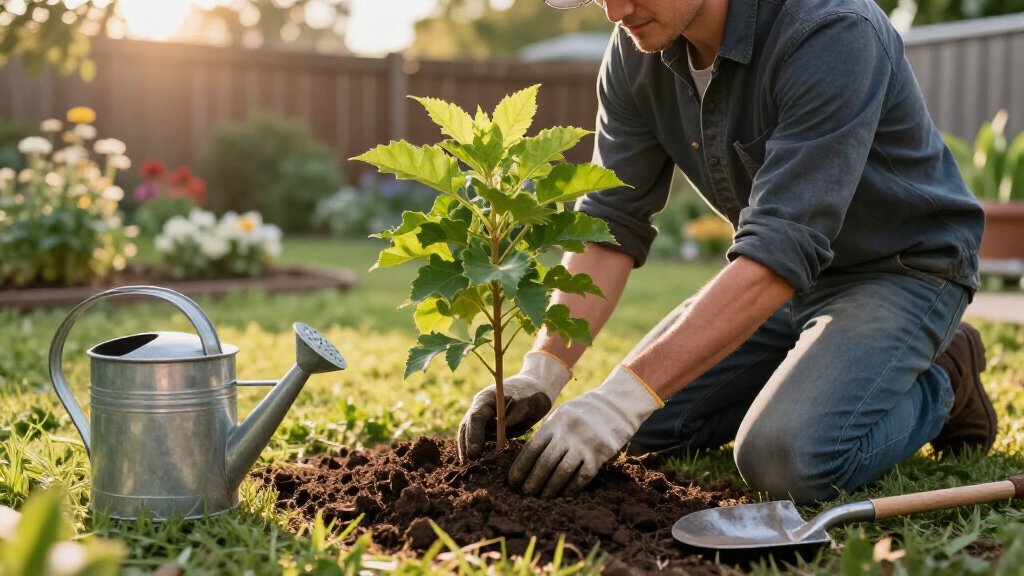
After easing the shrub out of its pot without damaging the roots, position it so the top of the root ball is level with the surrounding soil. Annelise Brilli, a horticultural expert at Thompson & Morgan, suggests laying a cane across the hole to check the height. Backfill with soil and firm it gently, taking care not to crush roots.
Water the shrub thoroughly after planting, even if the ground is damp, then spread mulch in a wide circle to conserve moisture and suppress weeds. Brilli advises leaving a 10cm clear gap around the base rather than piling mulch against the stems. The report also recommends deep watering when needed and closer monitoring during dry spells.
Getting Shrub Roots Established
Planting depth and early watering affect the conditions in which a shrub’s roots begin to grow. The advice focuses on practical ways to reduce avoidable stress: loosening the soil, avoiding damage when removing the plant from its pot, and keeping the root ball neither buried too deeply nor exposed above the ground.
The mulch guidance also addresses a common planting mistake. A layer can help retain moisture and limit weeds, but piling it against stems can trap moisture and encourage stem rot, Brilli says. For gardeners, following the steps offers a straightforward way to support establishment without assuming every shrub or site has identical needs.
As an affiliate, we earn on qualifying purchases.
Why Autumn Can Suit Planting
The Ideal Home report describes October as a suitable time to plant shrubs, noting that soil may retain warmth from summer while becoming moister. It says this can give roots time to establish before spring. Those are general seasonal considerations; local weather, soil drainage and the needs of the particular shrub still matter.
The report also distinguishes between improving the ground broadly and adding material directly to the planting hole. Brilli advises removing perennial weeds and breaking up compacted soil, but cautions against the traditional practice of enriching the hole with organic matter in heavy or poorly drained soil. In those conditions, she says, the material may hold excess water around the roots and later settle as it breaks down, potentially leaving the shrub too deep.
““Douse the shrub roots in water until completely soaked.””
— Paul Parker, J. Parker’s
Site Conditions Still Matter
The source gives general planting advice, not a schedule tailored to every shrub species, soil type or climate. It does not specify how often a newly planted shrub should be watered: Brilli’s guidance is to water deeply when needed and pay closer attention during dry spells. Local conditions and the plant’s needs will affect what “when needed” means.
The report also does not provide a complete planting calendar or establish that October is suitable everywhere. Its seasonal rationale concerns soil warmth and moisture; weather and ground conditions can differ by location. Gardeners should check the requirements of their chosen shrub and assess whether their soil drains well.
Care After Planting
After planting, gardeners should water thoroughly to settle soil around the roots, apply mulch with a clear gap around the stems, and monitor the shrub as it establishes. The report recommends deep watering rather than small amounts frequently, with particular attention during dry weather and hot, dry spring conditions.
The next steps depend on how the plant responds and the conditions in the garden. The source does not announce a follow-up study or further development; it presents the five-step method as practical guidance for planting and ongoing care.
Key Questions
When does the guide say to plant shrubs?
The report says October can be a suitable time, because soil may still be warm and moist enough for roots to establish before spring. Conditions vary by location and shrub.
How wide should the planting hole be?
Paul Parker advises digging a hole about three times as wide as the pot and a little deeper, then loosening soil below and around it.
Should organic matter go in the planting hole?
Annelise Brilli advises against adding organic matter to the hole in heavy or poorly drained soil, where it may hold excess moisture and settle as it breaks down.
How close should mulch come to the shrub?
Spread mulch in a wide circle, but leave a 10cm gap around the base. The report warns that mulch against stems can trap moisture and encourage stem rot.
Source: rss
Halloween Picks
halloween
As an affiliate, we earn on qualifying purchases.