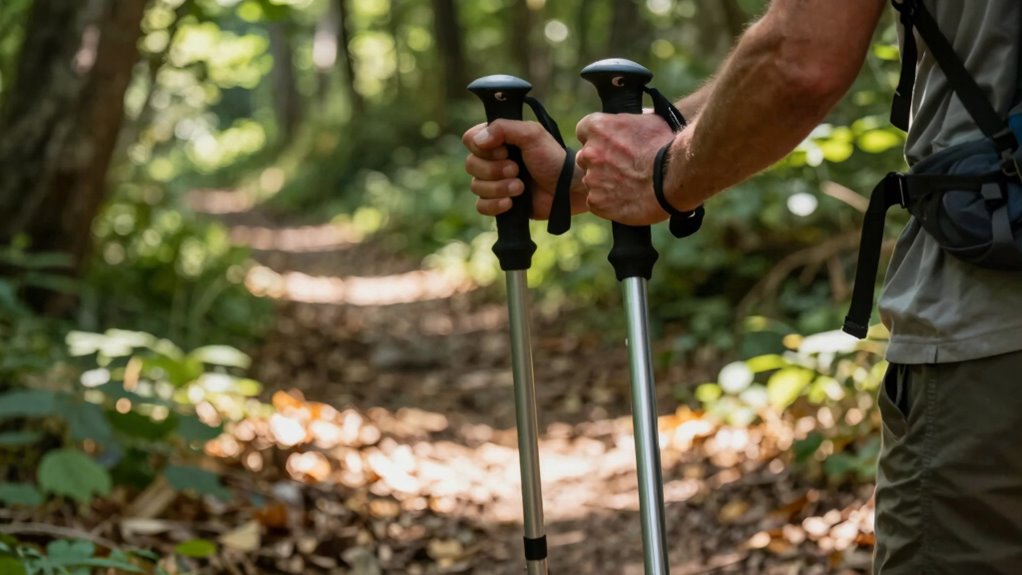

Using trekking poles correctly helps you save energy on long walks by distributing the effort between your arms and legs. Plant the poles properly, lean into them on inclines, and adjust their length for different terrains. Coordinate your movements smoothly and push off with your poles to propel forward, engaging your core. Staying hydrated and maintaining good technique prevent fatigue and injury. If you want to discover how to maximize these benefits, keep exploring these tips further.

Get garden gear delivered free with Prime
- Fast, free delivery on millions of items
- Prime Video, Amazon Music and more included
- Member-only deals all year
Key Takeaways
- Properly adjusted trekking poles distribute weight evenly, reducing fatigue and conserving energy during long walks.
- Coordinated pole planting and smooth movements enhance energy efficiency and minimize muscle strain.
- Using poles to push off and propel forward engages core muscles, decreasing reliance on leg strength.
- Maintaining a consistent rhythm with poles helps prevent unnecessary exertion and preserves stamina.
- Combining effective hydration strategies with proper pole use sustains energy levels and delays fatigue.
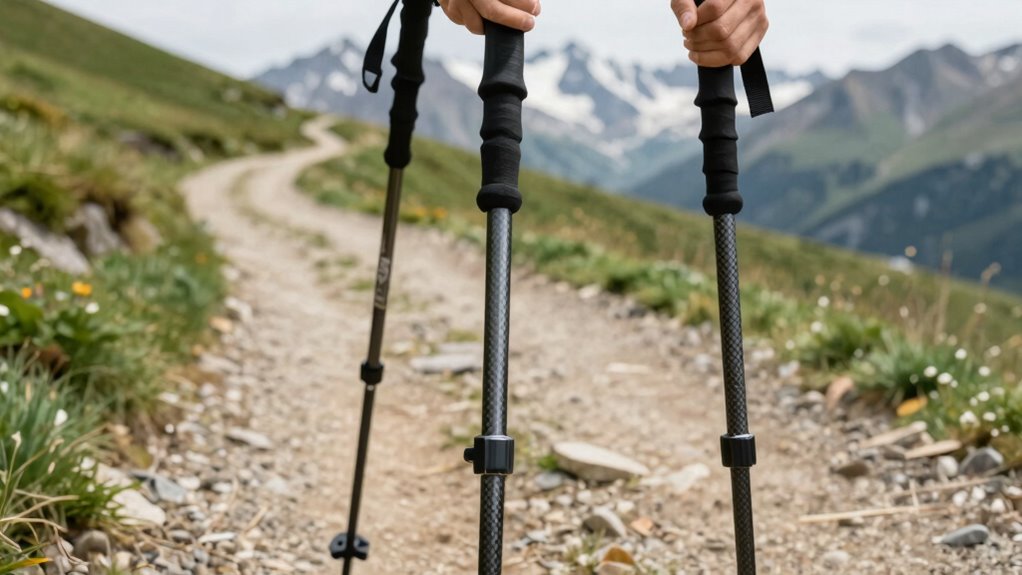
Have you ever wondered how to make those long walks feel easier and less tiring? Using trekking poles can be a game-changer, especially when you master the right climbing techniques. When you plant your poles correctly, you distribute your weight more evenly, reducing the strain on your legs and knees. As you ascend or descend, leaning into your poles helps maintain balance and conserve energy. It’s important to adjust the length of your trekking poles according to terrain—shorter for uphill climbs and longer for downhill sections. This way, you engage your upper body effectively, which takes some load off your lower limbs and prevents fatigue from setting in too quickly. Proper calibration of your poles ensures optimal performance and comfort during your trek.
But even with good climbing techniques, if you neglect hydration strategies, your energy levels will plummet before you know it. Staying properly hydrated is essential for maintaining stamina and preventing cramps during long walks. Before you start, drink a glass of water to kick-start hydration, and continue sipping small amounts regularly throughout your trek. Carry a water bottle or hydration pack that’s easy to access so you don’t have to stop frequently. Electrolyte drinks can also be beneficial, especially on hot days or when you’re sweating heavily. They help replace salts lost through perspiration, keeping your muscles functioning smoothly and reducing the risk of fatigue.
Using trekking poles in combination with effective hydration strategies can *considerably* extend your endurance. As you climb, focus on smooth, coordinated movements with your poles, planting them firmly in sync with your steps. This rhythm helps you conserve energy and prevents unnecessary exhaustion. With each step, engage your core and arms, pushing off with your poles to propel yourself forward. Remember, your technique matters—erratic or inconsistent pole use wastes energy and can cause strain. Keep your arms relaxed and your movements deliberate to maximize efficiency. Additionally, understanding drone bees and hive health can remind us of the importance of balance and efficiency in systems—whether in nature or during a long walk. Developing a consistent rhythm and maintaining proper technique can also help prevent injury and ensure a more comfortable journey.
Coordinate your pole planting with each step to conserve energy and improve your hiking efficiency.
Hydration also plays a role in maintaining mental sharpness, which is *vital* on steep or challenging sections. Feeling dehydrated can impair your judgment and slow your pace, making the walk more tiring. Regularly check your water supply and listen to your body’s signals—thirst is a late indicator of dehydration. Incorporating hydration strategies like timing your fluid intake can further enhance your endurance, especially on longer treks. Proper piercing care and hygiene and maintaining clean equipment can prevent infections that might otherwise sap your energy during extended activities. By integrating good climbing techniques with proper hydration strategies, you’ll notice that your long walks feel less overwhelming. You’ll move more confidently, recover faster, and enjoy each step more fully. With these habits, your energy will last longer, and you’ll be able to tackle those trails with *greater* ease and enthusiasm.
adjustable trekking poles for hiking
As an affiliate, we earn on qualifying purchases.
As an affiliate, we earn on qualifying purchases.
Frequently Asked Questions
Do Trekking Poles Improve Balance on Uneven Terrain?
Yes, trekking poles improve balance on uneven terrain. They provide extra points of contact, which enhances your overall balance and stability. Using poles helps you maintain better terrain stability, especially on tricky or unstable surfaces. By distributing weight and offering support, trekking poles reduce the risk of slips or falls. They’re a valuable tool for hikers seeking to keep their footing secure and maintain confidence on challenging, uneven paths.
Can Trekking Poles Reduce Joint Strain During Long Hikes?
Yes, trekking poles can reduce joint strain during long hikes by providing extra support and enhancing gait stability. They help distribute weight more evenly, decreasing the load on your knees, hips, and ankles. This joint protection allows you to hike longer without discomfort or injury. By maintaining better balance and reducing impact, trekking poles make extended walks more comfortable, especially on uneven terrain or challenging trails.
What Materials Are Best for Lightweight Trekking Poles?
Did you know lightweight trekking poles can improve your hiking endurance by up to 20%? For the best balance of durability and weight, carbon fiber is top-tier, offering excellent material durability and lightweight construction. Aluminum is also a popular choice, providing strength and adjustability at a lower cost. Both materials guarantee your poles are sturdy yet easy to carry, enhancing your hike without adding unnecessary bulk.
How Should I Choose the Right Length of Trekking Poles?
To choose the right length of trekking poles, start by adjusting them so your elbows form about a 90-degree angle when holding the ergonomic grips. Make sure they’re adjustable so you can customize the height based on terrain—shorter for uphill and downhill, longer for flat sections. Proper length provides stability and reduces fatigue, helping you walk efficiently and comfortably over long distances.
Are There Specific Trekking Pole Techniques for Energy Conservation?
To conserve energy, focus on proper pole grip techniques and stride synchronization. Grip the poles firmly but comfortably, avoiding over-tightening, to reduce fatigue. Coordinate your stride with the poles’ rhythm, planting them in sync with your steps to propel forward efficiently. This alignment minimizes unnecessary arm and leg movements, helping you conserve energy on long walks. Practice these techniques consistently for maximum benefit.
Conclusion
Using trekking poles on long walks is like having a trusted compass guiding you through the journey. They help conserve your energy, making each step feel lighter and more manageable. As you push forward, remember that these poles aren’t just sticks—they’re your allies, turning a long trek into a more enjoyable adventure. Embrace them, and you’ll find that your energy stretches further, transforming every walk into a victory lap on your personal trail.
Halloween Picks
halloween
As an affiliate, we earn on qualifying purchases.