
TL;DR

Get garden gear delivered free — and shop member deals
- Fast, free delivery on millions of items
- Access to Prime Big Deal Days deals on October 6–7
- Prime Video, Amazon Music and more included
A Planet Natural report says the first 7–10 days after harvest can help suitable winter squash develop a drier, tougher rind for storage. It recommends careful harvesting, sorting out damaged fruit and curing sound squash in a warm, dry, well-ventilated place; results vary by variety and conditions.
Planet Natural’s winter squash storage guidance identifies the first 7–10 days after harvest as a key curing period for suitable mature fruit. It recommends keeping squash warm, dry and well ventilated during that time, while handling it gently and removing damaged fruit from the storage group; curing can support storage, but it cannot make every variety or injured squash a long-term keeper.
The report recommends harvesting mature squash before a hard frost when practical. Signs of maturity include developed color for the variety, a rind that resists a fingernail press, and a stem that is beginning to dry and turn corky. Those signs vary among cultivars, so the report says variety information should guide decisions when a fruit’s maturity is uncertain.
Use clean pruners or a sharp knife to cut fruit from the vine rather than twisting it. Leave a 2–4 inch stem on pumpkins and most winter squash, the report advises, and carry fruit from underneath rather than by the stem. It notes an exception: some storage guidance recommends removing the stem on Hubbard types, making cultivar-specific or local extension advice relevant. Loose soil can be brushed away with a dry cloth or soft brush; soaking is discouraged.
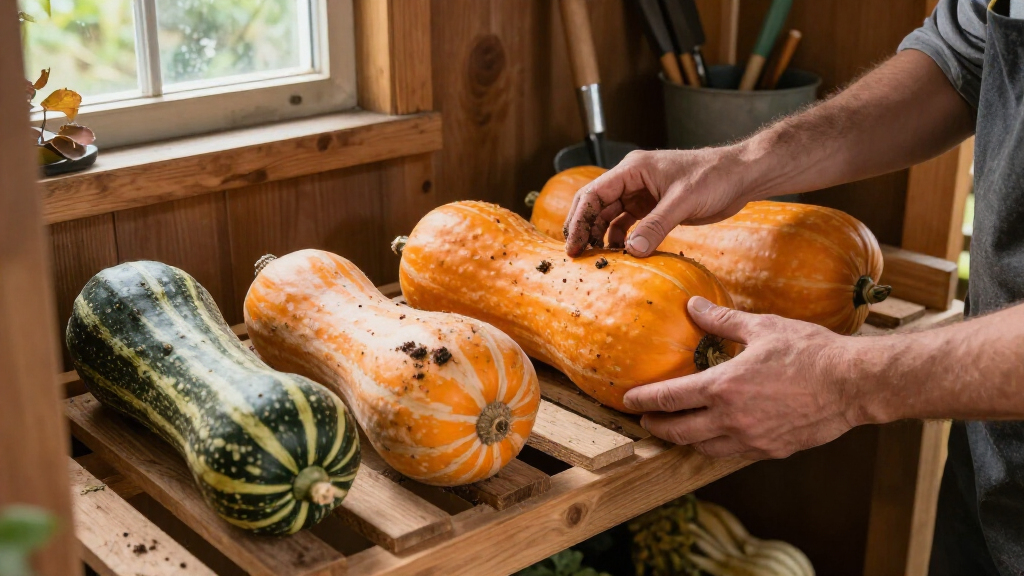
Before curing, separate the harvest by condition. Firm, mature squash with intact rinds are the best candidates. Fruit with a superficial scuff or a broken stem should be kept apart, checked often and used sooner. Squash with a wet or soft spot, deep crack, puncture into the flesh, active mold or leaking area should not be stored with sound fruit, the report says. Curing is not a repair for serious damage.
For suitable squash, the report gives common guidance of about 70–85°F for 7–10 days, in dry conditions with airflow. Spread fruit in a single layer on a dry surface, leaving space around each one. After curing, move only sound fruit to a cool, dry, ventilated storage area; general recommendations cited in the report are around 50–55°F, though the best range depends on the type.
Why Careful Curing Can Help
The curing period is a practical opportunity to keep small handling mistakes from becoming hidden storage problems. A broken stem, punctured rind or damp contact area can expose fruit to decay, and one failing squash can be overlooked if it is packed among healthy ones. Gentle handling, open spacing and regular checks make it easier to spot trouble early.
For gardeners hoping to keep part of a harvest into winter, sorting also helps set realistic expectations. The report says curing may help the rind harden and minor surface injuries dry, but it does not turn immature fruit into a reliable keeper or restore a punctured rind. Setting aside questionable squash for earlier meals can reduce the chance of losing sound fruit in storage.
The advice also matters because “winter squash” covers types with different storage prospects. A single curing routine should not be treated as a guarantee of months of storage. Variety, maturity, growing conditions and the storage environment all affect how long individual fruit keeps.
As an affiliate, we earn on qualifying purchases.
Variety Changes the Storage Plan
The Planet Natural report describes curing as a controlled holding period intended to help the rind harden and minor surface injuries dry into a protective layer. Its temperature and timing figures are presented as common guidance, not a universal prescription for every cultivar or harvest.
Butternut, Hubbard, many kabocha and buttercup types, and some pumpkins are described as often better candidates for longer storage when mature and handled well. Acorn squash generally has a shorter storage window; the report says some extension guidance cautions against artificial curing for acorn types because their skins are more delicate. Delicata and many spaghetti squash are also suggested for earlier use rather than long storage. Actual keeping time still depends on the fruit and conditions.
What Affects Keeping Time
The guidance does not give a guaranteed storage life for each squash. It says expected keeping time varies with cultivar, maturity at harvest, growing conditions, handling, storage temperature and humidity, as well as damage that may not be obvious at first. The material also does not identify a single ideal curing setup for all climates or varieties.
Its temperature ranges are general recommendations, and the source advises checking cultivar-specific or local extension guidance where recommendations differ, including for Hubbard and acorn squash. It is also unclear from the supplied material how long any particular harvest will keep. Regular inspection remains necessary, especially during curing and after fruit enters storage.
From Curing to Regular Checks
After roughly a week to 10 days in suitable curing conditions, gardeners should move only firm, sound squash to a cool, dry place with good airflow. Keep fruit off concrete when possible, avoid deep piles and protect it from freezing, rain and repeated swings between hot and cold conditions.
Check the curing and storage groups every day or two for new soft spots, wet areas, mold or leakage, and remove affected fruit promptly. Use less-suitable or lightly damaged squash first. The report offers no later scheduled milestone beyond continued inspection; the storage outcome will depend on the varieties grown and conditions in the garden and storage space.
Key Questions
How long should winter squash cure?
The report gives about 7–10 days as common guidance for many mature winter squash, at roughly 70–85°F in dry conditions with good airflow. Recommendations can differ by type.
Can I cure squash outdoors?
The report says outdoor curing can work when weather is reliably warm and rain-free. Otherwise, use a protected warm, dry place with airflow, and avoid cool nights or condensation.
Which squash should be used first?
Use fruit with superficial scuffs, shortened or broken stems, or other minor concerns sooner, and keep it separate from sound squash. Fruit with a soft or wet spot, deep crack, active mold or puncture into the flesh should not be stored with healthy fruit.
Does every winter squash benefit from curing?
No. The report says storage suitability varies by cultivar. Acorn squash may have a shorter storage window, and some extension guidance cautions that artificial curing may not help it. Delicata and many spaghetti squash are also generally better planned for earlier meals.
What temperature should cured squash be stored at?
The report cites about 50–55°F as a general storage range, with moderate humidity and ventilation. The best range and storage length vary by type, so consult cultivar-specific or local extension guidance when available.
Source: rss
Halloween Picks
halloween
As an affiliate, we earn on qualifying purchases.