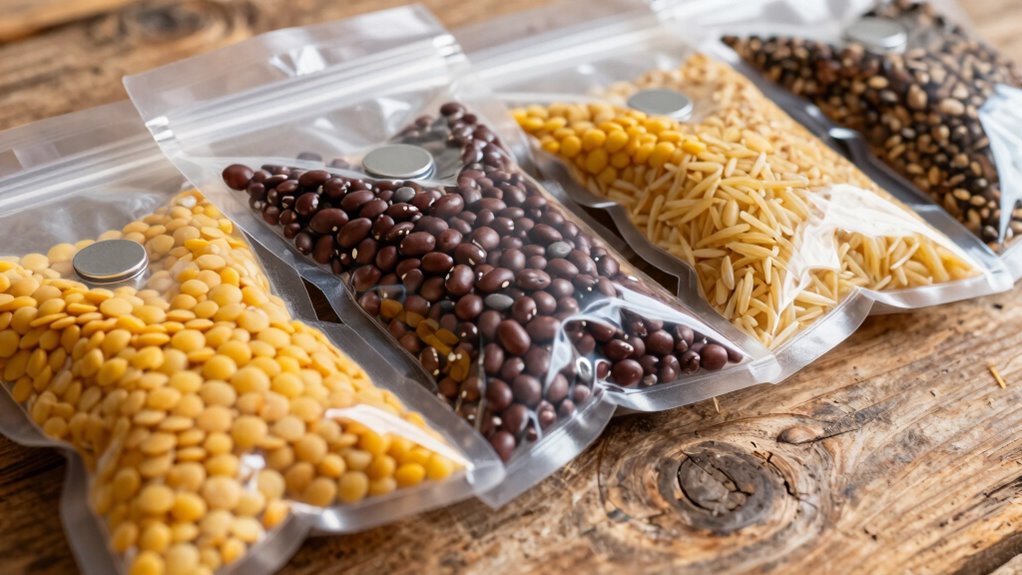

Using oxygen absorbers is a key way to extend the shelf life of dry foods. They remove residual oxygen from packaging, creating a low-oxygen environment that slows spoilage, mold growth, and pest invasion. Properly selecting and placing the right size absorber in airtight containers guarantees foods stay fresh, flavorful, and nutritious for months or even years. When paired with good packaging techniques, oxygen absorbers provide a simple, effective method to preserve your dry foods longer—so you can enjoy healthier storage options over time.

Get garden gear delivered free — and shop member deals
- Fast, free delivery on millions of items
- Access to Prime Big Deal Days deals on October 6–7
- Prime Video, Amazon Music and more included
Key Takeaways
- Oxygen absorbers remove residual oxygen, creating a low-oxygen environment that slows spoilage in dry foods.
- Proper sizing of absorbers based on container volume ensures effective oxygen removal and prolongs shelf life.
- Using oxygen absorbers prevents mold, pests, and rancidity, maintaining food quality and nutritional value over time.
- Combining oxygen absorbers with airtight packaging maximizes dry food shelf life for long-term storage.
- Regularly monitoring and correctly storing packaged foods enhances preservation and extends usability.
Have you ever wondered how to keep your dry foods fresh for longer? It all comes down to effective packaging technology and understanding food preservation. When you store dry foods like grains, nuts, or dried fruits, the goal is to slow down spoilage caused by oxygen, moisture, and pests. Oxygen absorbers are a simple yet powerful tool that help achieve this by removing oxygen from the packaging environment. By doing so, they extend the shelf life of your dry foods, guaranteeing they remain fresh, flavorful, and safe to eat for months or even years.
The core idea behind using oxygen absorbers is rooted in food preservation. Oxygen is a major factor that accelerates spoilage, oxidation, and the growth of mold or bacteria. When oxygen is present, fats can go rancid, and dry foods can lose their texture and taste. Packaging technology that incorporates oxygen absorbers creates an environment that inhibits these processes. You fundamentally create a vacuum or low-oxygen atmosphere within your storage containers, which helps maintain the integrity of your foods. This method is especially valuable for long-term storage, emergency preparedness, or when you want to keep bulk purchases fresh without frequent repackaging.
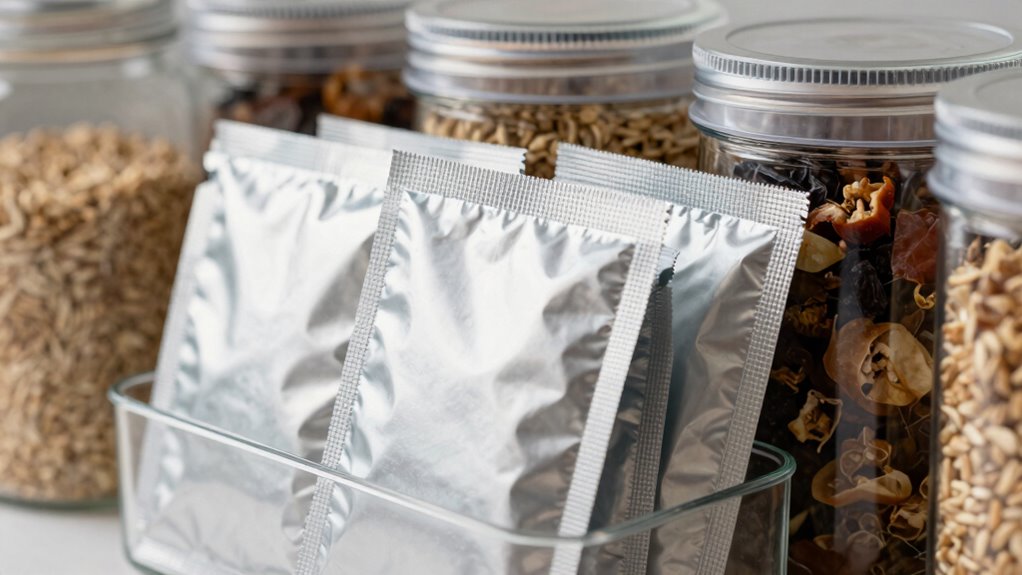
Using oxygen absorbers is straightforward. You place them inside airtight containers along with your dry foods before sealing. Once sealed, these absorbers actively remove residual oxygen from the package, creating an oxygen-depleted environment. This process is silent, non-toxic, and effective, making it a popular choice among home preppers, food hobbyists, and commercial establishments alike. It’s also important to understand the different types of oxygen absorbers available to choose the right one for your needs. Additionally, understanding food preservation techniques helps you optimize the effectiveness of oxygen absorbers in maintaining food quality over time. Knowing how to properly pack and store your foods can further enhance their longevity and quality. It is essential to select the right size of oxygen absorber based on the volume of your container, as an undersized absorber won’t remove enough oxygen, while an oversized one might be unnecessary and costlier. Understanding food preservation is essential to maximizing the benefits of oxygen absorbers and ensuring your stored foods stay fresh longer.
Place oxygen absorbers in sealed containers to keep dry foods fresh and extend shelf life effectively.
In addition to preventing spoilage, oxygen absorbers also help protect your foods from pests like insects that require oxygen to thrive. The result is a healthier, longer-lasting product that retains its nutritional value and flavor. Proper packaging technology combined with the use of oxygen absorbers is a game-changer for anyone serious about food preservation. It not only maximizes the shelf life but also minimizes waste and saves money over time. By understanding how to leverage these tools effectively, you guarantee that your dry foods stay fresh and delicious, whether you’re storing for a few months or several years.
oxygen absorbers for food storage
As an affiliate, we earn on qualifying purchases.
As an affiliate, we earn on qualifying purchases.
Frequently Asked Questions
How Do Oxygen Absorbers Affect Different Types of Dry Foods?
Oxygen absorbers help extend the shelf life of various dry foods by removing oxygen from packaging. They prevent spoilage, mold, and insect infestation, especially for foods like grains, pasta, and dried fruits. When you use proper food packaging with oxygen absorbers, you considerably prolong freshness and quality. This shelf life extension ensures your dry foods stay edible and flavorful longer, reducing waste and maintaining food safety.
Are Oxygen Absorbers Safe for Long-Term Food Storage?
Oxygen absorbers are like silent guardians, ensuring your food stays fresh. They’re safe for long-term storage when used correctly within food packaging. These small packets considerably extend shelf life, preventing spoilage and maintaining quality over years. Just follow manufacturer instructions, and you’ll effectively protect your dry foods. Properly used, oxygen absorbers are a reliable, safe method to enhance shelf life extension and keep your food pantry well-stocked for the long haul.
Can Oxygen Absorbers Be Reused or Recycled?
Oxygen absorbers generally can’t be reused or recycled because they lose effectiveness once used. For packaging innovation and reducing environmental impact, it’s best to dispose of them properly and opt for reusable storage solutions. Recycling options are limited, so minimizing waste is key. By choosing sustainable packaging, you help protect the environment while maintaining food freshness. Always follow manufacturer guidelines for disposal and care to guarantee safety.
What Are Signs of Oxygen Absorber Failure?
You’ll know oxygen absorber failure when you notice signs of oxygen deprivation inside the package, like a puffed or swollen bag. If the absorber appears saturated, usually indicated by a color change, it’s no longer effective. You might also see a loss of vacuum seal or detect stale odors. These signs mean the absorber can’t remove oxygen properly anymore, risking spoilage of your dry foods.
How Do Temperature and Humidity Influence Oxygen Absorber Effectiveness?
Think of your storage environment as a delicate dance floor where temperature and humidity set the rhythm. High heat and moisture can cause oxygen levels to rise, making oxygen absorbers work harder and less effectively. Proper container sealing and ideal storage conditions—like cool, dry places—keep the absorbers performing at their best. When the dance floor gets too hot or wet, the absorbers lose their rhythm and efficiency.
Conclusion
Think of oxygen absorbers like tiny lifeguards guarding your dry food’s freshness. When I first started storing dried herbs, I realized a small packet kept them tasting just as vibrant months later—saving me money and frustration. Just like a vigilant lifeguard keeps swimmers safe, these absorbers protect your food from spoilage, extending its shelf life. With this simple tool, you guarantee your pantry’s treasures stay fresh, flavorful, and ready whenever you need them.
Fall yard work Picks
leaf blowers
As an affiliate, we earn on qualifying purchases.