
To control moisture in your pantry, use humidity sensors to get real-time readings and detect high moisture levels early. Place a dehumidifier near the center of your space for ideal airflow and moisture removal, making sure it isn’t blocked or against the wall. Keep good ventilation, use moisture absorbers, and regularly monitor humidity to prevent mold, odors, and food spoilage. To learn more about effective moisture management techniques, keep exploring these proven strategies.

Get garden gear delivered free with Prime
- Fast, free delivery on millions of items
- Prime Video, Amazon Music and more included
- Member-only deals all year
Key Takeaways
- Monitoring humidity with sensors helps detect excess moisture early, preventing mold and spoilage.
- Proper placement of dehumidifiers ensures efficient moisture removal and optimal airflow.
- Good ventilation and airflow circulation reduce stagnant humidity and inhibit mold growth.
- Using moisture absorbers and desiccants in damp areas provides additional moisture control.
- Regularly checking and managing humidity levels maintains pantry hygiene and extends food shelf life.
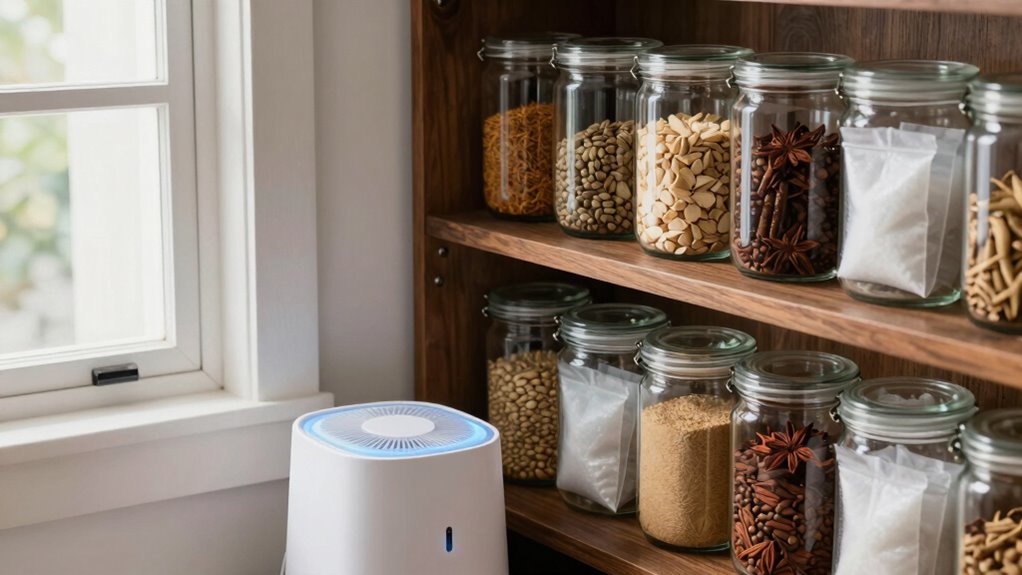
Have you ever noticed how moisture buildup can ruin your pantry’s contents? It’s a common problem that can lead to mold, unpleasant odors, and even damage to your stored food and packaging. The key to preventing these issues lies in effective moisture management. One of the best ways to keep humidity levels in check is by using humidity sensors. These small devices provide real-time readings of the moisture content in the air, allowing you to monitor your pantry’s environment accurately. With a humidity sensor, you can detect when the air becomes too damp and take action before mold or spoilage starts. Proper placement of the dehumidifier is also crucial, as it ensures optimal airflow and moisture extraction.
Once you have a good understanding of your pantry’s humidity levels, the next step is to think about dehumidifier placement. Proper placement is vital to make sure the device works efficiently and evenly reduces moisture. You want to position your dehumidifier in a spot where it can circulate air freely without obstructions. Typically, placing it near the center of the pantry or at a location with good airflow helps maximize its effectiveness. Avoid placing it directly against walls or behind shelves, as this can restrict airflow and reduce its ability to draw moisture from the air. If your pantry has a door, keep it slightly open or ensure the dehumidifier’s air intake is not blocked, so it can continuously pull in humid air. Additionally, ensuring good ventilation in your pantry can significantly help manage moisture levels effectively. Regularly checking air circulation can further prevent areas of stagnant, humid air that promote mold growth. Implementing moisture control measures can also enhance your efforts in keeping your pantry dry and safe. To further optimize moisture management, consider using desiccants or other moisture-absorbing materials in areas prone to excess dampness.
digital humidity sensor for pantry
As an affiliate, we earn on qualifying purchases.
As an affiliate, we earn on qualifying purchases.
Frequently Asked Questions
How Often Should I Check for Moisture Buildup in My Pantry?
You should check your pantry for moisture buildup at least once a month. Use proper ventilation techniques, like opening vents or doors, to promote air circulation. Consider dehumidifier options if you notice persistent humidity or mold. Regular inspections help you catch moisture issues early, preventing spoilage and damage. Keep an eye out for dampness, musty odors, or mold growth, and take action promptly to maintain a dry, healthy pantry environment.
Are There Specific Humidity Levels Ideal for Pantry Storage?
You should aim for a cozy humidity level around 50-60% in your pantry, ensuring your stored goods stay fresh. Use humidity sensors to keep an eye on moisture, and place a dehumidifier strategically to maintain these levels. Proper placement of the dehumidifier near problem spots helps prevent excess moisture buildup, protecting your pantry’s contents. Maintaining this balance keeps your storage space comfortable and your goods in prime condition.
Can Certain Pantry Materials Help Prevent Moisture Issues?
Yes, certain pantry material choices can help prevent moisture issues. Opt for moisture-resistant shelving made from materials like stainless steel, plastic, or sealed wood, which resist humidity and mold. These materials reduce the risk of moisture buildup and spoilage. Using moisture-resistant shelving keeps your pantry dry and safe, ensuring your food stays fresh longer. Choosing the right pantry materials is a smart step in maintaining an ideal storage environment.
What Are the Signs of Mold Caused by Excess Moisture?
Imagine dark shadows creeping along your pantry walls—that’s mold caused by excess moisture. You’ll notice fuzzy or slimy spots, often green, black, or white, spreading across surfaces. To prevent this, focus on mold prevention by maintaining proper humidity control, keeping levels low, and ensuring good ventilation. Watch for musty odors or discolored patches, as these are signs your pantry’s moisture balance is off and mold may be developing.
How Do Seasonal Changes Affect Pantry Moisture Levels?
Seasonal changes considerably impact your pantry’s moisture levels through fluctuations in seasonal humidity. During humid months, moisture can accumulate, leading to mold or spoilage. Conversely, dry seasons reduce humidity, but can cause wood to crack or items to dry out. To manage these shifts, guarantee proper pantry ventilation year-round. Using dehumidifiers or moisture absorbers during high humidity seasons helps maintain ideal conditions, protecting your stored foods and pantry structure.
Conclusion
To keep your pantry happy and healthy, a little attention to moisture goes a long way. Think of it as gently guiding your space toward harmony, preventing pesky problems before they start. By staying mindful and proactive, you create an environment where your food stays fresh and your shelves remain cheerful. Remember, a well-balanced pantry isn’t just about storage—it’s about nurturing a cozy, worry-free haven for all your favorites.
Fall yard work Picks
leaf blowers
As an affiliate, we earn on qualifying purchases.