
TL;DR

Get garden gear delivered free — and shop member deals
- Fast, free delivery on millions of items
- Access to Prime Big Deal Days deals on October 6–7
- Prime Video, Amazon Music and more included
Gardener’s Path reports that most established spirea varieties rated for a gardener’s climate need little extra winter protection. Newly planted and container-grown shrubs may need protection from freeze-thaw cycles, drying winds or waterlogged soil, with care depending on local conditions.
Most established spirea shrubs need little extra winter protection if they are healthy and rated for the local climate, according to a Gardener’s Path care guide. The report says newly planted and container-grown spirea may need added protection from freezing and thawing, drying winds or saturated soil, conditions that can damage roots even when the shrub itself is cold-hardy.
Spirea are deciduous shrubs: they lose their leaves and enter dormancy for winter. The guide says many cultivated varieties are hardy in USDA Zones 4 to 9, while some can survive in Zone 3. Gardeners should check the hardiness of their particular variety and consider local winter conditions rather than assuming all spirea need the same treatment.
Before winter, remove dead or damaged branches after the leaves fall, but avoid heavy pruning after midsummer. The guide cautions that pruning can prompt tender new growth that may not harden off before an early frost. It also recommends stopping fertilizer six to eight weeks before the first frost, and watering during dry autumn weather until the ground freezes, particularly for recent plantings. Water deeply enough to moisten the root ball.
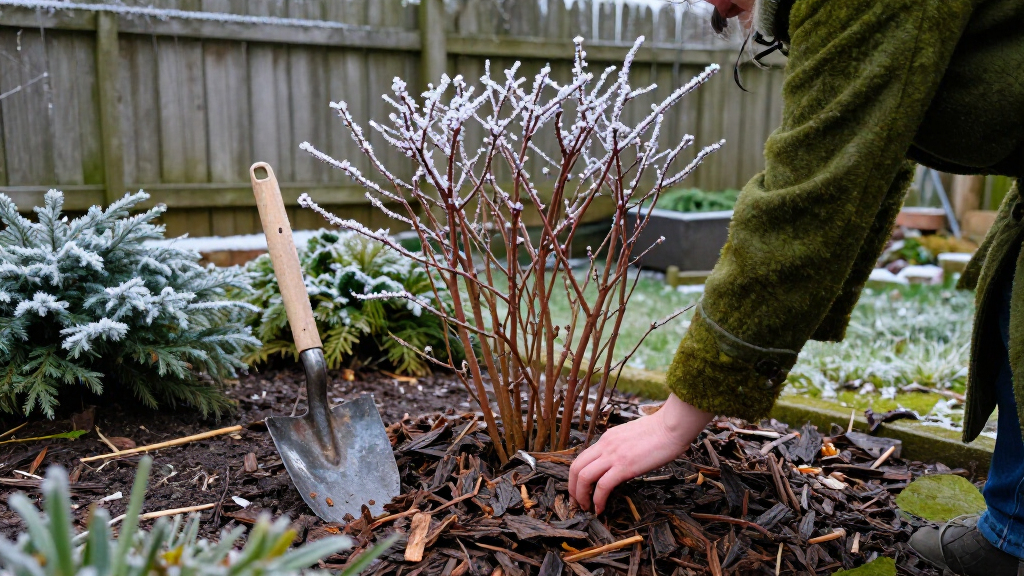
After the first hard frost, or once the ground is frozen, apply four to six inches of mulch over the root zone of new or late-season plantings. Keep mulch several inches away from stems where rodents may be a concern. The source also describes using wire around the base to deter rabbits; it says to remove the barrier in spring. These measures are presented as protection for vulnerable plants, not a requirement for every established shrub.
Protecting Roots From Winter Damage
The guidance matters because winter injury can occur below ground even when a shrub is suited to the region. Repeated freezing and thawing may heave soil and expose the crown, while shifting ground can damage roots. In areas with wet winters, saturated soil can contribute to root rot. Container plants face particular exposure because their roots are not insulated by surrounding garden soil.
Matching care to the plant’s situation can prevent unnecessary work as well as avoidable damage. A mature, established shrub may need no special covering, while a recently planted shrub or pot left outdoors may benefit from insulation, drainage improvements or a sheltered location. The recommendations are general; the report does not establish a single treatment that suits every climate, variety or site.
As an affiliate, we earn on qualifying purchases.
Dormancy and Local Hardiness
The source describes spirea as a large genus of flowering shrubs in the rose family. Cultivated varieties flower in spring or summer and may have foliage that changes color through the growing season. Their winter routine is simpler: all varieties are deciduous and enter dormancy after shedding their leaves.
The guide’s hardiness-zone ranges are broad rather than a guarantee for an individual plant. Variety, establishment, exposure and drainage affect how a shrub fares. Its recommendations focus on keeping plants healthy as they enter dormancy and protecting the roots of those most exposed to winter stress.
For potted spirea in cold climates, the source advises moving containers to a sheltered place such as beside a foundation or into an unheated garage or shed. If pots remain outdoors, gardeners can mulch the soil surface or wrap the container itself with bubble wrap or an old blanket. The guide says not to put those coverings over the plant.
Care Depends on Site Conditions
The report does not identify a single winter-care schedule for every spirea or give forecasts for particular regions. Local first-frost timing, rainfall, drainage, container size and cultivar hardiness affect what protection is appropriate. It also does not quantify how much any one measure improves survival.
Its advice to tilt containers during periods of heavy rain is aimed at reducing water reaching the pot, but the source does not specify how long a pot should remain tilted. Gardeners using this method should keep the container secure and avoid spilling soil, as the guide advises. The report also does not replace plant-specific guidance for unusually exposed sites or severe winters.
Winter Steps and Spring Removal
As cold weather approaches, gardeners can check that spirea are healthy, stop late-season fertilizing, and water when autumn rainfall is inadequate. After the first hard frost or once the soil has frozen, they can mulch vulnerable root zones and move pots to shelter or improve drainage. During winter, containers left outdoors should not sit in standing water.
The guide recommends removing mulch and container coverings in early spring, or after overnight temperatures remain above freezing. Any wire used to deter rabbits should also be removed then. Gardeners can check for winter damage once growth resumes and follow pruning guidance suited to whether their spirea flowers in spring or summer.
Key Questions
Do established spirea need to be covered for winter?
Usually not, if the shrub is healthy and its variety is hardy for the area. New plantings and exposed sites may need extra protection, particularly around the roots.
When should I mulch a spirea for winter?
The Gardener’s Path guide recommends applying four to six inches of mulch over the root zone after the first hard frost or once the ground is frozen. It says to keep mulch away from the stems when rodents are a concern.
Should I prune spirea before winter?
Remove dead or damaged branches after the leaves fall, but avoid heavy pruning after midsummer. The guide warns that late pruning can encourage tender growth vulnerable to frost.
How should I protect spirea in a pot?
In cold climates, move the pot to a sheltered location or insulate the container with mulch or a wrap. In wet climates, make sure it drains freely and does not sit in standing water. Do not cover the shrub with container insulation.
When should winter protection be removed?
Remove mulch and container coverings in early spring, or when overnight temperatures stay above freezing. Remove any rabbit-proofing wire at that time as well.
Source: rss
Halloween Picks
halloween
As an affiliate, we earn on qualifying purchases.