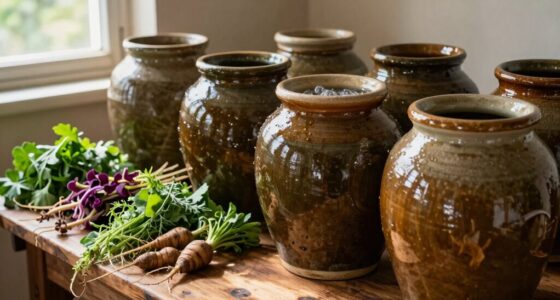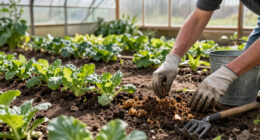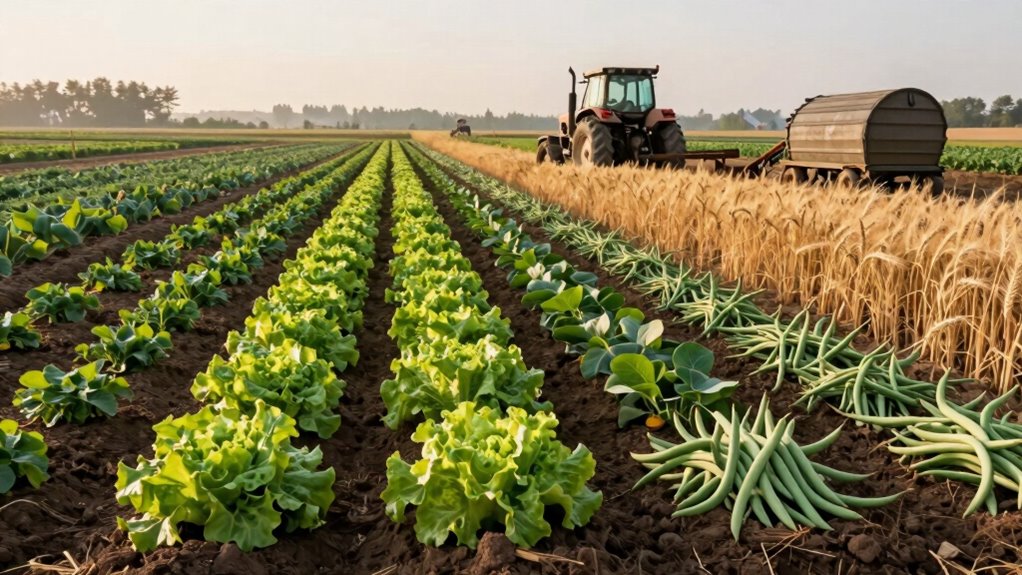

Crop rotation helps you preserve harvest quality by breaking pest and disease cycles that can damage crops. It also keeps your soil healthy by adding organic matter and preventing nutrient depletion. Changing crops disrupts weeds and reduces your need for chemical treatments, promoting sustainable practices. Plus, diverse root systems and microbes boost soil fertility and resilience. If you want to learn more about how rotation supports long-term, thriving harvests, keep exploring this essential farming strategy.

Get garden gear delivered free with Prime
- Fast, free delivery on millions of items
- Prime Video, Amazon Music and more included
- Member-only deals all year
Key Takeaways
- Rotation disrupts pest and disease cycles, reducing crop losses and ensuring healthier, more reliable harvests.
- Varying crops enhances soil nutrient balance, leading to sustained soil fertility and better crop yields over time.
- Diverse root systems and cover crops improve soil structure and microbial health, supporting resilient harvests.
- Crop rotation minimizes reliance on chemical inputs, promoting sustainable practices that protect long-term crop productivity.
- Planning rotations fosters ecosystem balance, leading to healthier crops and more preserved, stable harvests.
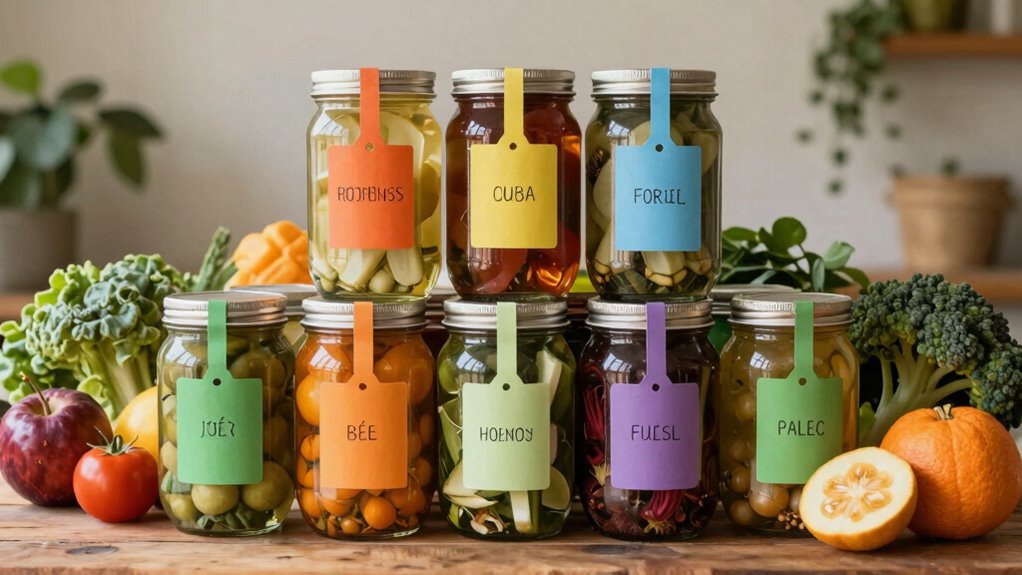
Have you ever wondered how farmers maintain soil health and crop productivity over time? It all comes down to the practice of crop rotation, which is essential for preserving harvest quality and ensuring sustainable farming. When you rotate your crops, you introduce variety into your planting schedule, which boosts crop diversity. This diversity helps prevent pests and diseases from becoming entrenched, reducing the need for chemical interventions. More importantly, crop rotation supports soil health by breaking pest and disease cycles that can deplete the soil’s nutrients or introduce harmful pathogens.
By rotating different types of crops, you allow your soil to recover and replenish naturally. For example, planting legumes after a heavy-feeding crop like corn can fix nitrogen in the soil, making it available for the next crop and reducing the need for synthetic fertilizers. This natural process keeps your soil fertile and robust, which is crucial for healthy, high-yielding harvests. When you focus on crop diversity, you also promote a balanced ecosystem beneath the surface. Different plants have varied root structures and nutrient requirements, so rotating them helps prevent soil exhaustion and maintains a diverse microbial community that supports soil health. Incorporating practices like cover cropping further enhances this process by protecting the soil during off-season periods and adding organic matter that benefits microbial activity. Additionally, using solar-powered equipment can make your farm more sustainable and energy-efficient, supporting environmentally friendly practices in crop management.
Rotating crops like legumes after heavy feeders naturally restores soil nitrogen and promotes a healthy, balanced ecosystem below the surface.
In addition to improving the soil, crop rotation can help you manage pests and weeds more effectively. Pests that attack one crop often won’t find the same host in the next planting cycle, reducing their impact. Weeds are less likely to become dominant when you change your crop types regularly because different crops compete differently for resources. This reduces the reliance on herbicides and other chemicals, making your harvests more sustainable and less contaminated.
Furthermore, crop rotation encourages you to plan ahead and think strategically about your farm’s overall health. It pushes you to consider which crops complement each other, how they affect soil nutrients, and how they fit into your long-term goals. By doing so, you’re not just chasing immediate yields but investing in the soil’s future. Additionally, understanding the importance of soil health can help you make more informed decisions about crop choices and management practices. Over time, this approach leads to more resilient crops, fewer inputs needed, and a more sustainable farming system overall.
In short, rotation is not just about diversifying what you grow; it’s about nurturing the very foundation of your farm—your soil. By prioritizing crop diversity and soil health through rotation, you set yourself up for successful, sustainable harvests that can withstand the test of time. Your efforts today will pay off with healthier soil, better crops, and more preserved harvests tomorrow.
As an affiliate, we earn on qualifying purchases.
Frequently Asked Questions
How Often Should Crop Rotations Be Changed for Optimal Preservation?
You should change crop rotations every 1 to 3 years to optimize preservation. This frequency helps maintain soil health and enhances crop diversity, which reduces pest and disease buildup. Regularly rotating crops prevents soil depletion, keeps nutrients balanced, and minimizes the need for chemical inputs. By adjusting your rotation schedule, you promote a healthier, more resilient soil ecosystem, ultimately leading to better preservation outcomes and sustainable farming practices.
What Are the Best Crops to Include in a Rotation Cycle?
You should include a mix of legumes, leafy greens, and root crops in your rotation cycle. These crops promote soil enrichment and boost crop diversity, helping prevent pests and diseases. Legumes like beans and peas fix nitrogen, while leafy greens and roots add variety and nutrients. Think of it as hitting two birds with one stone—improving soil health and maintaining a resilient, productive harvest.
How Does Crop Rotation Affect Pest and Disease Control?
Crop rotation markedly boosts pest and disease control by disrupting pest life cycles and reducing pathogen buildup. As you rotate crops, you improve soil fertility, which strengthens plants’ natural defenses. This process suppresses pests and diseases naturally, decreasing your reliance on chemical treatments. By changing crop types regularly, you create an environment where pests and diseases struggle to thrive, ensuring healthier yields and more sustainable farming practices.
Can Rotation Practices Vary Based on Harvest Storage Methods?
Your rotation practices can definitely vary based on storage techniques and preservation methods. If you use airtight containers or refrigeration, you might rotate crops differently than if you rely on drying or fermenting. Properly aligning your crop rotation with storage methods guarantees freshness and reduces spoilage. Remember, adapting your practices to your storage techniques keeps your harvests at their peak, preventing waste and maximizing shelf life, like a well-oiled machine.
What Economic Benefits Are Linked to Crop Rotation in Preserved Harvests?
You can see economic benefits from crop rotation in preserved harvests through improved soil fertility and increased crop diversity. Rotating crops helps maintain healthy soil, reducing the need for costly fertilizers, and boosts yields over time. Plus, diversifying your crops minimizes risks from pests and market fluctuations, ensuring steady income. This strategic approach ultimately lowers costs and maximizes profits, making your preserved harvests more sustainable and economically resilient.
Conclusion
So, next time you plan your preserved harvests, will you prioritize rotation? Keeping your harvests diverse not only prevents pests and diseases but also guarantees your soil stays healthy and productive. By rotating your crops, you’re making smarter, more sustainable choices for the future. Don’t let your preserved harvests become stagnant—embrace rotation and watch your garden thrive. After all, isn’t a little planning today the key to a bountiful tomorrow?
Fall Picks
fall essentials
As an affiliate, we earn on qualifying purchases.