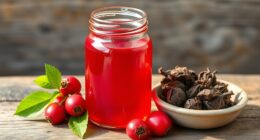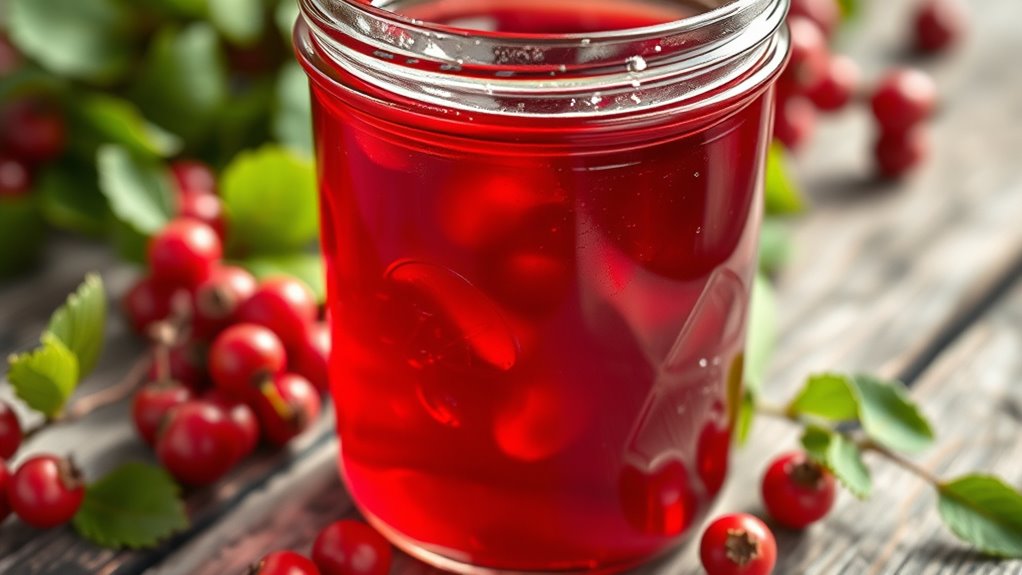
To set hawthorn jelly without commercial pectin, focus on the berry’s natural high pectin content. Cook the berries until soft, then add lemon juice to boost natural gelling properties and flavor. As the mixture thickens, monitor the gel point closely—you’ll see it hold its shape when ready. With patience and attention, you’ll achieve a perfect, natural set, and there’s more to discover if you explore further.
Key Takeaways
- Hawthorn berries naturally contain pectin, which helps the jelly set without commercial pectin additions.
- Cooking the berries releases natural pectin and sugars, enabling gel formation during the process.
- Adding lemon juice boosts natural pectin activity and enhances flavor, aiding in proper setting.
- Monitor the mixture carefully and wait for the gel point to achieve the desired consistency naturally.
- Using fresh, wild-harvested berries ensures a pure, additive-free jelly that relies on natural pectin for setting.
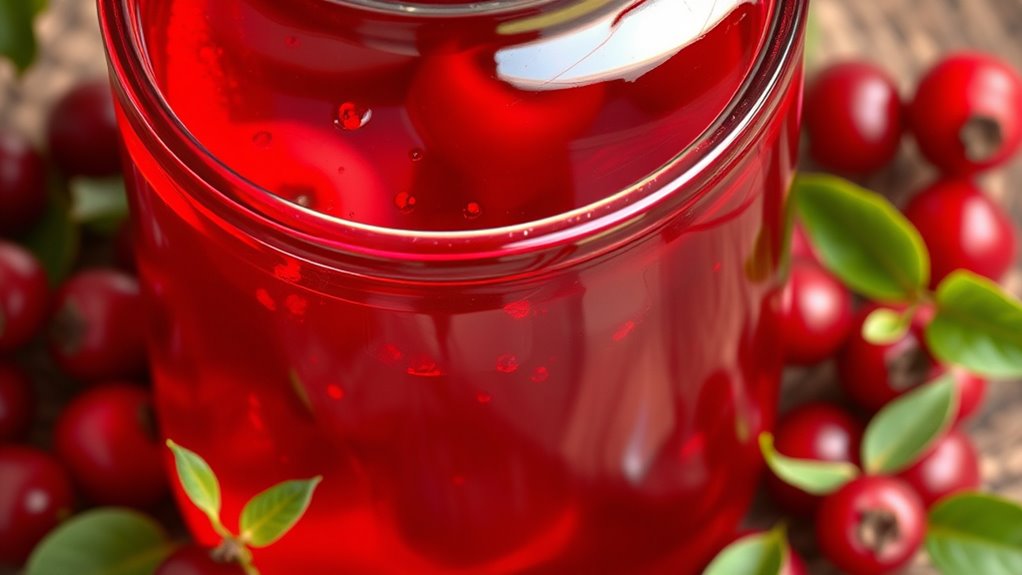
Have you ever tasted hawthorn jelly? If not, you’re missing out on a vibrant, flavorful way to connect with nature’s abundance. Making your own hawthorn jelly isn’t just about enjoying a delicious spread; it’s about reclaiming your freedom from commercial products and embracing the power of wild foraging. When you gather hawthorn berries from the wild, you tap into a tradition rooted in herbal medicine and self-sufficiency. This isn’t just about food—it’s about reclaiming control over what you consume, knowing exactly where your ingredients come from, and harnessing nature’s healing properties.
Wild foraging for hawthorn is a liberating act. It allows you to step outside the constraints of store-bought products that often contain added sugars, preservatives, or artificial pectin. Instead, you gather the berries in their natural environment, feeling the sun on your skin and the earth beneath your feet. This direct engagement with nature empowers you, making the process of creating hawthorn jelly a ritual of independence. The berries themselves are packed with herbal medicine benefits, known to support heart health and improve circulation. By turning these wild fruits into jelly, you’re not just creating a tasty treat—you’re harnessing the herbal medicine power of hawthorn in a form that’s easy to enjoy and share.
Making hawthorn jelly without commercial pectin might seem intimidating at first, but it’s a straightforward process that reinforces your autonomy. The key is understanding the natural pectin content in the berries and how to work with it. As the berries cook down, their natural pectin will gel the mixture, especially if you add a touch of lemon juice, which enhances pectin activity and flavor. You don’t need artificial thickeners—just patience and a keen eye for the right consistency. This approach keeps your jar of jam free from unnecessary additives, aligning perfectly with a lifestyle rooted in natural living and herbal medicine. Recognizing the natural pectin content of wild fruits can help you achieve the perfect set without relying on store-bought thickeners.
Frequently Asked Questions
Can Hawthorn Jelly Be Stored Long-Term Without Refrigeration?
You can store hawthorn jelly long-term without refrigeration if you follow proper storage tips. Make certain the jars are sealed correctly and keep them in a cool, dark place. When stored properly, your hawthorn jelly can have a shelf life of up to a year or more, giving you the freedom to enjoy it anytime without the hassle of refrigeration. Regularly check for signs of spoilage to maintain its freshness and safety.
What Are the Best Hawthorn Varieties for Jelly Making?
You should choose the best hawthorn berry selection for jelly making by focusing on ideal hawthorn cultivars like Crataegus laevigata and Crataegus monogyna. These varieties provide abundant, flavorful berries with high pectin content, making your jelly set beautifully without commercial pectin. By selecting these cultivars, you gain control over your craft, freeing yourself from store-bought shortcuts and enjoying the pure, homemade process of creating delicious hawthorn jelly.
How Do I Adjust Sweetness Levels in Hawthorn Jelly?
They say, “Taste is king,” so trust your palate to adjust sweetness levels. To balance sweetness, add sugar gradually and taste often. If you prefer less sugar, try natural sugar alternatives like honey or stevia, but keep in mind they might alter the flavor. Remember, you’re in control—liberate your jelly from rigid recipes and create a perfectly balanced, delicious hawthorn jelly that reflects your taste.
Are There Any Health Risks Associated With Hawthorn Jelly?
You should be aware of potential toxicity concerns and allergen risks with hawthorn jelly. While it’s generally safe, consuming large amounts might cause adverse effects, especially if you’re sensitive or allergic. Always check for allergies before trying it, and consult with a healthcare professional if you’re pregnant, nursing, or on medication. Enjoy your freedom to explore, but stay informed and cautious to make sure your health stays protected.
Can Hawthorn Jelly Be Used in Baking or Cooking Recipes?
Yes, you can use hawthorn jelly in baking and cooking recipes. Its natural flavor enhancement adds a unique, fruity touch to dishes, making it perfect for culinary applications. Spread it on toast, swirl it into yogurt, or use it as a glaze for meats and desserts. Embrace the versatility of hawthorn jelly and liberate your recipes, transforming everyday meals into delightful, flavorful creations with this natural, homemade ingredient.
Conclusion
Just like the timeless art of alchemy transforming humble ingredients into gold, making hawthorn jelly without commercial pectin proves you don’t need shortcuts to create something truly special. With patience and a gentle touch, you harness nature’s own magic, turning wild berries into a jewel of a preserve. So, embrace the journey, and soon you’ll enjoy a luscious, set jelly—proof that with care and a little know-how, you hold the key to culinary wonder.