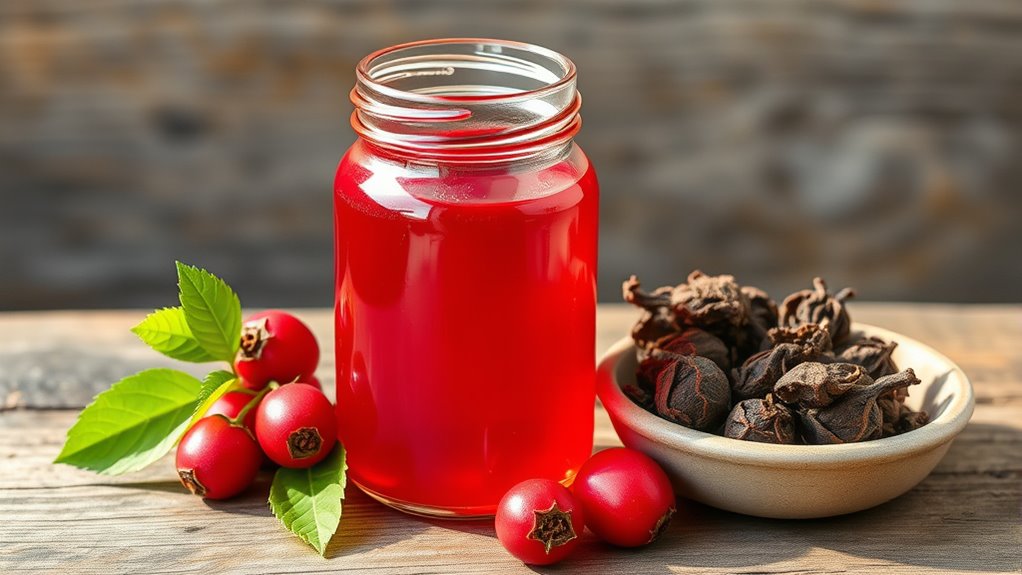

If you want to make rosehip syrup, you can choose fresh or dried berries. Fresh rosehips give a bright, tangy syrup that captures summer’s flavor, while dried ones provide a more concentrated, deep berry taste suitable for year-round use. Fresh berries are quick and vibrant, but dried rosehips are easier to store and have a richer flavor. To discover how each method brings out unique qualities, keep exploring these flavorful options!
Open a free Amazon Business account
Business pricing, bulk buying and tax-exempt orders.
As an affiliate, we earn on qualifying purchases.
Key Takeaways
- Fresh rosehips produce a bright, tangy syrup capturing the vibrant flavors of summer and autumn.
- Dried rosehips create a concentrated, robust syrup with an intense berry flavor suitable for year-round use.
- Fresh rosehip syrup is quicker to make, while dried rosehips require soaking before simmering for flavor extraction.
- Both methods preserve antioxidants and vitamin C, but dried versions offer more concentrated nutritional benefits.
- Choice depends on seasonal availability, desired flavor intensity, and convenience for culinary applications.
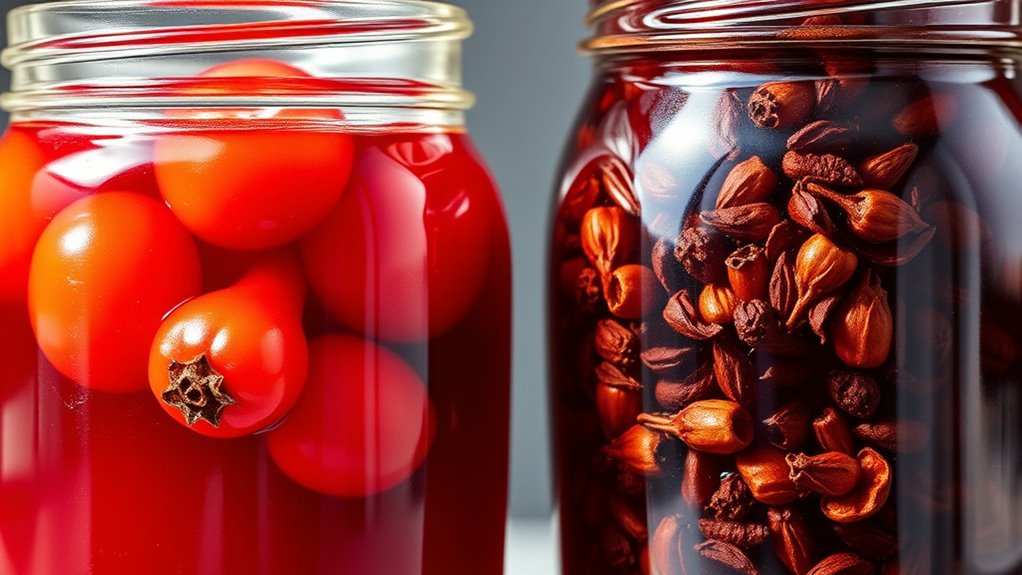
Have you ever wondered how to enjoy the tangy, vitamin-rich flavor of rosehips in more than one way? If you’re seeking to unleash their full potential, understanding the differences between fresh and dried rosehips can set you free to experiment with their health benefits and culinary uses. Fresh rosehips burst with vibrant flavor and nutrients, offering a lively, tangy punch that’s perfect for making syrups, jams, or teas. Their bright, juicy nature makes them ideal for quick, simple preparations. When you use fresh rosehips, you get the maximum amount of vitamin C and antioxidants, which support your immune system and promote overall health. Plus, working with fresh fruit gives you a more vibrant, natural taste that’s hard to replicate. However, fresh rosehips aren’t available year-round, and their delicate nature means they spoil quickly. That’s where dried rosehips come in, providing a long-lasting, versatile alternative. Once dried, these berries preserve much of their nutritional profile while gaining a concentrated flavor, making them excellent for infusions, syrups, or baking. Dried rosehips are your liberation from seasonal constraints—they’re easy to store and always ready when you want to tap into their health benefits or culinary uses.
When making rosehip syrup, fresh and dried options each bring their own unique qualities. Using fresh rosehips allows you to craft a bright, tangy syrup that captures the essence of summer and autumn. The process involves simmering the fresh berries until they release their juices, then straining and sweetening the liquid. This produces a vibrant, slightly tart syrup packed with vitamin C, perfect for boosting immunity or adding a zing to your beverages. On the other hand, dried rosehips lend themselves to a more concentrated, robust syrup. Soaking dried berries softens them, and simmering releases their concentrated flavor, which can be sweetened to your taste. This syrup offers a more intense, berry-forward profile, ideal for those who want a deep, rich taste that complements both sweet and savory dishes. Additionally, the high antioxidant content of rosehips enhances their health benefits, making both fresh and dried versions excellent choices for wellness. In the end, choosing between fresh and dried rosehips depends on your desire for convenience, flavor intensity, and seasonal availability. Both options empower you to incorporate their health benefits—like immune support and antioxidants—into your diet creatively. Whether you prefer the lively freshness of fresh berries or the concentrated depth of dried ones, you’re free to explore endless culinary uses. From tangy syrups to herbal teas and desserts, embracing these versatile berries liberates you from limits and invites you to enjoy their health benefits in the most delicious ways.
As an affiliate, we earn on qualifying purchases.
Frequently Asked Questions
How Long Does Homemade Rosehip Syrup Last in Storage?
You can enjoy your homemade rosehip syrup for up to a year if stored properly. Keep it in a sterilized, airtight bottle in the refrigerator to maximize shelf life. If you want longer storage, consider preservative options like adding a bit of alcohol or honey, which can extend its freshness. Regularly check for signs of spoilage, like fermentation or mold, and enjoy your vibrant, natural syrup at its best!
Can Rosehip Syrup Be Used in Cooking or Baking Recipes?
A picture is worth a thousand words, and rosehip syrup can truly elevate your culinary creations. You can use it in cooking applications like marinades, sauces, or desserts, adding a tangy, floral sweetness. Its unique flavor pairing complements berries, citrus, and spices. Feel free to experiment in baking, drizzling over cakes or mixing into glazes—liberate your kitchen by embracing this versatile, natural ingredient that transforms ordinary dishes into extraordinary ones.
Are There Any Health Risks Associated With Consuming Rosehip Syrup?
Yes, there are some health risks with rosehip syrup. You should watch for allergy concerns, especially if you have sensitivities to berries or related plants. Also, be mindful of the sugar content, as it can be quite high, which might impact blood sugar levels or overall health. Enjoy it freely, but with awareness—moderation allows you to reap its benefits without compromising your well-being.
What Are the Best Harvesting Tips for Fresh Rosehips?
You must seize the moment when harvest timing is just right—wait too long, and the hips vanish like fleeting dreams. Pruning techniques are your secret weapon; trim wisely to boost growth and accessibility. Feel the liberation as you connect with nature’s rhythm, harvesting at peak ripeness when hips are plump and vibrant. Trust your instincts, act decisively, and let the wild, fragrant bounty of fresh rosehips empower your journey.
How Do Dried Rosehips Compare in Flavor Intensity to Fresh Ones?
Dried rosehips pack a more concentrated flavor compared to fresh ones, making their flavor comparison quite striking. When you use dried rosehips, you’ll notice a richer, more intense tang that stands out in your syrups. Fresh rosehips offer a lighter, more delicate taste, perfect for a subtle infusion. Embrace the boldness of dried ones to discover a deeper, more liberated flavor experience, elevating your culinary creations with passion and confidence.
Conclusion
Whether you choose fresh or dried rosehips, making syrup is a simple way to enjoy their health benefits. Some believe dried rosehips concentrate nutrients, making the syrup more potent, while fresh ones offer a vibrant flavor. Scientific studies suggest both methods preserve the vitamin C content, but dried may have a slight edge in shelf life. Whichever you prefer, you’ll end up with a delicious, immune-boosting treat that’s worth the effort.
Fall Picks
fall essentials
As an affiliate, we earn on qualifying purchases.