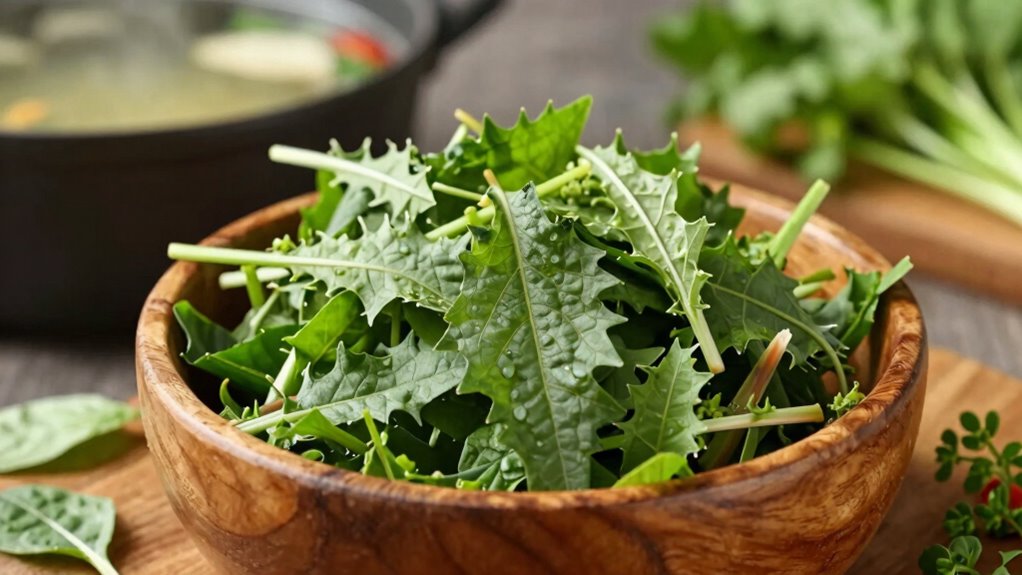

To use wild greens in soups without overcooking, add them toward the end of cooking so they only need a few minutes to wilt. Keep the heat at a gentle simmer, not a rolling boil, and monitor the timing closely. Use perforated bags or damp cloth for storage to maintain freshness. Precise heat management and quick addition help preserve their bright color, delicate texture, and nutrients. For more tips on perfecting your soup, keep exploring these strategies.

Get garden gear delivered free — and shop member deals
- Fast, free delivery on millions of items
- Access to Prime Big Deal Days deals on October 6–7
- Prime Video, Amazon Music and more included
Key Takeaways
- Add wild greens during the final minutes of cooking to prevent overcooking and preserve their texture.
- Keep the soup at a gentle simmer, not a rolling boil, to protect greens’ vibrant color and nutrients.
- Use a small amount of greens at a time and taste-test as they wilt to avoid overdoing it.
- Use quick cooking techniques, such as chopping greens finely, to reduce overall cooking time.
- Monitor and adjust cooking duration based on the specific greens to maintain their delicate qualities.

Wild greens can add vibrant flavor and nutrients to your soups, but if overcooked, they lose their freshness and delicate texture. To preserve their bright taste and vibrant color, proper wild greens storage is crucial. Keep your greens in a perforated plastic bag or loosely wrapped in a damp cloth inside the refrigerator. Avoid airtight containers, as excess moisture can cause spoilage. Use them within a few days of harvesting or purchase to ensure maximum freshness. Proper storage prevents wilting and helps maintain the greens’ natural flavors, making it easier to incorporate them into your soups without sacrificing quality.
When adding wild greens to your soup, timing is everything. To avoid overcooking, add the greens toward the end of the cooking process. Usually, a handful of chopped wild greens only needs a few minutes to wilt and release their flavor. Keep the heat at a gentle simmer rather than a rolling boil, which can quickly turn tender greens into a soggy mess. Once you see the greens start to wilt, taste-test to ensure they’re not overdone. This quick addition preserves their delicate texture and bright taste, making your soup more vibrant and flavorful. Incorporating proper cooking techniques can further help maintain the greens’ vibrant color and nutritional value. Additionally, understanding how different types of wild greens respond to heat can help you customize your cooking process for the best results. Being aware of cooking times for various greens ensures you do not accidentally overcook them and lose their delicate qualities. Paying attention to heat management also plays a vital role in preserving their freshness and nutritional benefits. To further enhance their vitality, consider precise timing and adjusting based on the specific greens you’re using.
As an affiliate, we earn on qualifying purchases.
Frequently Asked Questions
Can I Freeze Wild Greens for Later Use in Soups?
Yes, you can freeze wild greens for later use in soups. To guarantee proper wild greens preservation, wash them thoroughly and blanch briefly in boiling water to maintain color and texture. Use freezing techniques like airtight containers or freezer bags, removing excess air to prevent freezer burn. Properly frozen wild greens stay fresh longer, making it easy to add nutritious greens to your soups whenever you want without overcooking.
Which Wild Greens Are Best Suited for Soups?
You should use flavorful wild greens for soups like wild spinach, purslane, dandelion greens, or lamb’s quarters. These greens add vibrant flavor and nutrients without overpowering your dish. They’re versatile and cook quickly, so add them toward the end of your soup’s cooking process to preserve their taste and texture. Always pick fresh, young greens for the best flavor and tender consistency.
How Do I Identify Safe, Edible Wild Greens?
Wild green foraging might seem like an adventure of a lifetime, but safety comes first. To identify safe, edible wild greens, master edible plant identification by consulting reliable guides and local experts. Look for distinct features like leaf shape, color, and smell, and avoid plants with milky sap or bitter taste. Always verify your find before eating, as misidentification can be dangerous—trust your senses and expert advice to stay safe.
Are There Any Health Benefits to Adding Wild Greens?
Adding wild greens boosts your meal with impressive wild greens nutrition, offering vitamins, minerals, and antioxidants. The benefits of foraged greens include supporting your immune system, improving digestion, and providing anti-inflammatory properties. When you incorporate wild greens into your soups, you’re enriching your diet naturally. Just make certain you’ve correctly identified safe, edible varieties to enjoy these health benefits safely and maximize their nutritional value.
How Long Can I Store Wild Greens Before They Spoil?
You can store wild greens for about 1 to 2 weeks if you focus on wild greens preservation. Keep them in a plastic bag or container in the refrigerator’s crisper drawer to maintain freshness. For the best freshness tips, rinse them gently, dry thoroughly, and avoid squeezing to prevent wilting. Check regularly for signs of spoilage, like sliminess or discoloration, and use them promptly to enjoy their nutritional benefits.
Conclusion
As you stir those wild greens into your soup, think of them as delicate dancers who need just the right moment to shine. Timing is your secret ingredient—add them late and let their vibrant flavors burst like fireworks, rather than fade into the background. With a gentle touch, you’ll craft a soup that’s a lively garden in a bowl, bursting with freshness. Enjoy every spoonful, knowing you’ve mastered the art of preserving nature’s wild, edible magic.
Fall yard work Picks
leaf blowers
As an affiliate, we earn on qualifying purchases.