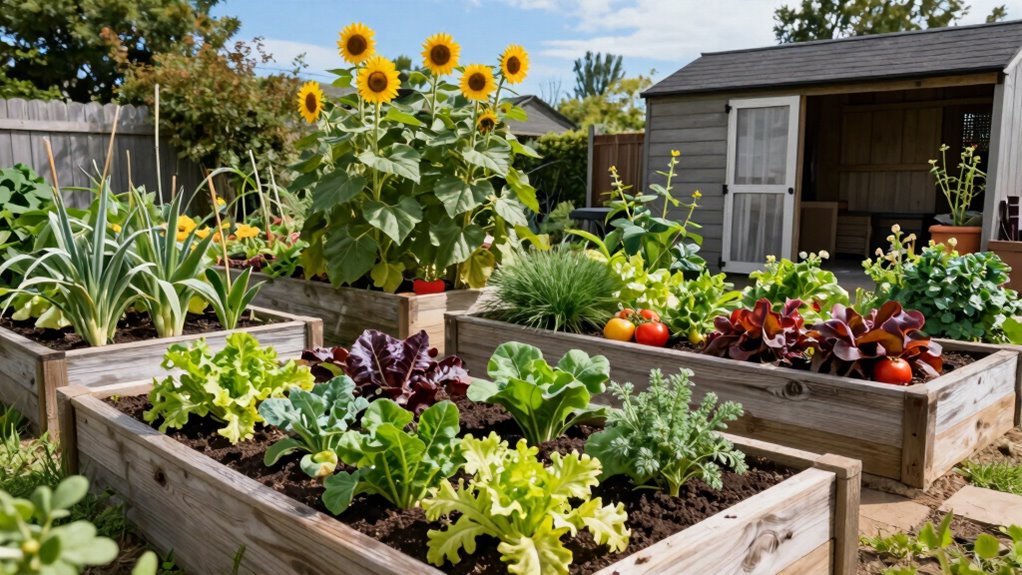

Using raised beds in your backyard boosts vegetable yields and improves soil health by giving you control over soil quality, drainage, and fertility. They act as natural pest barriers and make soil management easier through regular organic amendments like compost and manure. Plus, you can easily monitor soil conditions to prevent pests and maintain healthy plants. Keep exploring to discover how combining these strategies can make your food system more productive and sustainable.
Open a free Amazon Business account
Business pricing, bulk buying and tax-exempt orders.
As an affiliate, we earn on qualifying purchases.
Key Takeaways
- Raised beds improve soil control, fertility, and drainage, leading to higher crop yields in backyard food systems.
- Enriching raised bed soil with compost and organic matter boosts plant health and resilience.
- Elevated beds help manage pests effectively through physical barriers and natural deterrents.
- Regular soil testing and amendments maintain optimal nutrient levels and soil vitality.
- Combining pest management with soil health practices creates sustainable, productive backyard food systems.
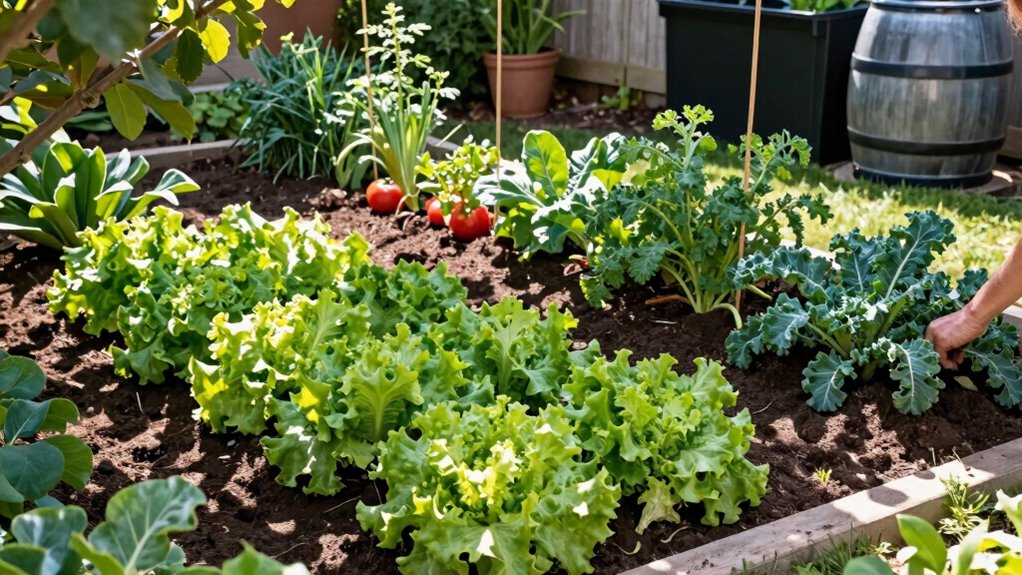
Creating a backyard food system often begins with building raised beds, which offer a practical and efficient way to grow your own produce. These beds give you control over soil quality, making it easier to improve soil fertility and guarantee your plants get the nutrients they need. Unlike traditional in-ground gardens, raised beds allow you to fill them with high-quality soil and compost, creating an ideal environment for healthy root development. This elevated setup also helps prevent soil compaction, guaranteeing better aeration and water drainage, both essential for vigorous plant growth. As you prepare your beds, focus on enriching the soil with organic matter—compost, manure, or other organic amendments—to boost fertility naturally. Well-fertilized soil leads to stronger plants, higher yields, and better resistance against pests and diseases.
When it comes to pest management, raised beds offer distinct advantages. They act as a physical barrier, making it more challenging for pests like slugs, snails, or ground-dwelling insects to reach your plants. You can also install simple covers or row covers over your beds to keep pests at bay while still allowing sunlight and rain to reach your crops. Regular inspection and early intervention are essential; remove pests manually when you see them, and consider natural deterrents such as neem oil or companion planting to keep pests away. The confined space of raised beds makes it easier to identify pest problems early and address them before they cause significant damage. Additionally, incorporating soil health practices and monitoring soil conditions can further enhance your garden’s resilience. Using soil testing to assess nutrient levels and pH can help optimize your soil amendments and maintain a healthy growing environment. Implementing integrated pest management strategies can also help maintain a balanced ecosystem within your garden. Furthermore, managing the microbial activity in the soil is crucial for sustaining long-term plant health and pest resistance.
raised garden beds with soil and compost
As an affiliate, we earn on qualifying purchases.
As an affiliate, we earn on qualifying purchases.
Frequently Asked Questions
How Do Raised Beds Affect Local Water Runoff and Drainage?
Raised beds improve water absorption by allowing soil to drain more efficiently, reducing water runoff and preventing erosion. You’ll notice better runoff management since excess water flows out easily, minimizing pooling and waterlogged roots. By controlling soil levels and composition, you can optimize water retention for your plants, making your garden more resilient during heavy rains. Overall, raised beds help you manage water effectively, promoting healthier plants and a sustainable garden environment.
What Are the Best Pest Control Methods for Raised Beds?
They say “an ounce of prevention is worth a pound of cure,” so start with companion planting to naturally deter pests in your raised beds. Use organic pesticides sparingly, targeting specific pests without harming beneficial insects. Keep your beds healthy and well-maintained, and consider introducing beneficial insects like ladybugs. These methods work together to keep pests at bay, ensuring your garden thrives without chemicals.
Can Raised Beds Be Used for Year-Round Gardening?
Yes, you can use raised beds for year-round gardening with proper seasonal planning. In winter, plant hardy crops like kale or spinach, and add insulation or row covers to protect against cold. During warmer months, grow summer vegetables. By adjusting your planting schedule and using season-appropriate crops, you maximize your raised beds’ productivity year-round, ensuring fresh produce no matter the season.
How Do Soil Amendments Differ in Raised Beds Versus Traditional Gardens?
Soil amendments in raised beds differ from traditional gardens because you have more control over soil fertility. You can add high-quality compost, organic matter, or specific amendment types like peat moss or vermiculite to improve drainage, aeration, and nutrient content. This targeted approach helps maintain ideal soil conditions year-round, ensuring your plants thrive. Since raised beds warm up faster, amendments also help sustain consistent growth, regardless of season or weather fluctuations.
What Are Cost Considerations for Establishing a Backyard Food System?
When establishing a backyard food system, you should start with a cost analysis and budget planning to manage expenses effectively. Consider costs like soil, seeds, tools, and materials for raised beds or containers. Investing in quality supplies can save money long-term by reducing replacements. Look for affordable options, DIY solutions, and bulk purchases to stay within your budget. Proper planning guarantees you maximize your investment and create a productive, sustainable backyard food system.
Conclusion
By embracing raised beds and backyard food systems, you’re planting seeds of sustainability and abundance right in your own backyard. Think of your garden as a symphony, each bed an essential instrument working in harmony to produce a nourishing melody. With care and patience, you’ll watch your food system flourish like a wildflower garden—vivid, resilient, and bursting with life. Your efforts transform your yard into a bountiful oasis, where nature’s generosity blooms at your fingertips.
Flea & tick season Picks
flea and tick prevention
As an affiliate, we earn on qualifying purchases.