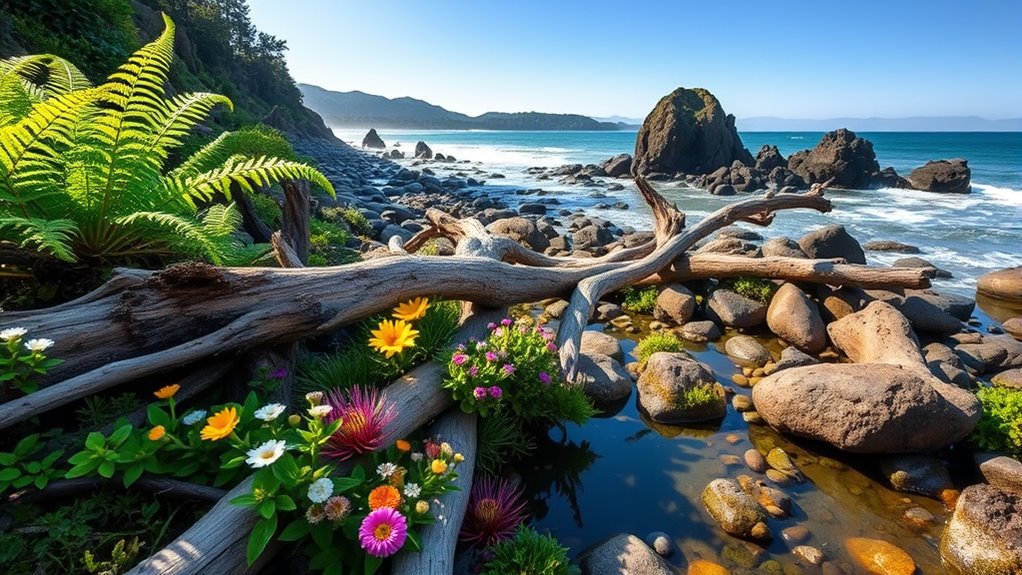

In spring along the Pacific Northwest coast, you can gather delicious seaweeds like nori, wakame, and kelp, along with shellfish such as clams and mussels, all harvested responsibly from clean waters. Wild greens like miner’s lettuce and chickweed add fresh flavor, but it’s important to follow local regulations, use proper tools, and respect habitats to guarantee sustainability. Keep exploring, and you’ll discover how to forage safely and ethically for a truly rewarding experience.

Get garden gear delivered free — and shop member deals
- Fast, free delivery on millions of items
- Access to Prime Big Deal Days deals on October 6–7
- Prime Video, Amazon Music and more included
Key Takeaways
- Identify and sustainably harvest edible seaweeds like nori, wakame, and kelp from clean, pollution-free waters along the Pacific Northwest coast.
- Use proper tools and techniques, such as scissors and mesh bags, to collect seasonal shellfish and clams during low tide, ensuring minimal habitat disturbance.
- Recognize and forage for wild greens like miner’s lettuce and chickweed, respecting private property and local regulations for responsible harvesting.
- Check local permits, tide schedules, and water quality reports before foraging to ensure safety and compliance with regional rules.
- Follow ethical guidelines by taking only what is needed and avoiding protected areas, supporting sustainable foraging and ecosystem health.
As an affiliate, we earn on qualifying purchases.
Edible Seaweed Varieties to Discover Along the Coast
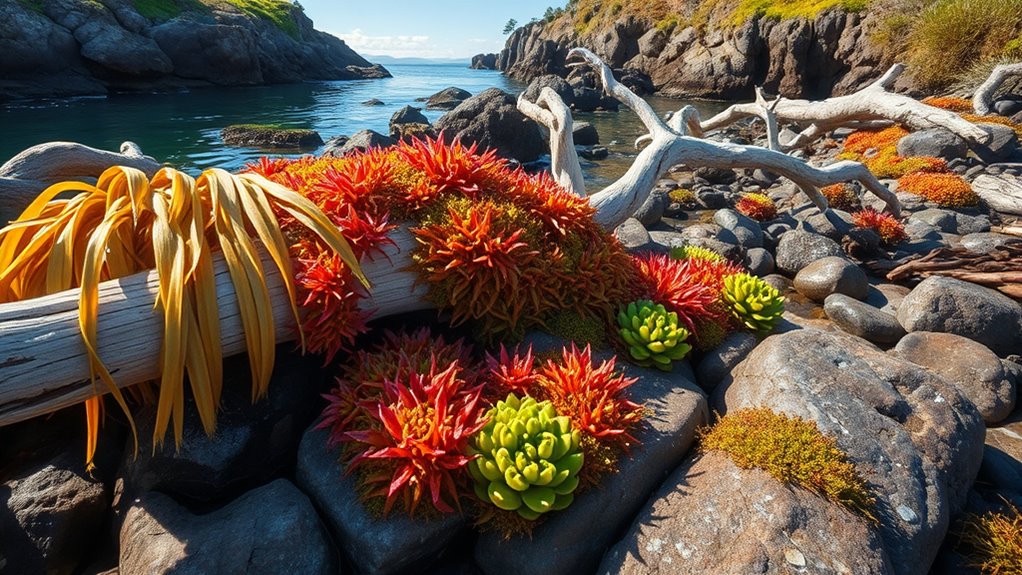
Along the coast, a variety of edible seaweeds await discovery, offering both nutritional benefits and unique flavors. You’ll find seaweed varieties like nori, wakame, dulse, and kelp, each packed with essential nutrients such as iodine, calcium, and vitamins. These seaweeds boost your health and add depth to your dishes. To safely forage, you’ll need foraging equipment essentials like a sturdy knife, a mesh bag for collecting, and gloves to protect your hands. Proper identification is key, so familiarize yourself with each type’s appearance and habitat. Harvest only from clean, pollution-free waters, and avoid overharvesting to sustain the ecosystem. With the right tools and knowledge, you can confidently gather these nutritious seaweeds and enjoy their vibrant flavors in your culinary adventures. Understanding safe foraging practices is essential to ensure a sustainable and enjoyable experience.
Seasonal Shellfish and Clams to Harvest Safely
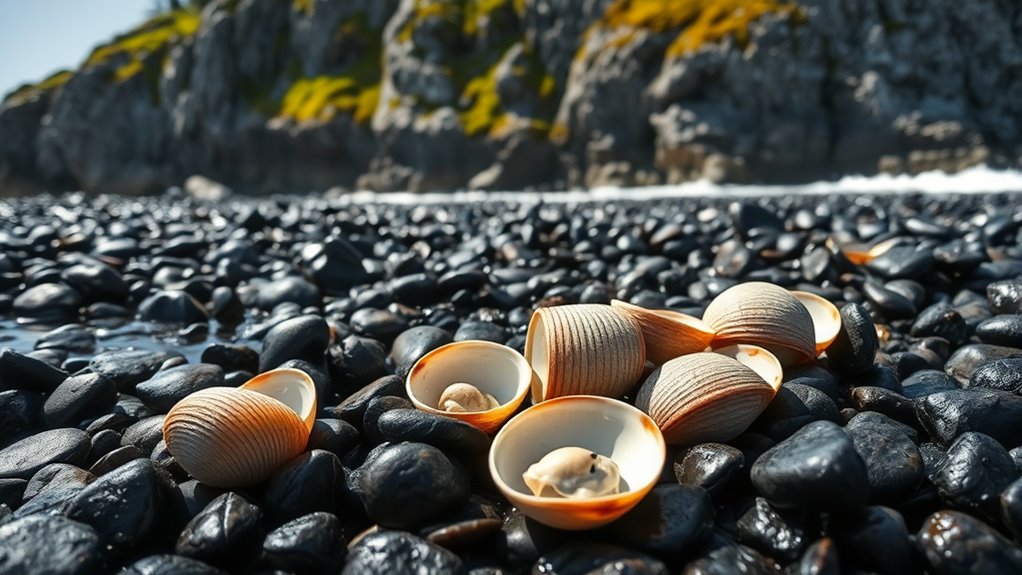
Understanding the best times to harvest shellfish and clams is essential for both safety and sustainability. You want to check local regulations and seasonal openings to avoid harvesting during closed periods, which protect fragile populations. Use proper harvesting equipment, like clam guns or rakes, to gather shellfish carefully and minimize environmental impact. Always verify water quality reports before foraging, as contaminated areas can pose health risks. Pay attention to tide schedules, as low tides provide better access and visibility. For your foraging safety, carry a mesh bag for easy collection and a knife for opening shells. Remember, harvesting responsibly ensures you enjoy fresh shellfish while helping preserve these vital coastal resources for future seasons. Employing proper fraud detection techniques can also be crucial in safeguarding your transactions and personal information while enjoying online resources related to coastal foraging.
Wild Spring Greens and Herbs for Fresh Flavors

As you finish harvesting shellfish and clams, consider turning your attention to the vibrant world of wild spring greens and herbs. These fresh flavors can elevate your foraged meals, but remember to follow foraging etiquette to protect the environment. Here are three seasonal foraging tips:
- Identify plants carefully—learn to distinguish edible greens like wild sorrel, miner’s lettuce, and chickweed.
- Harvest sustainably—only take what you need, leaving enough to ensure plants continue thriving.
- Respect private property and local regulations—always seek permission and stay within legal boundaries.
- Cultivating your foraging practice with attention and awareness can lead to a more creative and sustainable experience.
Tips for Ethical and Sustainable Foraging
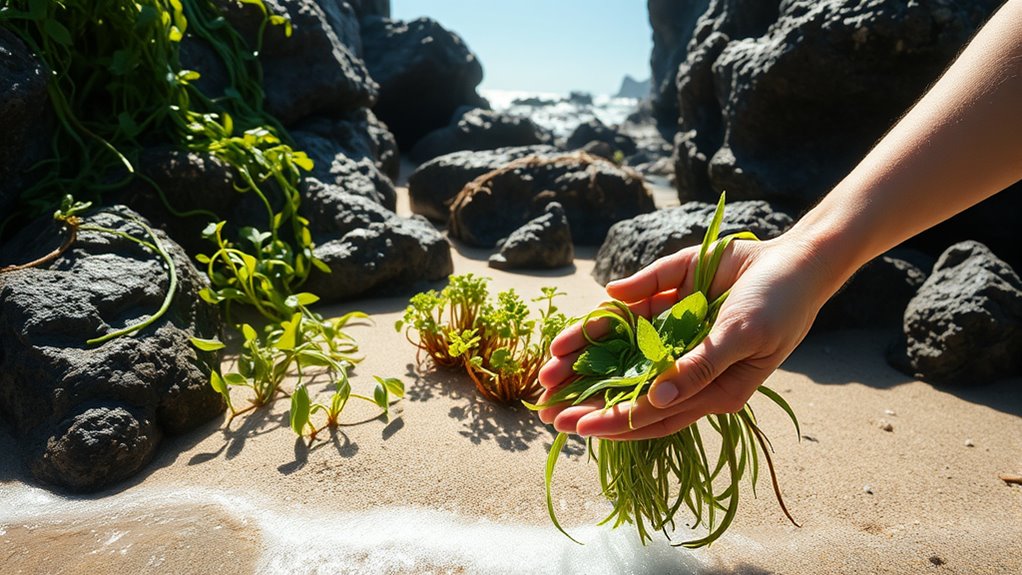
Practicing ethical and sustainable foraging guarantees that wild plants and ecosystems remain healthy for future harvests. To do this, focus on proper harvesting techniques—like taking only what you need and avoiding over-harvesting, so plants can regenerate. Always use the right foraging gear, such as scissors or knives, to make clean cuts and minimize damage. Be mindful of your surroundings, ensuring you don’t trample delicate habitats or disturb wildlife. Respect plant populations by avoiding rare or endangered species, and leave plenty behind for others and the environment. Keep your foraging activities responsible by staying within visible, designated areas. Additionally, staying informed about local ecosystem health helps you make better choices to protect the environment while foraging. By following these tips, you help preserve the coastal ecosystem’s health while enjoying the bounty of spring.
Navigating Local Regulations and Safety Guidelines
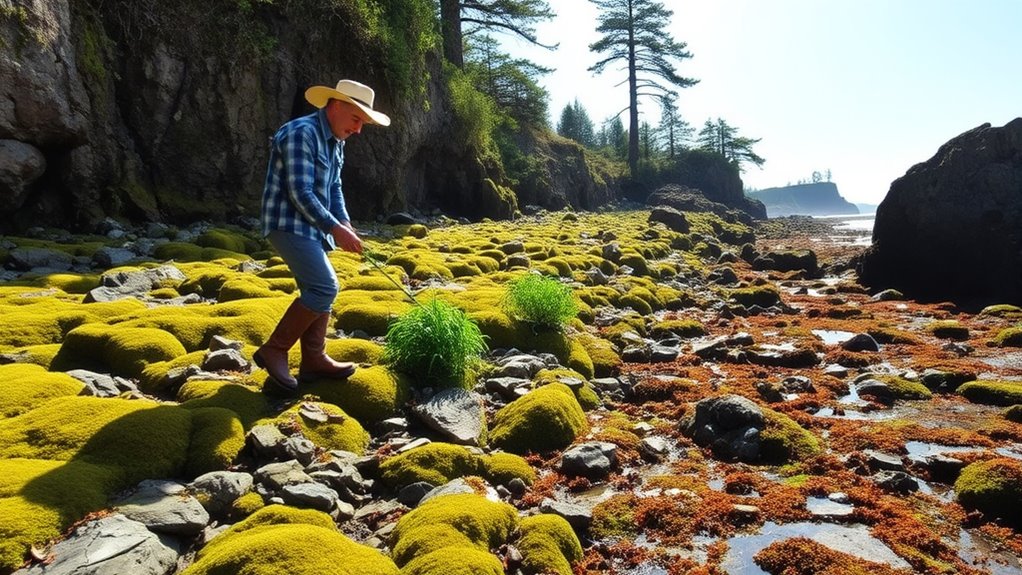
Are you aware of the local regulations governing coastal foraging? Knowing the rules keeps you safe and helps protect the environment. First, check if you need a foraging permit; some areas require them to ensure sustainable harvesting. Second, familiarize yourself with hazard identification—recognize dangerous plants, animals, or unsafe water conditions before collecting. Third, respect seasonal restrictions and protected zones to avoid fines and preserve ecosystems. Always follow posted signs and local guidelines to stay compliant. Understanding these regulations minimizes risks and ensures your foraging remains safe and responsible. It’s also important to understand modern symbols and signs to interpret warning signals and navigation aids effectively. By staying informed and cautious, you enjoy the bounty of the coast without harming the environment or risking your safety. Proper knowledge makes your foraging experience sustainable and rewarding.
Frequently Asked Questions
What Are the Best Tools for Coastal Foraging?
When foraging, you need the right tools to guarantee safety and sustainable harvesting. A sturdy knife helps you harvest delicately without damage, while gloves protect your hands. A basket or mesh bag allows for proper collection and easy transport. Don’t forget a guidebook to identify plants and avoid poisonous species. Always prioritize foraging safety by respecting local regulations and harvesting responsibly to preserve the ecosystem for future foragers.
How Can I Identify Toxic or Inedible Seaweed Varieties?
When identifying edible vs. inedible seaweed, you need to understand seaweed toxicity signs. Look for unfamiliar or unusual colors, slimy textures, or foul smells, which often indicate inedible varieties. Stick to well-known types like nori or wakame, and consult reliable guides or local experts. Always double-check to avoid toxic seaweed, as misidentification can lead to health issues. When in doubt, it’s safer to skip it.
What Are Common Mistakes Beginners Make When Foraging?
When foraging, you might make common mistakes like misidentification hazards, confusing edible plants with toxic ones. You may also overharvest, taking too much from a single spot and harming the ecosystem. To avoid these issues, always double-check your identifications, use reliable guides, and harvest sustainably. Being cautious helps prevent accidents and guarantees the environment stays healthy for future foragers.
How Do Weather Conditions Affect Foraging Success?
Imagine walking along the shoreline, feeling the cool breeze and watching the tide ebb and flow. Weather conditions like wind speed and tide timing directly impact your foraging success. Calm winds make spotting seaweeds and shellfish easier, while high tides can hide treasures. Strong winds can stir up the water, making it harder to see what’s beneath. Always check the weather, tides, and wind before heading out for a fruitful foraging adventure.
Are There Recommended Local Foraging Groups or Guides?
You should look for local foraging groups or guides that prioritize foraging safety and sustainable harvesting. These groups often offer workshops, guided walks, and community events, helping you learn responsible foraging techniques. Search online or ask at local markets and nature centers for recommendations. Joining experienced groups guarantees you gather safely, avoid overharvesting, and respect local ecosystems, making your foraging adventures both enjoyable and environmentally responsible.
Conclusion
As you dance along the Pacific Northwest coast, let the ocean’s bounty be your melody. Embrace the thrill of discovery, but always tread lightly, respecting nature’s delicate rhythm. With mindful foraging, you become a steward of this vibrant ecosystem, turning each harvest into a symphony of flavors. So, go forth with curiosity and care—your coastal adventure awaits, ready to fill your plate and your soul with the wild, nourishing spirit of spring.
Halloween Picks
halloween
As an affiliate, we earn on qualifying purchases.