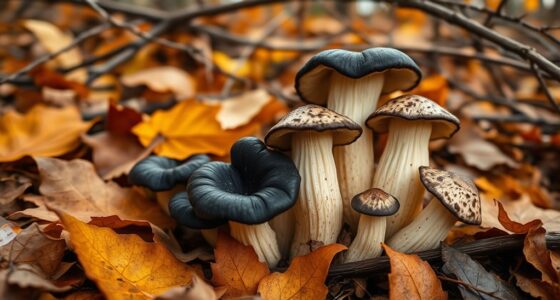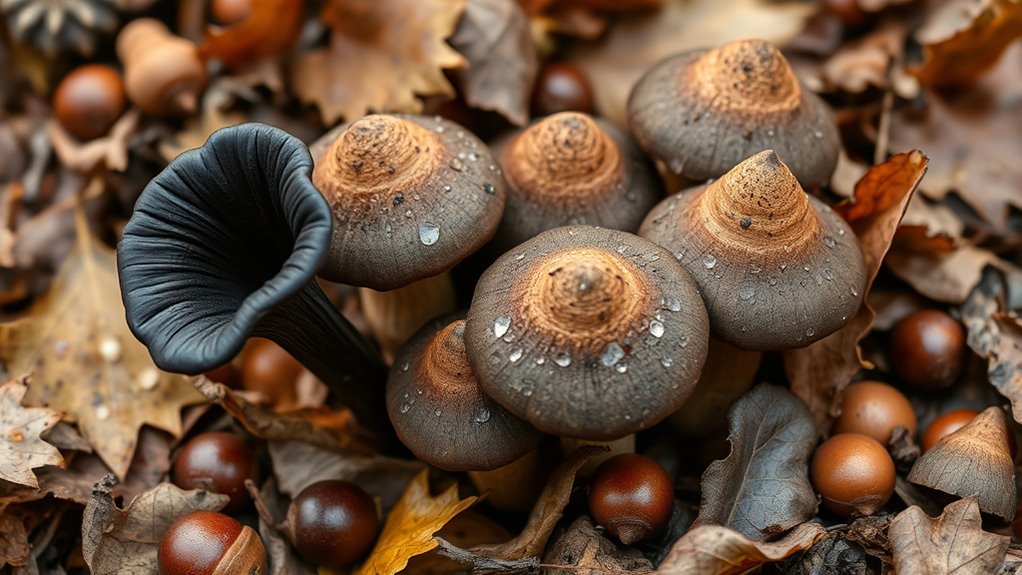

In late fall, find Black Trumpets in deciduous forests and shaded, moist areas beneath leaf litter or fallen branches, especially in areas with rich soil. Porcinis grow near the base of hardwoods like oaks and chestnuts, favoring well-drained soil. Look for thick white stalks with broad brown caps. Always identify mushrooms carefully and consider connecting with experienced foragers to guarantee safety. Keep exploring to discover precise spots where these flavorful fungi thrive.
Key Takeaways
- Search for Black Trumpets in deciduous forests with moist, shaded areas beneath leaf litter or fallen branches.
- Find Porcinis near the base of hardwood trees like oaks and chestnuts, in well-drained soil.
- Late fall is ideal for foraging, as these fungi emerge when temperatures cool and conditions are damp.
- Use guidebooks or consult experienced foragers to accurately identify these wild mushrooms and avoid lookalikes.
- Practice sustainable harvesting by collecting only what you need and avoiding contaminated or protected areas.
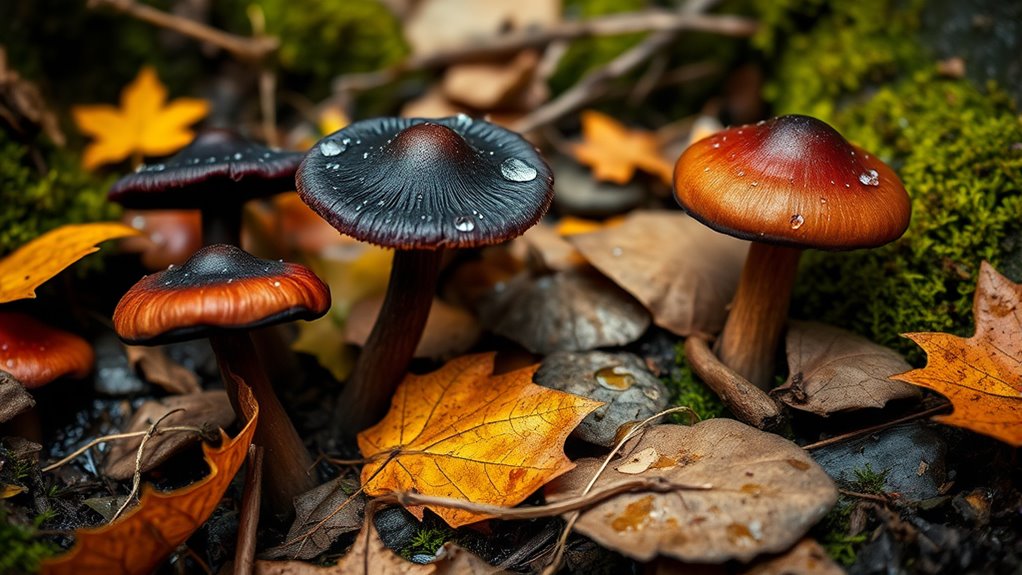
As the cooler months arrive, Black Trumpet and Porcini mushrooms emerge, signaling a prime season for foragers and culinary enthusiasts alike. This is your moment to embrace the wild bounty, to step outside the confines of supermarket aisles, and to connect deeply with nature’s hidden treasures. Foraging for these fungi isn’t just about gathering ingredients; it’s about reclaiming your culinary independence and experiencing flavors that can transform your dishes. With the right foraging tips, you can confidently identify and harvest these mushrooms, ensuring both safety and success. Engaging in community events or guided foraging tours can also enhance your knowledge and safety when collecting wild mushrooms. Black Trumpet mushrooms, with their dark, trumpet-shaped caps, flourish in deciduous forests and wooded areas, often hiding beneath leaf litter or fallen branches. To find them, look for moist, shaded spots where the soil is rich and undisturbed. Porcinis, on the other hand, tend to grow near the base of hardwoods like oaks and chestnuts, especially after a good rain. They prefer well-drained soil and can be spotted by their thick, white stalks topped with broad, brown caps. When foraging, always double-check your finds—these mushrooms can resemble toxic varieties. Use a field guide or consult experienced foragers to sharpen your identification skills.
Once you’ve located these treasures, it’s time to think about culinary uses. Black Trumpets lend themselves beautifully to a variety of dishes—sauté them with butter and garlic for a simple appetizer, toss them into risottos, or blend them into sauces to add depth and earthy richness. Their smoky flavor elevates everything it touches. Porcinis are prized for their meaty texture and umami punch, making them perfect for hearty stews, pasta sauces, or dried and ground into powder to season meats and vegetables. Their robust flavor stands up to bold ingredients, giving your dishes a wild, authentic edge.
Embracing the season’s bounty with confidence means respecting the environment and practicing sustainable foraging. Only pick what you need, leave some behind for the ecosystem, and never harvest from contaminated areas. With these foraging tips and culinary insights, you’re not just gathering mushrooms—you’re reclaiming a primal connection to food, flavor, and freedom. This late fall, let the woods be your pantry, and your kitchen be a place where nature’s wild gifts inspire bold, liberated cooking. The season is fleeting, so seize it, explore, and transform these wild fungi into culinary masterpieces that celebrate your independence.
Frequently Asked Questions
How Can I Identify Authentic Black Trumpet and Porcini Mushrooms?
To identify authentic black trumpet and porcini mushrooms, focus on their unique features. For black trumpets, look for dark, trumpet-shaped caps with a hollow stem, avoiding common look-alikes like false trumpet. Porcini have thick stems and brown, spongy undersides. Use identification tips like checking the spore color and scent. Trust your instincts, stay confident, and don’t settle for anything that seems off—liberate yourself from doubt and enjoy safe foraging.
Are There Any Health Risks Associated With Foraging These Mushrooms?
While foraging, you should be aware of potential toxicity concerns and allergy risks with black trumpet and porcini mushrooms. Though generally safe, misidentification or consuming spoiled specimens can cause illness or allergic reactions. Embrace your freedom to explore nature, but always double-check your finds, avoid eating unknown mushrooms, and consider consulting an expert. Your health is worth the effort to forage responsibly and safely.
What Tools Are Best for Harvesting Black Trumpets and Porcini?
You’ll want sturdy foraging gear like a mushroom knife with a fine blade and a brush for cleaning, along with a basket or mesh bag to keep your harvest fresh. Don’t forget mushroom identification tools, such as a field guide or app, to guarantee you pick the right species. These tools empower you to forage confidently, embracing the freedom of connecting with nature and enjoying your mushroom hunt safely and sustainably.
Can These Mushrooms Be Stored for Long-Term Use?
Yes, you can store black trumpets and porcini for long-term use through mushroom preservation. To do this, employ storage techniques like drying, freezing, or vacuum sealing. Drying enhances flavor and extends shelf life, while freezing preserves texture and nutrients. By mastering these storage techniques, you free yourself from seasonal limitations, enjoying their rich taste anytime you crave. Embrace the freedom of mushroom preservation and elevate your culinary adventures.
Are There Any Regional Variations in Black Trumpet and Porcini Seasons?
Yes, there are regional variations in black trumpet and porcini seasons influenced by regional climate and local foraging traditions. In cooler areas, you’ll find these mushrooms later in fall, while warmer regions see them earlier. Embrace your local knowledge and foraging customs to release your mushroom hunting experience. Adapt your timing based on climate patterns and regional cues, and you’ll access the best harvests wherever you are, making foraging an exciting adventure.
Conclusion
As the forest whispers its secrets, you become a seeker of hidden treasures, much like a treasure hunter chasing elusive gems. Black trumpets and porcini are the jewels of late fall, waiting patiently for you to discover them beneath the canopy’s shadow. Embrace the journey, for each mushroom found is a story woven into nature’s grand tapestry. In this season’s quiet mystery, you become part of the forest’s timeless quest for beauty and bounty.